What Is Timer Controlled Lighting for Your Home?
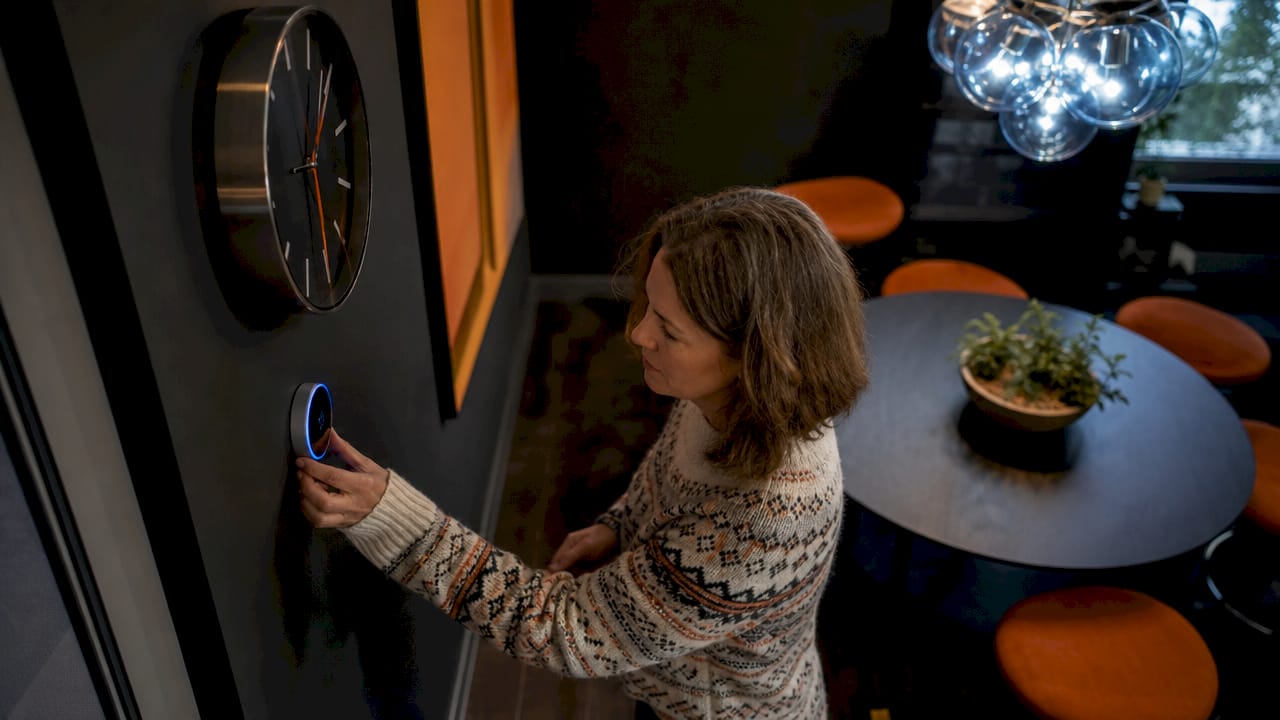
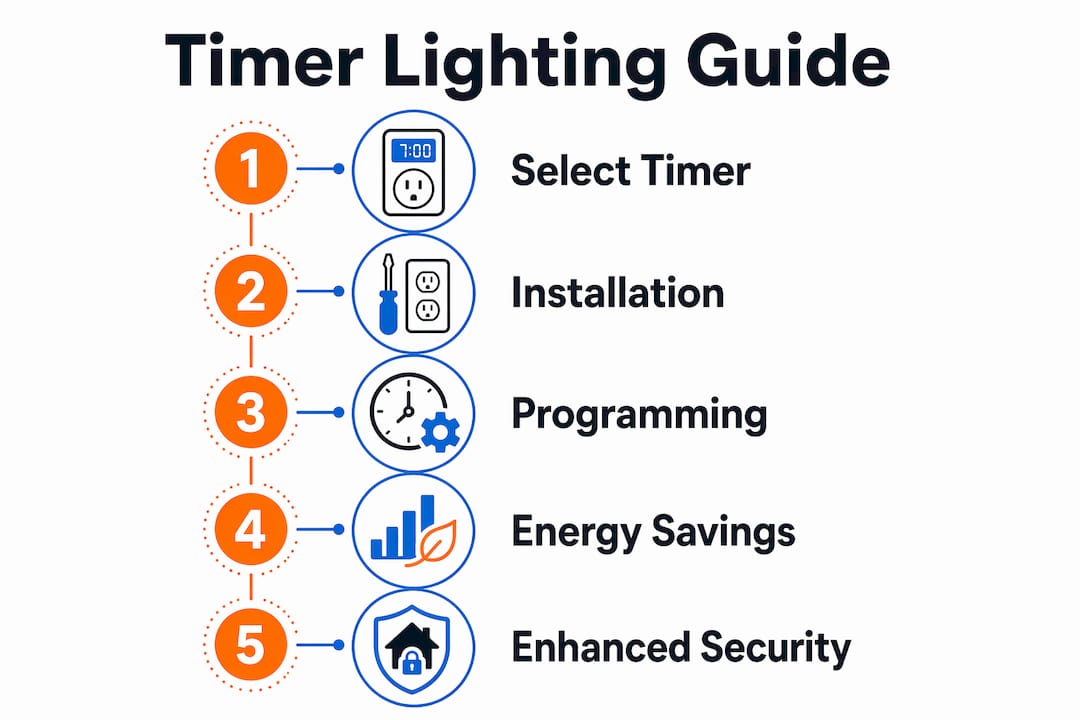
Timer controlled lighting is a system that automatically turns your home lights on and off based on pre-set schedules, without any manual input. The industry term for this broader category is automated lighting control, and timer switches are its most accessible entry point. Whether you want to cut your electricity bill, make your home look occupied while you travel, or simply stop worrying about lights left on all day, a timer lighting system delivers all three. Mechanical, digital programmable, and smart timers each serve different needs, and choosing the right one depends on your home’s wiring, your lifestyle, and how much control you want.
What is timer controlled lighting and how does it work?
Timer controlled lighting works by completing or breaking an electrical circuit at pre-programmed intervals. Timer switches automate home lighting, kitchen appliances, and outdoor gear for increased convenience and energy savings. The timer sits between your power source and the light fixture, acting as a programmable gatekeeper.
Three main timer types cover most homeowner needs:
- Mechanical (pin-type) timers. These use rotating dials with physical pins to set on/off times. They are reliable, inexpensive, and require no programming knowledge. The trade-off is limited precision, typically in 15 or 30-minute increments.
- Digital programmable timers. These feature LCD screens, manual override buttons, and multiple daily on/off settings. Models like the Legrand PS-RTPA24 support 7 on/off events per day and meet energy codes such as California Title 24.
- Smart timers. These connect via Wi-Fi or Bluetooth and are controlled through smartphone apps. They offer remote access, integration with voice assistants like Amazon Alexa or Google Home, and advanced scheduling features.
One standout feature in modern timer lighting systems is the astronomic timer. Astronomic timers track sunrise and sunset based on your geographic location and automatically adjust for seasonal changes and Daylight Saving Time. That means your outdoor lights shift with the seasons without you touching a single setting. Many models also include a 14-day battery backup to retain programming during power outages.
Pro Tip: Look for a digital timer with a randomize function. Smart timers with randomizing features vary daily on/off times slightly, making it much harder for anyone watching your home to detect a pattern.
What are compatibility and installation requirements for timer lighting?
Compatibility is the most common place homeowners run into trouble. Not every timer works with every bulb type, and getting this wrong causes flickering, shortened bulb life, or a timer that simply won’t function.
Key compatibility points to check before you buy:
- LED and CFL bulbs. Digital programmable timers must be verified for compatibility with LED or CFL bulbs. Always check the package label for a compatibility list.
- Load ratings. Every timer has a maximum wattage rating. Add up the total wattage of all lights on the circuit and confirm it falls below the timer’s rated capacity.
- Neutral wire requirement. Many digital and smart timers require a neutral wire for installation. Older homes built before the 1980s often lack this wire in wall switch boxes, which means you may need an electrician or a special no-neutral timer model.
Installation placement also matters. You have three main options:
- Wall switch replacement. The timer replaces your existing light switch. This is the cleanest look and works for indoor and outdoor circuits.
- Plug-in timer. Plug-in timers control lamps or light strings without any wiring changes. This is the right choice for renters or anyone who wants a no-tools setup.
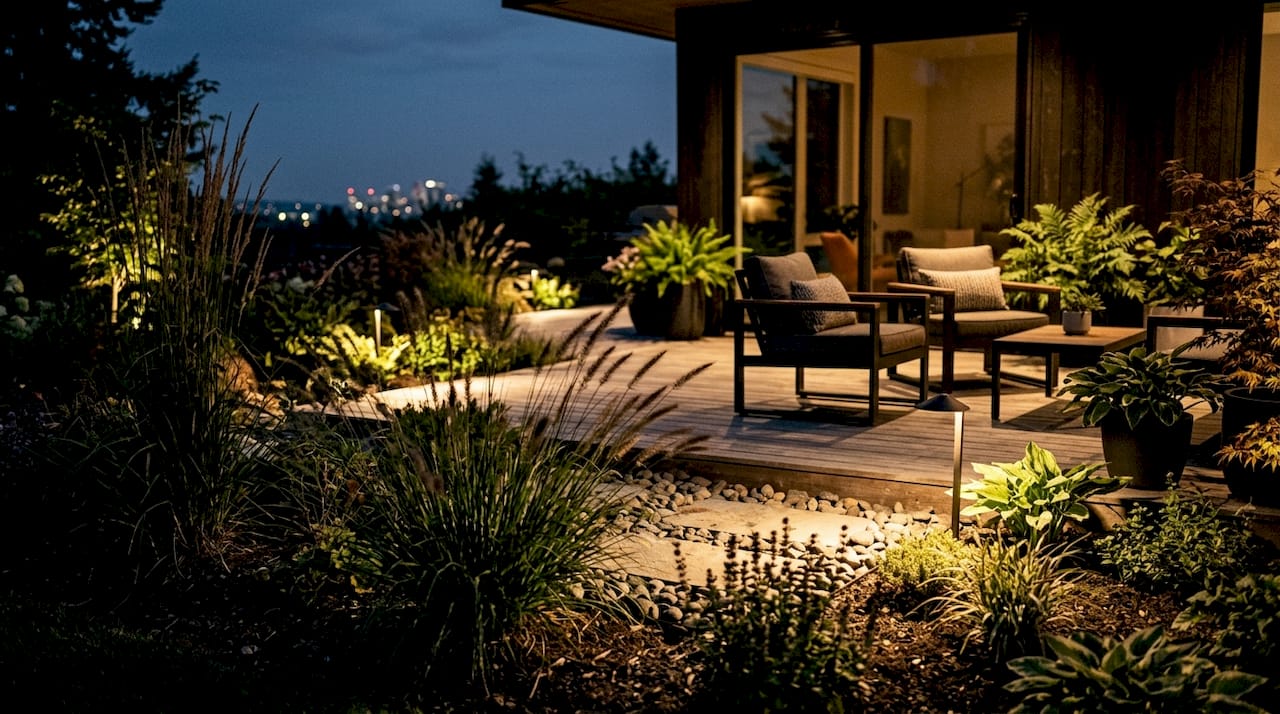
- Low-voltage transformer. For landscape lighting, the timer is built into or attached to the transformer that powers your outdoor fixtures. This is the standard approach for programmable outdoor lighting systems.
A common misconception is that the control must be located at the light fixture itself. For exterior lighting, the timer often lives in the transformer or a smart plug near your power source, which actually simplifies the whole installation.
Pro Tip: Before purchasing any digital or smart timer, check your wall switch box for a white neutral wire. If you only see black and bare copper wires, you will need either a no-neutral compatible timer or a quick wiring update from a licensed electrician.
How does timer lighting improve home security and energy efficiency?
The two biggest reasons homeowners install timer lighting systems are security and savings. Both benefits are real, and they work best when you combine the right tools.
On the energy side, timer controlled lighting reduces energy consumption by about 9% by operating lights only when needed. That reduction also extends the lifespan of your bulbs and reduces wear on fixtures. Over a full year, the savings on a whole-home system add up to a meaningful reduction in your utility bill. For a deeper look at how home lighting automation cuts electricity costs, the numbers are even more compelling when you move beyond basic timers.
On the security side, the logic is straightforward. An empty, dark house signals no one is home. A house with lights cycling on and off at realistic times signals the opposite.
“Combining timers with motion sensors enhances effectiveness.” — U.S. Department of Energy
Here is how to build a layered security lighting setup:
- Set indoor timers to cycle living room and bedroom lights in the evening, mimicking normal activity.
- Add a dusk-to-dawn photocell to your exterior lights so they activate automatically at sunset.
- Pair exterior fixtures with motion sensors for immediate response to movement near entry points.
- Use a smart timer’s randomize function to vary indoor light schedules by 15–30 minutes each night.
One honest limitation: timers alone are less effective in occupied homes. Combining timers with motion or occupancy sensors yields better security and energy management when your household schedule changes frequently. A fixed schedule that never adapts to your actual presence can waste energy and look artificial to anyone paying close attention. For a complete approach to integrating timers with security lighting, pairing technologies is always the stronger choice.
How do smart timer systems add convenience for homeowners?
Smart timer lighting systems go well beyond simple on/off scheduling. They connect your lights to your home network and give you control from anywhere with a smartphone.
Core features of smart timer systems include:
- Remote access. Adjust schedules from your phone whether you are at work or traveling. Forgot to set a timer before a vacation? Fix it in 30 seconds from the airport.
- Sensor integration. Smart timers connect with motion sensors, door/window sensors, and photocells to create conditional rules. A light can turn on when motion is detected AND it is after sunset.
- Voice control. Integration with Amazon Alexa, Google Home, and Apple HomeKit lets you adjust schedules with a voice command.
- Whole-home coordination. Networked lighting controls link multiple fixtures and zones into one system, so your front porch, backyard, and driveway lights all follow a coordinated schedule.
The trade-off with smart systems is setup complexity. They require a stable Wi-Fi signal at the installation point, and some systems need a dedicated hub. For most DFW homeowners, this is a one-time setup cost that pays off quickly in daily convenience. If your current router does not reach your outdoor fixtures, a Wi-Fi extender or a Bluetooth-based timer is a practical workaround.
Common misconceptions homeowners have about timer lighting
Several persistent myths lead homeowners to buy the wrong product or skip timer lighting entirely.
- “Timers are only for lamps.” Wired timer switches control any light on a circuit, including recessed lighting, exterior floodlights, and landscape systems.
- “A timer will cause a fire if a bulb burns out.” Modern timers are passive switches. They do not generate heat and do not create fire risk when a bulb fails. Always use bulbs within the fixture’s rated wattage as a standard safety practice.
- “I can use any timer with my LED lights.” This is the most costly misconception. Mechanical timers generally work with most bulb types, but digital timers need explicit LED compatibility. Check the label before you buy, and review LED lighting safety considerations if you are unsure about your current setup.
- “Smart timers are too complicated to set up.” Most current smart timer apps walk you through setup in under 10 minutes. The bigger challenge is confirming your wiring before installation.
Pro Tip: If you want the lowest-maintenance outdoor lighting setup, use a photocell-timer combination. The photocell handles the dusk-on trigger automatically, and the timer cuts power at your preferred hour. You never need to adjust for seasonal daylight changes.
Key Takeaways
Timer controlled lighting automates your home’s on/off cycles to deliver measurable energy savings, stronger security, and daily convenience without manual effort.
| Point | Details |
|---|---|
| Three core timer types | Mechanical, digital programmable, and smart timers each suit different budgets and wiring setups. |
| Energy savings are real | Timer systems reduce energy consumption by about 9% by running lights only when needed. |
| Security requires layering | Combine timers with motion sensors and a randomize function for the most effective deterrent. |
| Compatibility check is critical | Verify LED/CFL compatibility and neutral wire availability before purchasing any digital or smart timer. |
| Photocell-timer combo wins outdoors | This pairing handles dusk-on automatically and cuts power at a preset time with zero seasonal adjustments. |
What I have learned after years of installing timer lighting systems
The homeowners who get the most out of timer lighting are the ones who match the timer type to their actual lifestyle, not just their budget. I see it regularly: someone buys a basic mechanical timer for their front porch because it is cheap, then calls us six months later frustrated that it does not adjust for the shorter days in november and december. An astronomic digital timer costs maybe $30 more and eliminates that problem entirely.
My strongest recommendation for DFW homeowners is the photocell-timer combination for any exterior fixture. The photocell handles the variable sunset trigger, and the timer cuts power at a fixed hour. You get automatic seasonal adjustment without paying for a full smart system. It is the most reliable, lowest-maintenance setup I know.
For anyone who wants whole-home coordination or remote access, a smart timer system is worth the extra setup time. The randomize function alone is a genuine security upgrade over fixed schedules. I would also strongly recommend professional installation for any wired timer, especially in homes built before 1990. Neutral wire issues are common in older DFW homes, and discovering them mid-install is frustrating and potentially unsafe.
The broader principle is this: timer lighting is not a single product. It is a category with real differences in capability, and the right choice depends on your home’s wiring, your schedule, and how much automation you actually want to manage.
— Adrian
Professional LED lighting installation in the Dallas-Fort Worth area
Timer controlled lighting delivers its full benefits when the underlying fixtures are installed correctly and built to last. At Dfwledpro, we install permanent outdoor LED lighting systems across 35+ DFW cities, including Arlington, Mansfield, Fort Worth, Grand Prairie, and Cedar Hill.

Our JellyFish LED systems are fully compatible with timer and smart lighting controls, so you get a fixture that works seamlessly with any schedule you set. If you are ready to upgrade your outdoor lighting with a system designed for long-term performance, explore our permanent LED installation in Lancaster, TX or our Dallas permanent LED lighting services. Contact Dfwledpro for a free consultation and we will design a system that fits your home, your schedule, and your security goals.
FAQ
What is the simplest type of timer for home lighting?
A plug-in mechanical timer is the simplest option. It requires no wiring changes and works by plugging into any standard outlet to control lamps or light strings.
Do timer switches work with LED bulbs?
Mechanical timers generally work with LED bulbs, but digital programmable timers must be verified for LED compatibility. Always check the packaging before purchase to avoid flickering or premature bulb failure.
How does an astronomic timer differ from a standard digital timer?
An astronomic timer automatically adjusts on/off times based on your location’s sunrise and sunset, including Daylight Saving Time changes. A standard digital timer uses fixed times that you must update manually each season.
Can timer lighting really deter burglars?
Yes, when used correctly. Scheduled lighting creates a lived-in appearance, and smart timers with a randomize function vary the schedule nightly so patterns are harder to detect. Pairing timers with motion sensors strengthens the effect further.
Does my home need special wiring for a smart timer?
Many smart and digital timers require a neutral wire, which older homes often lack in wall switch boxes. Check your existing wiring before purchasing, or choose a no-neutral compatible model to avoid installation issues.