Home lighting automation: 75% energy savings and control
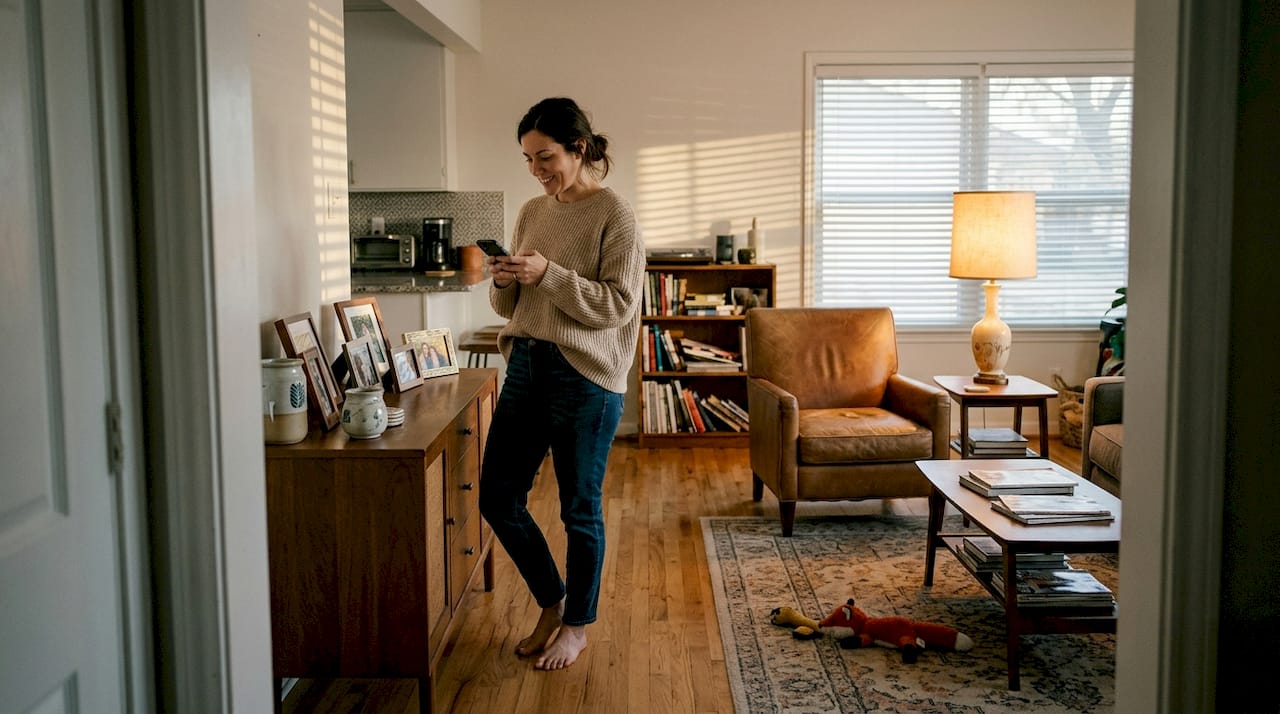
Home lighting automation can reduce electricity use by up to 75%, saving Dallas-Fort Worth homeowners $200 to $600 every year. That’s not a minor upgrade. That’s a meaningful shift in how your home operates and what you pay for it. Yet most homeowners still think of smart lighting as just a convenience play, swapping out a few bulbs and calling it done. This guide goes further. We’ll break down what home lighting automation actually includes, how it saves real money, which systems make sense for DFW homes, and how to avoid the most common mistakes before you spend a dime.
Table of Contents
- What is home lighting automation?
- How home lighting automation saves energy—and money
- Comparing home lighting automation options
- Integrating lighting automation for smarter living
- Our take: Smart lighting should be about value, not gadgets
- Ready to automate your lighting? Dallas-Fort Worth solutions
- Frequently asked questions
Key Takeaways
| Point | Details |
|---|---|
| Big energy savings | Automation can reduce energy costs by around 30–40% for Dallas-Fort Worth homes. |
| Multiple options | Homeowners can pick from smart bulbs, switches, or full pro systems depending on budget and needs. |
| Custom comfort | Lighting automation is about making life easier and safer, not just adding technology. |
| Professional help pays off | Expert installation ensures reliable, future-proof automation with local support. |
What is home lighting automation?
Home lighting automation is a system that controls your lights automatically, based on schedules, occupancy, daylight levels, or commands from an app or voice assistant. It’s not just a smart bulb you turn on with your phone. It’s a coordinated setup that can manage every light in your home without you touching a switch.
Lighting automation encompasses systems that handle on/off switching, brightness adjustments, and color changes, either on a set schedule, triggered by occupancy sensors, or driven by real-time daylight readings. That means your porch light comes on at dusk automatically, your office dims when natural light peaks at noon, and your kids’ rooms shut off at bedtime without a reminder.
A typical home automation lighting setup includes these core components:
- Smart bulbs or LED fixtures that respond to wireless commands
- A central hub or smart home controller that coordinates all devices
- In-wall smart switches or dimmers for reliable, always-on control
- Occupancy and daylight sensors that trigger changes without any input
- A mobile app for remote access and scheduling
What you can automate is broader than most homeowners expect. Common features include:
- Scene settings that shift your lighting mood from bright task lighting to relaxed evening tones
- Scheduled on/off cycles tied to sunrise, sunset, or your daily routine
- Remote access so you can check and adjust lights from anywhere
- Dimming profiles that reduce wattage without turning lights off entirely
- Holiday and event lighting through smart lighting options that let you program color and patterns year-round
Homeowners in DFW are adopting these systems for three clear reasons: lower utility bills, less daily friction, and better home security. A well-designed system means your home looks occupied even when you’re traveling, and your outdoor lighting responds to the environment without any manual effort.
How home lighting automation saves energy—and money
Now that we’ve defined it, let’s see how lighting automation delivers concrete benefits for your wallet.
Real-home energy reductions of 30 to 40% are common with lighting automation, with lab conditions showing up to 75%. For DFW homeowners, that translates to $200 to $600 in annual savings depending on home size and current usage habits.

Here’s how those savings break down by home size:
| Home size | Est. monthly lighting cost | Savings with automation | Annual savings || |—|—|—|—| | Under 1,500 sq ft | $35 | 30% | ~$126 | | 1,500 to 2,500 sq ft | $55 | 35% | ~$231 | | 2,500 to 4,000 sq ft | $80 | 40% | ~$384 | | 4,000+ sq ft | $110+ | 40%+ | $528+ |
The main ways automation cuts your costs:
- Dimming reduces wattage in real time, not just when lights are off
- Occupancy sensors eliminate lights left on in empty rooms
- Scheduling prevents overnight or all-day lighting waste
- Daylight harvesting adjusts indoor brightness based on natural light coming through windows
“Home lighting automation can reduce energy use by 30 to 40% in real homes and up to 75% in controlled settings, with DFW residents saving $200 to $600 per year.” — Nature.com energy study
Pro Tip: The biggest savings come from combining all three strategies together: dimming, scheduling, and occupancy sensors. Using just one cuts costs. Using all three can push you toward the top of the savings range.
For context, pairing lighting automation with other energy-saving upgrades like HVAC zoning can compound your total home efficiency gains significantly. And if you’re weighing upfront costs, reviewing a cost savings comparison for permanent LED systems versus traditional options shows how quickly these investments pay back.
Comparing home lighting automation options
Understanding the benefits is helpful, but which system fits best in your Dallas-Fort Worth home? Let’s compare the main options.
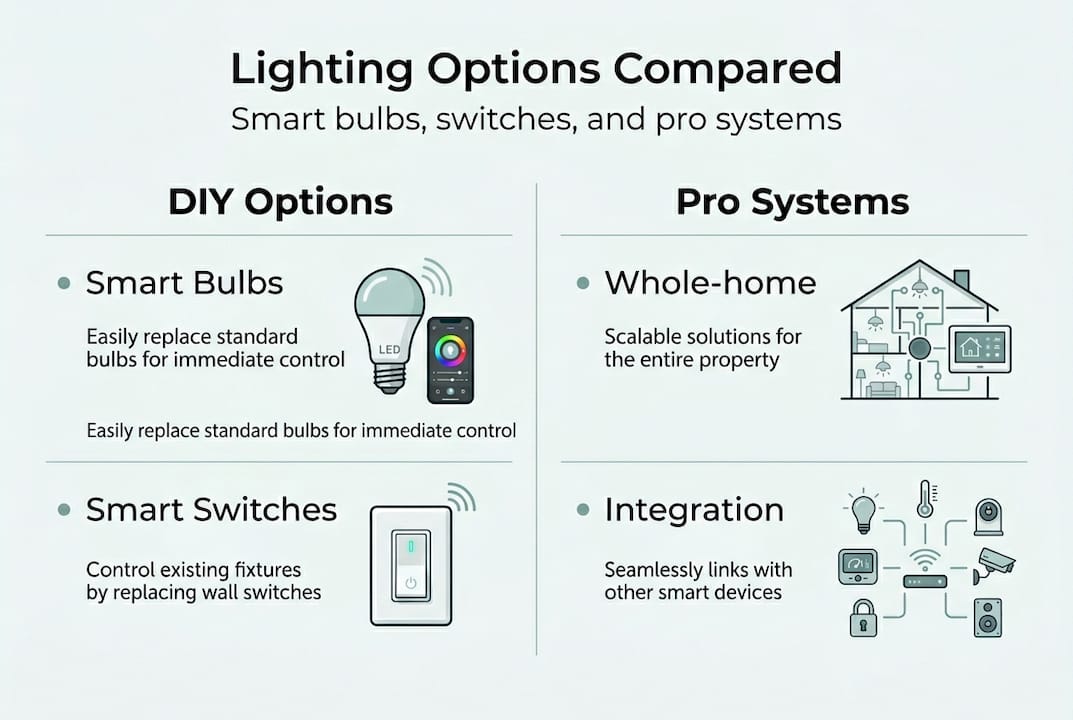
There are three primary categories of home lighting automation: smart bulbs, in-wall smart switches, and pro-grade whole-home systems. Each has a different cost profile, installation requirement, and level of reliability.
| Feature | Smart bulbs | In-wall switches | Pro-grade systems |
|---|---|---|---|
| Upfront cost | $10 to $50 per bulb | $30 to $80 per switch | $500 to $2,000+ |
| Installation | Plug-and-play | Requires wiring | Professional required |
| Reliability | Moderate | High | Very high |
| Flexibility | High (portable) | Medium | Very high |
| Best for | Renters, starters | Homeowners | Whole-home control |
Smart bulbs are renter-friendly but less reliable than in-wall switches or pro-grade systems, which offer superior stability and longevity at a higher upfront cost. Bulbs can lose connectivity when switched off at the wall, a frustrating limitation that switches avoid entirely.
To figure out which approach fits your home, work through these steps:
- Determine your living situation. Renters benefit most from smart bulbs. Homeowners get more long-term value from switches or pro systems.
- Count the rooms you want to automate. A few rooms? Bulbs or switches work well. Whole home? Consider a pro-grade setup.
- Check your existing Wi-Fi coverage. Weak signal in parts of your home can undermine any wireless system.
- Review your smart home ecosystem. If you already use Alexa or Google, pick systems that integrate with voice and smart home integration platforms you already own.
- Factor in future plans. If you’re planning a remodel or addition, rough in for a pro system now rather than retrofitting later.
Pro Tip: Think about where you want to be in three years, not just today. A system that’s easy to start with but hard to expand will cost you more in the long run.
For DFW homeowners unsure about installation complexity, comparing DIY versus professional approaches upfront saves time and avoids costly mistakes.
Integrating lighting automation for smarter living
Once you’ve chosen a direction, you’ll want to see how automation integrates into your day-to-day life.
Adding automation to your home doesn’t have to be complicated. Here’s how most DFW homeowners approach it:
- Start with one room or zone. Test your chosen system before committing to the whole house.
- Choose DIY for simple setups. Smart bulbs and basic switches are genuinely plug-and-play for most people.
- Hire a pro for complex installs. In-wall wiring, whole-home hubs, and outdoor integration are best handled by someone who knows working with home pros on system integration.
- Set schedules immediately. Don’t rely on manual control. Schedules are where the savings actually happen.
- Use sensors in high-traffic areas. Hallways, bathrooms, and garages are ideal for occupancy-based automation.
Whole-home automation delivers the most seamless experience and long-term value, especially when it’s designed around how your family actually lives rather than what looks impressive in a product demo.
Ecosystem compatibility matters more than most homeowners realize. If your lights don’t talk to your thermostat, your security system, or your voice assistant, you end up managing multiple apps instead of simplifying your life. Alexa, Google Home, and Control4 are the most common platforms in DFW homes. Check compatibility before you buy anything.
Common pitfalls to avoid:
- Weak Wi-Fi coverage in outdoor or far-room zones that drops device connections
- App overload from mixing brands that don’t share a single control platform
- No zone planning before purchasing, leading to mismatched devices and coverage gaps
For real-world examples of how permanent LED systems perform in DFW homes, and how system compatibility and integration works in practice, those resources give you a grounded look at what to expect.
Pro Tip: Before buying a single device, map out your home’s zones and list your top three priorities. Knowing whether you care most about energy savings, convenience, or security lighting shapes every decision that follows.
Our take: Smart lighting should be about value, not gadgets
We’ve installed lighting systems across more than 35 cities in the Dallas-Fort Worth area, and the pattern is consistent. Homeowners who get the most out of automation aren’t the ones who bought the most features. They’re the ones who matched the system to how their family actually lives.
The biggest savings and comfort boost come when smart lighting is matched to your family’s actual schedule and habits, not just trendy features. A system that dims automatically during movie time and turns on the porch light before you get home delivers more daily value than one loaded with color-changing modes nobody uses.
DFW homes see the biggest payoff when automation covers the full picture: indoor comfort, outdoor security, holiday lighting, and energy management. That’s where worth of permanent LED lights becomes a real conversation, because permanent outdoor systems eliminate the annual setup hassle while delivering year-round automated control.
Our honest advice: don’t let the number of options paralyze you. Start with your real priorities. Build from there. The right system is the one you’ll actually use every day, not the one with the longest spec sheet.
Ready to automate your lighting? Dallas-Fort Worth solutions
If you’re ready to add value, savings, and convenience to your home, here are the best local next steps.
For DFW homeowners, professional installation makes a measurable difference in system reliability and long-term performance. A properly designed setup eliminates the connectivity issues, app conflicts, and coverage gaps that frustrate DIY installs.
We specialize in permanent LED lights for Dallas homes that integrate directly with smart home platforms for fully automated outdoor control. Whether you want security lighting that responds to motion, holiday displays you control from your phone, or outdoor lighting automation for your patio and landscaping, we design systems built for how DFW families actually live. Reach out to us for a tailored recommendation and a local installation team that knows your neighborhood.
Frequently asked questions
How much does home lighting automation typically cost in DFW?
Expect costs from $200 for basic DIY setups to $2,000 or more for pro-grade whole-home systems, depending on size and complexity. Annual savings of $200 to $600 often offset installation costs within a few years.
Can lighting automation really lower my utility bills?
Yes. Automation can cut electricity use by 30 to 40% in regular homes, and even higher when you combine smart sensors, scheduling, and dimming together.
Are smart bulbs or smart switches better for renters?
Smart bulbs are the better fit for renters since they’re wireless and portable. Smart switches offer more reliability for homeowners, as bulbs are less reliable when wall switches cut their power.
Does lighting automation work with voice assistants?
Most systems are fully compatible with Alexa, Google Assistant, and major smart home platforms, giving you hands-free control without any additional hardware beyond what you already own.
Recommended
- Smart Home LED Lighting — Alexa, Google & Control4 Integration | DFW LED Pro
- Blog | Permanent LED Lighting Tips & Guides | DFW LED Pro
- JellyFish Lighting App — Full Feature Guide | DFW LED Pro
- JellyFish Accent & Security Lighting | Smart Home LED | DFW LED Pro
- Optimize Your Home: What Is HVAC Zoning and Why It Matters
- Overstappen op energiezuinige verlichting: Wat led je? - Holland Electric