Networked Lighting Control: Transform Outdoor Spaces
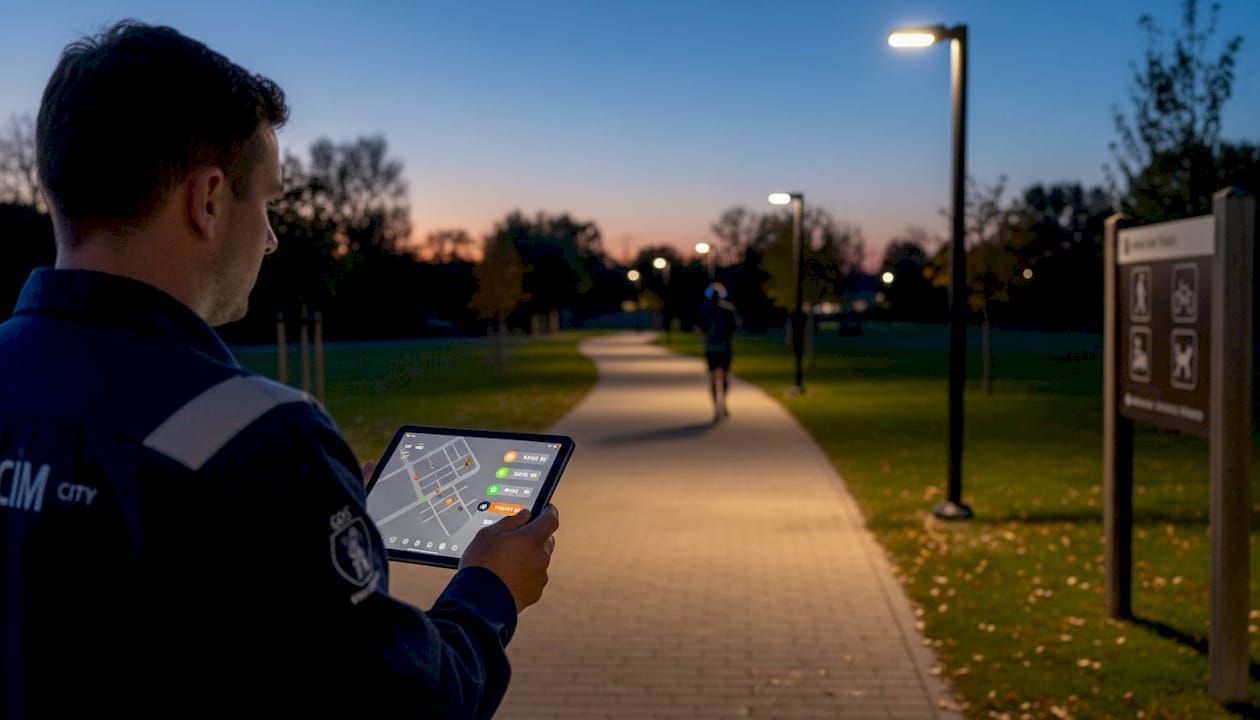
Most property owners in Dallas-Fort Worth think lighting control means a basic timer or a wall switch. That assumption costs real money. Networked lighting control (NLC) is a fully integrated, connected system that manages every fixture, sensor, and schedule from one platform. It goes far beyond flipping lights on at dusk. Across DFW, homeowners and commercial property managers are adopting NLC to cut energy bills, boost curb appeal, and create outdoor spaces that work smarter year-round. This guide breaks down exactly what NLC is, why it matters for your property, and how to put it to work.
Table of Contents
- What is networked lighting control?
- Key benefits of networked lighting control for DFW properties
- How networked lighting control works: Core technologies and options
- Making the most of networked lighting: Implementation tips for homeowners and businesses
- Why networked lighting control is the smart upgrade most DFW properties overlook
- Next steps: Transform your lighting with DFW experts
- Frequently asked questions
Key Takeaways
| Point | Details |
|---|---|
| Integrated smart lighting | Networked lighting control means centralized, automated control of all fixtures and sensors for maximum efficiency. |
| Major energy savings | NLC systems cut lighting energy usage by nearly half on average compared to conventional controls. |
| Hybrid solutions best | Combining wired and wireless options offers DFW properties the right mix of reliability and flexibility. |
| Rebate and code ready | Choosing DLC-listed and code-compliant NLC systems helps DFW owners access rebates and meet regulations. |
What is networked lighting control?
Networked lighting control is an integrated system where fixtures, sensors, and software communicate with each other over a shared network. Think of it as the difference between a single thermostat and a full smart home climate system. One device works in isolation. The other responds to conditions, schedules, and commands across every room, or in this case, every light on your property.
At its core, networked lighting basics connect several key components working together:
- Networked fixtures: LED luminaires with embedded controls built in
- Sensors: Occupancy detectors, daylight sensors, and motion triggers
- Gateways: Devices that bridge fixtures to your network and cloud software
- Communication protocols: The language fixtures use to talk to each other
- Central software: The dashboard where you monitor, schedule, and adjust everything
The NLC components include networked fixtures with embedded controls, sensors for occupancy and daylight, gateways, wired and wireless protocols such as Ethernet/IP, DALI, Zigbee, Bluetooth, and BACnet, plus cloud or central software for monitoring, reconfiguration, and integration with HVAC or building management systems.
Here is a quick comparison of standalone versus networked systems:
| Feature | Standalone system | Networked system |
|---|---|---|
| Scheduling | Manual timer only | Automated, GPS-synced |
| Remote control | None | App or web dashboard |
| Energy reporting | None | Real-time data |
| Sensor integration | Limited | Full occupancy and daylight |
| Scalability | Difficult | Easy to expand |
For outdoor spaces specifically, NLC lets you set flexible schedules that adjust with sunset times throughout the year, monitor fixture health remotely, and integrate lighting with your security or HVAC systems. That last point matters a lot in DFW, where summer heat and storm seasons put extra stress on equipment.
Pro Tip: For DFW’s climate, a hybrid wired and wireless design gives you the best of both worlds. Wired connections handle critical fixtures where reliability is non-negotiable. Wireless handles flexible zones where running conduit is impractical. This approach reduces single points of failure during severe weather.
Key benefits of networked lighting control for DFW properties
With the basics established, let’s look at the real-world benefits of NLC for DFW properties.
Energy savings are the headline number. NLC delivers an average of 49% lighting energy savings, with offices reaching up to 64%, streetlights hitting 65%, and integrated HVAC plus lighting systems achieving 69% total energy savings. For a commercial property running lights across a large parking lot or building facade, those numbers translate directly into lower utility bills every month.
Here are the top benefits for DFW property owners:
- Lower energy costs: Sensors dim or shut off lights when spaces are unoccupied, and daylight harvesting reduces output when natural light is sufficient.
- Reduced maintenance: NLC systems report fixture failures in real time, so you replace bulbs or drivers before they become safety issues, not after.
- Longer fixture life: Dimming and smart scheduling reduce operating hours, which directly extends LED lifespan.
- Dynamic aesthetics: Color-changing capability and scene scheduling let you set holiday themes, event lighting, or seasonal color palettes from an app.
- Code compliance: ASHRAE 90.1 and Title 24 energy codes increasingly require networked controls for commercial builds and renovations.
- Rebate eligibility: DLC-listed NLC systems often qualify for utility rebate programs available to Texas property owners.
- Security and safety: Smart scheduling prevents dark windows and unlit walkways, and motion-triggered zones respond instantly to activity.
Pro Tip: Before purchasing any NLC system, verify that the fixtures and controls carry DLC (DesignLights Consortium) listing. This is the fastest path to qualifying for local utility rebates in DFW, and it confirms the system meets proven efficiency benchmarks.
How networked lighting control works: Core technologies and options
Now that you know the benefits, it is important to understand the technologies and options behind NLC.

NLC systems run on two broad categories of communication: wired and wireless. Each has strengths and trade-offs depending on your property type and goals.
Wired protocols include Ethernet/IP, DALI (Digital Addressable Lighting Interface), and Power over Ethernet (PoE). These are highly reliable and resistant to interference. PoE is particularly useful because it carries both data and power over a single cable, simplifying installation. However, wired systems require more upfront labor and conduit runs.
Wireless protocols include Bluetooth mesh, Zigbee, and LoRaWAN. These offer installation flexibility and are easier to retrofit into existing properties. The trade-off is that wireless systems are more flexible but interference-prone, while PoE is highly reliable yet regulated in some settings like healthcare facilities. LoRaWAN works well for long-range monitoring but is not ideal for real-time critical control.
| Protocol | Reliability | Flexibility | Interference risk | Best use |
|---|---|---|---|---|
| DALI | High | Moderate | Low | Commercial interiors |
| PoE | Very high | Low | Very low | Permanent outdoor runs |
| Zigbee | Moderate | High | Moderate | Residential and retrofit |
| Bluetooth mesh | Moderate | High | Moderate | Small commercial zones |
| LoRaWAN | Moderate | High | Low | Wide-area monitoring |
For most DFW outdoor applications, a hybrid approach works best. Use PoE or DALI for primary fixture runs along driveways, building perimeters, and parking areas. Layer in Zigbee or Bluetooth for accent zones, landscape lighting, and areas where trenching is not practical.
The gateway is the brain of the whole setup. It translates commands from your software dashboard into signals each fixture understands, and it sends status data back up to the cloud. Good gateway selection matters. Choose one that supports multiple protocols so you are not locked into a single vendor ecosystem.
- Residential properties: Zigbee or Bluetooth mesh with a cloud-connected gateway
- Small commercial: DALI or hybrid Zigbee with local server backup
- Large commercial or HOA: PoE backbone with wireless edge nodes and BACnet integration
“Choosing the right network technologies for your outdoor lighting is not about picking the newest protocol. It is about matching reliability, coverage, and budget to your specific property layout and long-term goals.”
Making the most of networked lighting: Implementation tips for homeowners and businesses
Understanding the technology helps, but implementation is where the benefits come alive.
Here is a practical step-by-step approach for DFW properties:
- Property assessment: Walk your property and map every fixture location, power source, and zone. Note areas with existing conduit runs and spots where wireless is the only practical option.
- System design: Work with a qualified installer to design zones, select protocols, and plan gateway placement. Good design prevents costly rework later.
- Device selection: Choose DLC-listed fixtures and controls to qualify for rebates. Verify IP ratings for outdoor fixtures. In DFW, look for IP65 or higher to handle summer storms and humidity.
- Installation: Run wired infrastructure first, then add wireless nodes. Commission each zone individually before integrating the full system.
- Software setup: Configure schedules, set up alerts for fixture failures, and connect to any existing building management or security systems.
NLC transforms standalone controls into scalable, data-rich systems ideal for DFW outdoor upgrades, cutting energy and maintenance costs while enabling dynamic aesthetics. Prioritizing DLC-listed products and hybrid wired/wireless designs gives you the best reliability and rebate outcomes.
Common pitfalls to avoid:
- Over-relying on wireless: DFW’s dense urban and suburban environments have significant RF interference from neighboring networks. Wireless-only systems can drop commands unpredictably.
- Ignoring heat ratings: Equipment rated for mild climates can fail during DFW summers when temperatures exceed 100°F. Always verify thermal specs.
- Skipping expansion planning: Install conduit with extra capacity now. Adding zones later without pre-planned infrastructure is expensive.
- Neglecting firmware updates: NLC systems require periodic software updates to maintain security and performance. Build this into your maintenance schedule.
Pro Tip: Integrate your outdoor NLC system with your HVAC and security platforms from day one. When your lighting system knows the security system triggered a motion alert, it can flood the zone with full brightness automatically. That kind of coordination adds real safety value beyond what lighting alone can deliver.
Why networked lighting control is the smart upgrade most DFW properties overlook
Here is what we see consistently in the field: most DFW property owners still treat outdoor lighting as a set-it-and-forget-it expense. They install fixtures, set a basic timer, and move on. That approach leaves significant value on the table.
The real missed opportunity is not just energy savings. It is the way NLC transforms how your property looks and feels throughout the year. Holiday color schedules, event lighting for backyard gatherings, seasonal accent changes, all of these are possible with a system that is already installed and running. You are not adding cost. You are using capability you already paid for.
We also see property owners focus too heavily on upfront installation cost. That instinct is understandable, but it leads to choosing cheaper systems that lack scalability, miss rebate eligibility, or fail prematurely in DFW’s demanding climate. A quality NLC system with proper local installation typically pays back its cost in energy savings within a few years, and it keeps delivering value for the life of the property.
Not all systems are equal, and not all installers understand the local environment. Choosing a team with genuine DFW experience means your system is designed for Texas heat, storm seasons, and the specific grid conditions in your area. That local knowledge is not a small detail. It is the difference between a system that performs reliably for years and one that needs constant attention.
Next steps: Transform your lighting with DFW experts
Ready to move from basic outdoor lighting to a smart, efficient NLC system? We make that transition straightforward for DFW homeowners and commercial property owners.
At DFW LED Pro, we design and install outdoor lighting solutions using DLC-listed systems built for the DFW climate. Our team covers 35+ cities across the metroplex, including Arlington, Fort Worth, Mansfield, Grand Prairie, and Burleson. We handle everything from property assessment and system design to installation and software setup. No guesswork, no generic solutions. Just a system matched to your property, your goals, and your budget. Schedule a no-obligation assessment today and find out exactly what a networked lighting upgrade can do for your property.
Frequently asked questions
How is networked lighting control different from smart bulbs or timers?
NLC systems coordinate multiple fixtures, sensors, gateways, and software as one integrated solution, while smart bulbs or timers operate individually without any central management or data sharing between devices.
What energy savings can I expect with networked lighting control?
You can expect around 49% savings on average, with offices reaching up to 64%, streetlights hitting 65%, and integrated HVAC plus lighting systems achieving 69% total energy savings.
Do networked lighting systems qualify for rebates in Texas?
Yes, DLC-listed NLC systems frequently qualify for utility rebate programs in Texas, and they align with ASHRAE 90.1 and Title 24 energy code requirements that drive those incentive programs.
Can I control outdoor and indoor lights together with NLC?
Yes, modern NLC platforms support both indoor and outdoor fixture management, and HVAC and BMS integration means you can coordinate lighting with other building systems from a single dashboard.
What protocols should I consider for outdoor networked lighting?
For DFW outdoor environments, hybrid wired and wireless designs perform best. PoE delivers maximum reliability for primary runs, while Zigbee or Bluetooth mesh handles flexible accent zones where running conduit is not practical.