What Is LED Home Branding? A Homeowner’s 2026 Guide
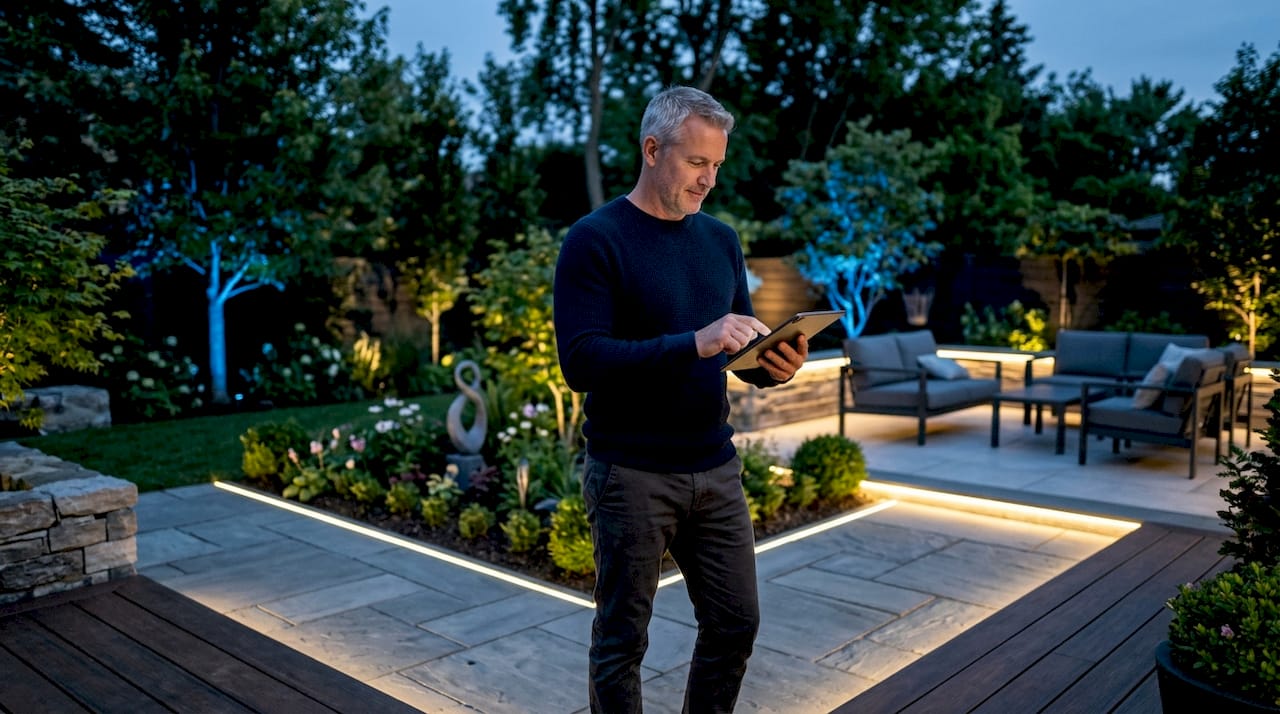
LED home branding is the strategic use of customized LED lighting to create a distinctive, illuminated identity for your home’s exterior. It covers everything from illuminated house numbers and roofline accents to app-controlled color systems that run year-round. Unlike temporary holiday lights, these are permanent, weatherproof installations designed to boost curb appeal, improve night visibility, and increase property value. If you’ve been wondering what is LED home branding and whether it’s worth the investment, the answer comes down to one thing: your home’s exterior is always on display, and lighting controls how it looks after dark.
What is LED home branding and what elements make it up?
LED home branding combines several lighting components that work together as a system. No single fixture creates the effect. The power comes from layering different types of light across your home’s exterior.
The main elements include:
- Illuminated house numbers: These serve a functional and aesthetic purpose. Illuminated address signage guides emergency responders, delivery drivers, and guests to your door at night. Some systems include emergency SOS beacons visible from over 1,000 feet.
- Architectural roofline lighting: Permanent low-profile LED strips installed along rooflines provide a warm-white nightly glow with full RGB color available through a smartphone app. These replace seasonal hanging lights entirely.
- Facade and feature accents: Uplighting on columns, downlighting on entryways, and wash lighting across stone or brick surfaces define your home’s structure after dark.
- Pathway and landscape lighting: Low-voltage accent lights along walkways and garden beds frame the property and guide foot traffic safely.
- Smart control systems: App-based scheduling lets you set warm white for weeknights, switch to team colors on game day, or run a holiday display without climbing a ladder.
Voltage systems: what you need to know
The distinction between 120V and 24V systems is one of the most practical decisions in LED home branding. Here is how they compare:
| System type | Voltage | Best use | Key advantage |
|---|---|---|---|
| Line-voltage | 120V | Ambient and structural lighting | Powers large fixtures reliably |
| Low-voltage | 24V | Accent and pathway lighting | Precise control, safer to handle |
| Smart LED strips | 24V | Roofline and architectural accents | App control, full RGB color |
| Solar accent lights | Varies | Low-priority decorative spots | No wiring needed, lower reliability |
Professional-grade, mains-powered systems outperform DIY or solar alternatives in every reliability metric. Premium installations distinguish a home’s quality and reputation by combining durability with design. Solar and low-quality retrofit options often fade, fail in extreme weather, or produce inconsistent color.
How does LED home branding improve home value and curb appeal?
The benefits of LED branding at home go well beyond aesthetics. A well-lit exterior signals quality, care, and permanence to anyone who sees your property.
Here is what homeowners gain from a complete LED home branding system:
- Night visibility: Your address becomes easy to find for guests, rideshare drivers, and emergency services. This is not a minor convenience. Clear address lighting can make a measurable difference in emergency response time.
- Year-round use: Smart exterior LED systems deliver warm-white lighting every night and full RGB color for holidays, sports events, or personal preference, all without seasonal installation costs.
- Premium home appearance: Architectural lighting highlights the features your home already has. A stone facade, arched entryway, or custom garage door looks dramatically different with proper uplighting versus no lighting at all.
- Energy efficiency: LED technology uses a fraction of the power that incandescent or halogen fixtures consume. Lower operating costs make the system pay for itself over time.
- Low maintenance: Quality permanent systems are built for outdoor exposure. Durable 2026 systems show zero failure over three years of continuous use, which means no annual bulb replacements or fixture repairs.
- Emotional and reputational signal: A well-branded home exterior tells neighbors and visitors that the property is cared for. That perception directly affects how buyers value the home if you ever sell.
Pro Tip: Set your roofline lights to warm white every night on a timer. You get the branding benefit without touching the app daily, and your home looks polished even when you forget about it.
For ideas on how to layer these effects across your property, the 2026 accent lighting guide from Dfwledpro covers current design approaches in detail.
What are the best design principles for effective LED home branding?
Good lighting design follows a layered approach. Experts recommend organizing every light source into one of three roles: ambient, task, or accent. Each layer serves a different function, and together they create a balanced, controllable exterior.
The three-layer lighting framework
- Ambient lighting is the base layer. It provides general illumination across the facade and driveway. Line-voltage fixtures handle this role. Think of it as the structural backbone of your exterior lighting plan.
- Task lighting serves specific functional needs. Entryway lights, garage lighting, and pathway fixtures fall into this category. They need to be bright enough to be useful but not so harsh that they overpower the design.
- Accent lighting is where home LED design concepts come to life. This layer highlights architectural features, frames the roofline, and adds color. Layering accent lighting independently with dimmers gives you the flexibility to lower ambient light for everyday use and activate accent colors for events or entertainment.
Placement and spatial thinking
Lighting placement is a spatial decision. The most common mistake homeowners make is defaulting to ceiling or wall positions without considering the direction and intensity each zone actually needs. Uplighting a column from the base creates drama. Downlighting an entryway from above creates safety and warmth. Washing a brick wall from the side reveals texture.
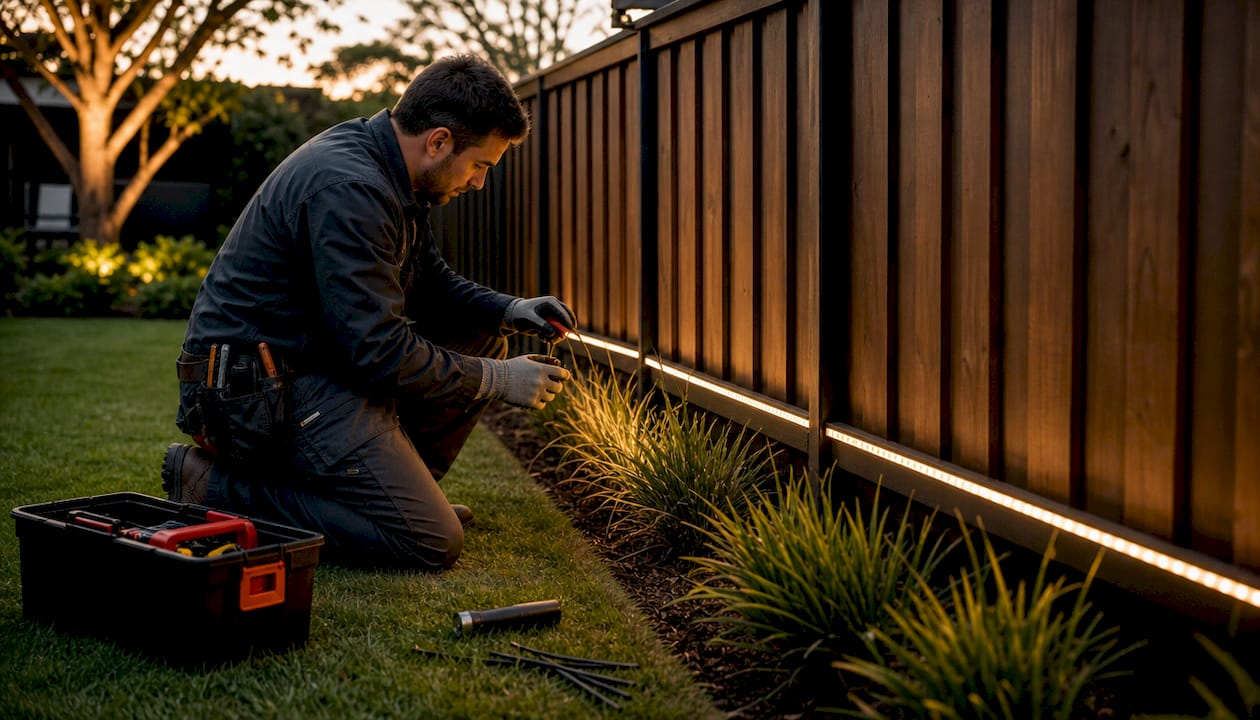
A systems approach to home lighting prioritizes behavioral needs over default architectural assumptions. Ask yourself how each area of your exterior gets used at night, then place light to serve that use.
Pro Tip: Use independent dimmers for each lighting layer. This lets you run a low-energy ambient setting on weeknights and switch to a full accent display for guests or holidays without rewiring anything.
For a step-by-step breakdown of how to apply accent lighting across your property, Dfwledpro’s accent lighting tutorial walks through the process from planning to fixture selection.
Layered lighting also pairs well with smart scheduling. Most app-controlled systems let you program color zones by time of day, day of week, or calendar event. You set it once and the system runs automatically. That consistency is what separates true home branding from occasional decoration.
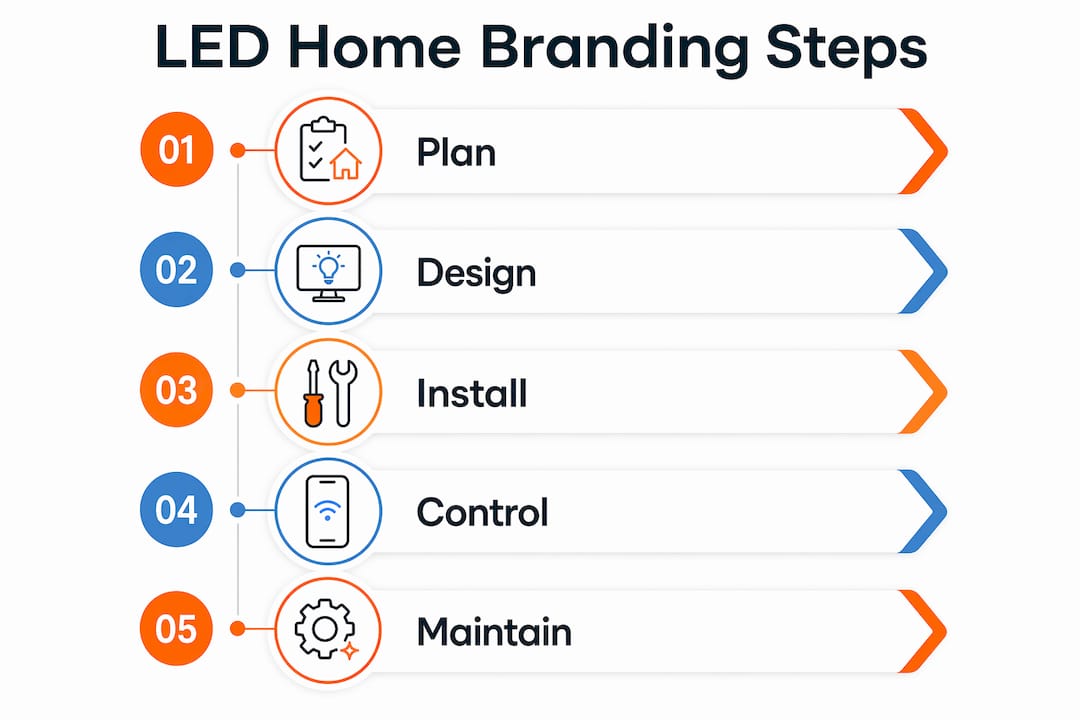
How to implement LED home branding from planning to installation
Getting LED home branding right starts before you buy a single fixture. The planning phase determines whether your system looks intentional or improvised.
Follow these steps to implement creative LED home branding effectively:
- Assess your exterior: Walk your property at night and photograph it. Note which features disappear in the dark and which already catch light well. Your roofline, entryway, columns, and address number are the highest-priority branding zones.
- Choose retrofit or new installation: Retrofit means adding LED systems to your existing exterior. New-build installation means planning lighting into construction or a major renovation. Retrofit works well for most homeowners and is how Dfwledpro approaches the majority of residential projects.
- Select the right system: Match voltage and control features to your goals. For roofline and architectural accents, a 24V smart LED system with app control is the right choice. For ambient and structural lighting, 120V line-voltage fixtures provide the power you need.
- Hire a professional installer: DIY installation of line-voltage systems carries real safety risk. Professional installation also ensures your system meets local electrical codes and performs as designed from day one.
- Program your schedule: Set a daily warm-white timer for your roofline and pathway lights. Add color profiles for holidays, sports seasons, or personal occasions. Most systems take under 30 minutes to program fully.
- Maintain the system: Quality permanent LED systems require minimal upkeep. Check connections once a year, clean fixture lenses seasonally, and update app firmware when prompted.
For guidance on safe installation practices, Dfwledpro’s LED safety resource covers the key steps homeowners should know before any electrical work begins.
A useful reference for understanding how perfect lighting layers work together is available for homeowners who want to deepen their design knowledge before committing to a system.
Key Takeaways
LED home branding works best when permanent, mains-powered systems combine layered ambient, task, and accent lighting with app-based control for year-round exterior performance.
| Point | Details |
|---|---|
| LED home branding defined | It is the use of customized LED lighting to create a permanent, illuminated identity for your home’s exterior. |
| Layered lighting is essential | Ambient, task, and accent layers each serve a distinct role and must work together for a balanced result. |
| Illuminated address signage matters | Lit house numbers guide emergency responders and guests and provide a safety function beyond aesthetics. |
| Professional installation wins | Mains-powered, professionally installed systems outperform DIY and solar alternatives in reliability and longevity. |
| Smart control adds year-round value | App-based scheduling replaces seasonal decoration and keeps your home looking consistent every night. |
What I’ve learned from watching homeowners get this wrong
Most homeowners approach exterior lighting as a decoration problem. They buy a set of solar path lights, hang some string lights in october, and call it done. That approach produces a home that looks festive for six weeks and forgettable for the other 46.
The homeowners who get LED home branding right think about it as infrastructure. They ask: “What do I want my home to communicate every night of the year?” That question leads to permanent systems, professional installation, and smart controls. It also leads to illuminated address signage, which is the single most overlooked element I see. Lit house numbers are not decorative. They are a safety feature that works for you every night without any effort.
The other mistake I see constantly is over-lighting. More fixtures do not mean better branding. A home with 12 poorly placed lights looks worse than one with four well-placed ones. Placement and direction matter more than quantity. Uplighting a single architectural column does more for your home’s appearance than flooding the entire facade with floodlights.
My honest advice: start with your roofline and your address number. Get those two elements right with a permanent, app-controlled system, and your home will look intentional and polished every single night. Add layers from there as your budget allows. This is not a project you need to complete all at once. It is a system you build over time.
— Adrian
Permanent LED lighting for your home, done right
Dfwledpro is the authorized JellyFish Lighting dealer for the Dallas-Fort Worth area, serving 35+ cities including Arlington, Fort Worth, Grand Prairie, and Mansfield. We install permanent, app-controlled LED systems on residential exteriors built to handle Texas weather year-round.
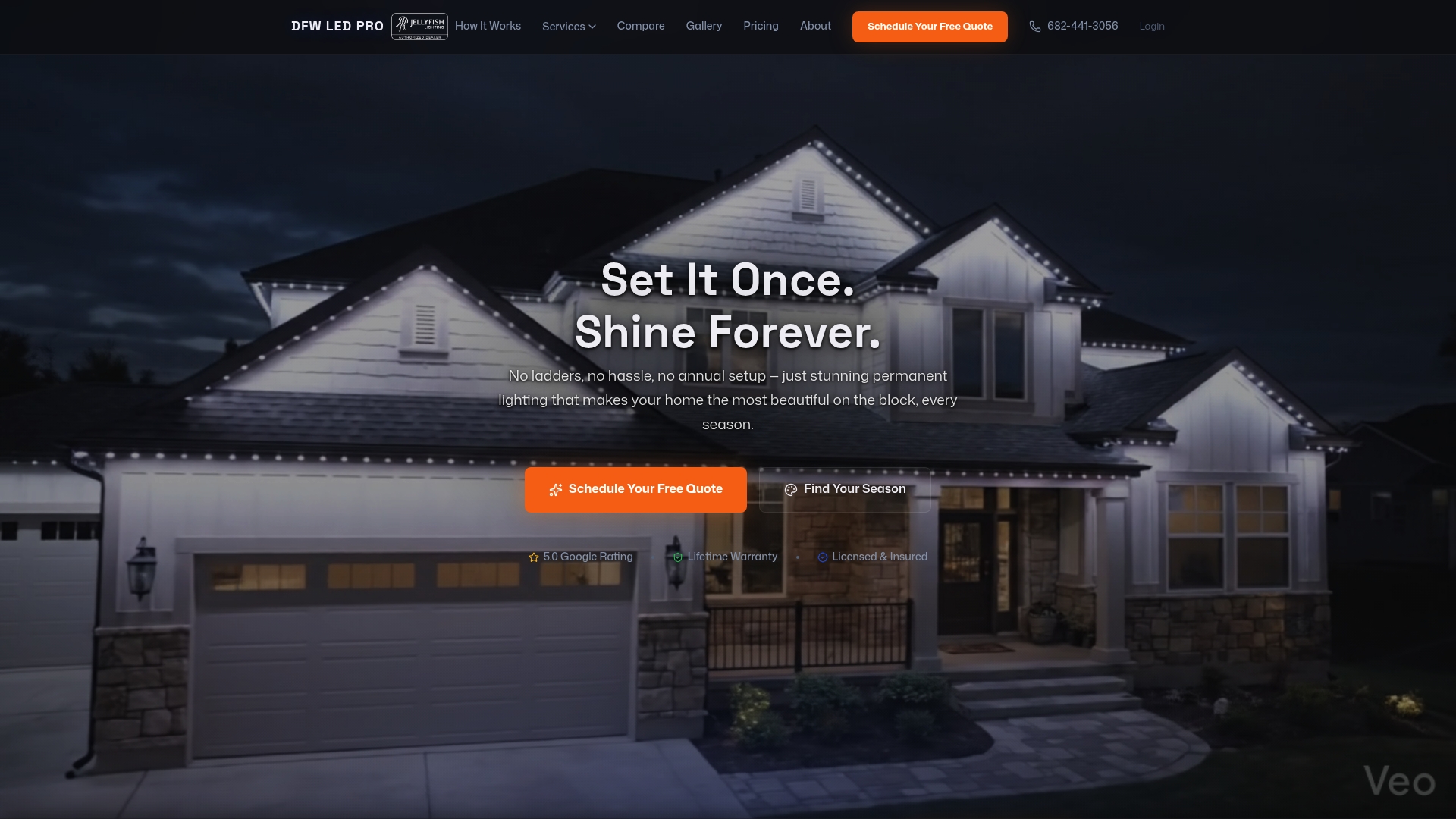
If you are ready to move from temporary decorations to a real exterior lighting system, we handle everything from design to installation. Homeowners in Lancaster can learn more about permanent LED installation in Lancaster, and Dallas-area homeowners can explore professional LED services in Dallas. Contact Dfwledpro to schedule a free consultation and see what your home looks like lit the right way.
FAQ
What is LED home branding in simple terms?
LED home branding is the use of permanent, customized LED lighting on your home’s exterior to create a consistent, attractive appearance at night. It includes roofline lights, illuminated house numbers, and architectural accents controlled by a smartphone app.
How long do permanent LED home branding systems last?
Quality mains-powered LED systems are built for year-round outdoor exposure and show zero failure over three or more years of continuous use, making them far more reliable than seasonal or solar alternatives.
Do I need a professional to install LED home branding?
Line-voltage systems require a licensed electrician or professional installer for safety and code compliance. Professional installation also ensures your system performs correctly and looks as designed from the start.
Can LED home branding work for a home-based business?
LED signs for home business use, including illuminated address numbers and branded color lighting, make a property easier to find and more memorable to clients. App-controlled systems let you switch between professional and personal lighting profiles instantly.
What is the difference between LED home branding and regular outdoor lighting?
Regular outdoor lighting focuses on function, such as security or pathway safety. LED home branding combines function with a deliberate aesthetic identity, using layered lighting, color control, and permanent fixtures to make your home recognizable and visually consistent every night.