Lighting Trends for Texas Homes in 2026
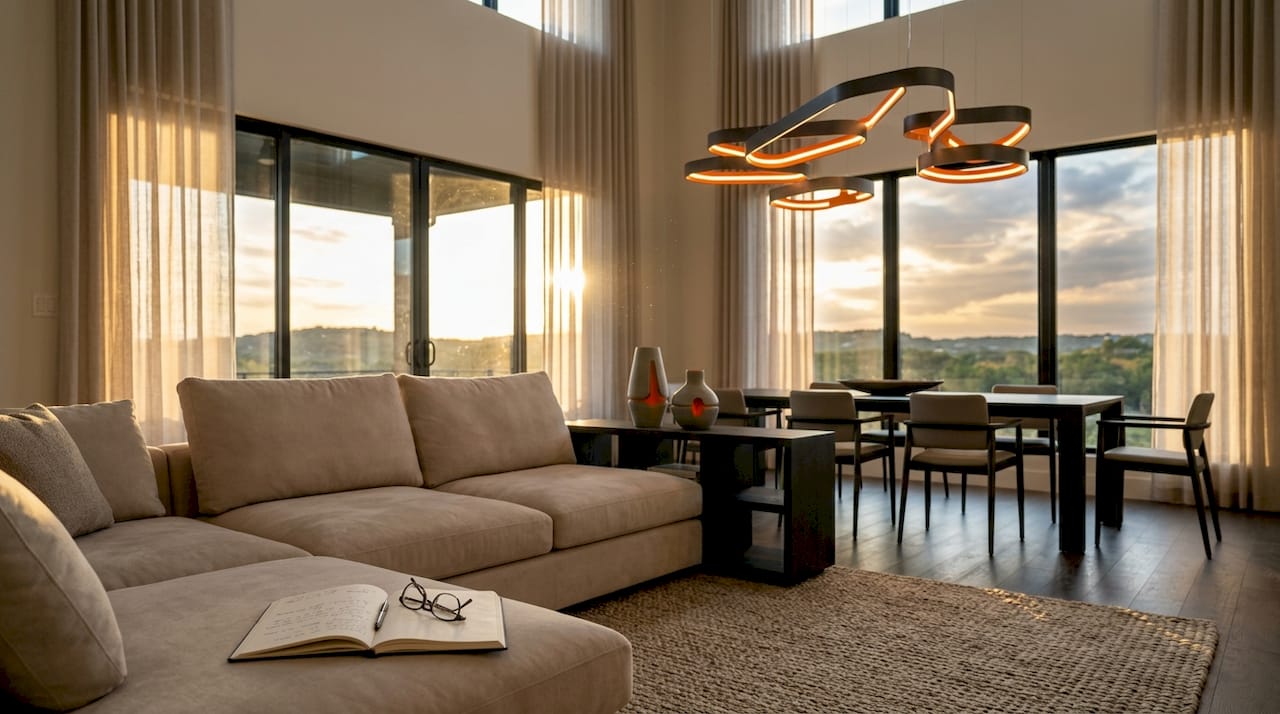
Texas home lighting in 2026 is defined by two parallel forces: bold sculptural fixtures that command attention indoors and weather-hardened, sustainable systems that perform outdoors year-round. The lighting trends for Texas homes this year move well beyond decorative choices. They reflect the reality of 100-degree summers, violent spring storms, and a growing awareness of light pollution across the state. Whether you are updating a living room in Fort Worth or adding permanent outdoor lighting in Midlothian, the decisions you make now will shape how your home looks, feels, and functions for years ahead.
1. What are the most popular indoor lighting trends for Texas homes?
Texas homeowners in 2026 are choosing fixtures with strong visual presence, using sculptural chandeliers and softly curved pendants to define open-concept spaces. This shift toward shape, scale, and visual weight is particularly practical in the large, open-layout homes common across the Houston and DFW markets, where a single fixture can anchor an entire room. Statement lighting is now the industry term for this category, and it covers everything from oversized rattan pendants to geometric metal chandeliers.
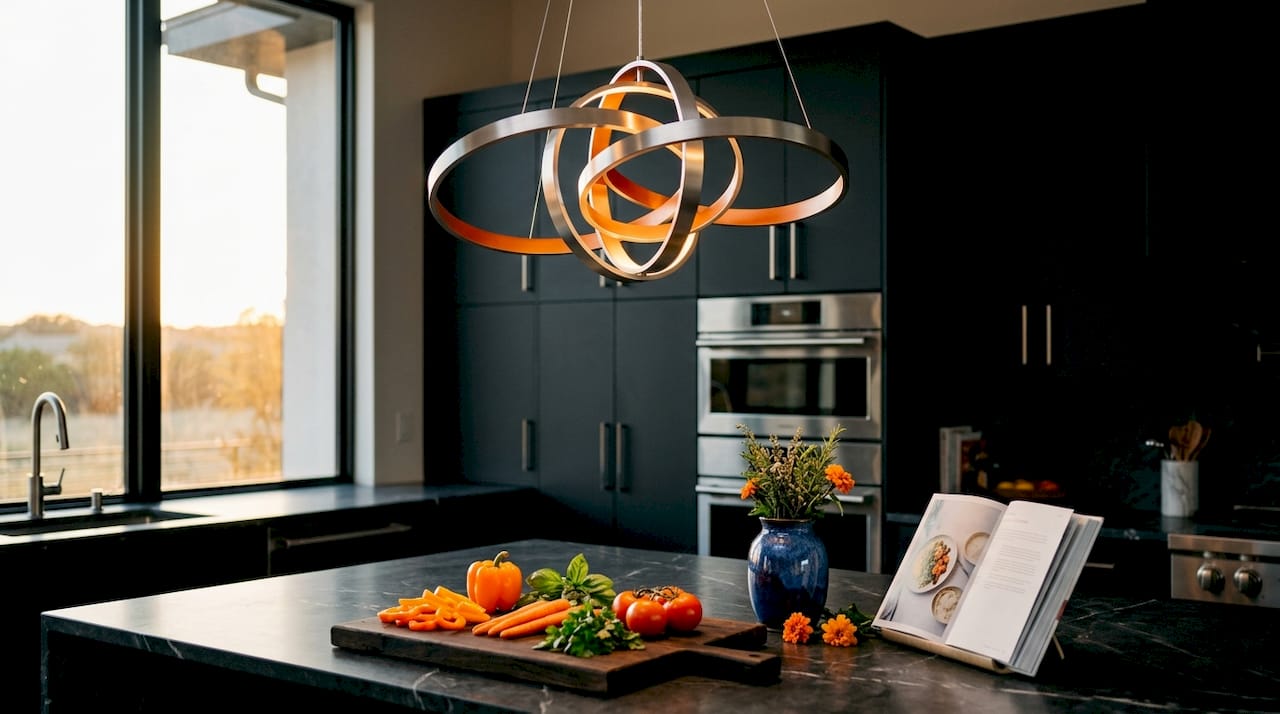
The materials driving this trend are natural and tactile. Wood, ceramic, tinted glass, and woven fibers are replacing the chrome and brushed nickel finishes that dominated the previous decade. These organic textures work especially well in Texas interiors, where warm earth tones and indoor-outdoor design flow are already popular. A ceramic pendant in a matte terracotta finish, for example, reads as both modern and regionally appropriate.
Layered lighting is the technique that ties these fixtures together. Rather than relying on a single overhead source, layered lighting combines ambient, task, and accent sources to create depth and warmth. This approach is what separates a well-designed Texas living room from one that simply has a nice chandelier.
- Statement pendants and sculptural chandeliers to define dining areas, kitchen islands, and entryways
- Natural materials including wood, ceramic, and tinted or smoked glass for warmth and texture
- Layered lighting combining recessed ambient light, task lighting, and accent fixtures
- Vintage-inspired designs with modern proportions, such as Edison-style bulbs in contemporary matte black frames
- Smart lighting integration for subtle, programmable ambiance control throughout the day
Pro Tip: When choosing a statement pendant for a Texas kitchen island, size up. A fixture that looks proportional in a showroom often reads as too small once installed above a wide island in an open-plan home.
2. How outdoor lighting should be adapted to Texas weather
Outdoor lighting durability is not optional in Texas. The state delivers UV radiation, humidity, hailstorms, and temperature swings that destroy fixtures not built for the conditions. IP65-rated fixtures are the minimum for ground-level outdoor use, providing dust-tight protection and resistance to water jets. For in-ground applications, IP67 is required, as it handles temporary submersion during heavy rain events.
The failure point for most outdoor lighting in Texas is not the bulb. It is the housing. Fixtures with marine-grade coatings resist the corrosion that humidity and coastal air accelerate. Impact-resistant lenses handle hail. Advanced thermal management systems prevent LED drivers from overheating during extended summer heat. These are not luxury features. They are baseline requirements for any fixture expected to last more than two seasons in a Texas yard.
Here is a practical comparison of IP ratings and their appropriate Texas applications:
| IP Rating | Protection Level | Best Texas Application |
|---|---|---|
| IP44 | Splash-resistant | Covered porch only |
| IP65 | Dust-tight, water jet resistant | Ground-level landscape, wall mounts |
| IP67 | Dust-tight, submersion to 1 meter | In-ground path lights, buried fixtures |
| IP68 | Continuous submersion | Pond or water feature lighting |
Modular fixture designs are worth prioritizing. When one component fails, you replace the module rather than the entire fixture. This approach reduces long-term maintenance costs significantly, which matters when you have 20 or more fixtures across a property.
Pro Tip: Always verify that a fixture carries a UL wet-location listing in addition to its IP rating. The IP rating tells you about physical protection; the UL wet-location listing confirms the electrical components meet safety standards for outdoor exposure.
3. Which outdoor lighting trends support sustainability in Texas
Outdoor lighting is evolving into functional, sustainable retreats, with lighting serving as both a comfort element and an energy strategy. Search interest in sustainable outdoor lighting is rising sharply, with native landscape searches up 59% and sustainable design searches up 42% in 2026. Texas homeowners are responding by moving toward solar-powered path lights, low-voltage LED systems, and fixtures designed to minimize light pollution.
DarkSky Texas defines responsible outdoor lighting through five core principles, and the most actionable one for homeowners is color temperature. Warm amber lighting at or below 2,200K is the standard for night-sky-friendly installations. This matters because standard “warm white” LED labels are not reliable. A bulb marketed as warm white may still measure 3,000K or higher, which contributes to sky glow and disrupts nocturnal wildlife.
“True night-sky-friendly lighting requires spectral verification at or below 2,200K and proper fixture direction to avoid glare.” — DarkSky Texas
The practical benefits of this approach extend beyond ecology. Aiming fixtures downward and using warm amber tones reduced scattered light by 99% in a documented Texas case study from the Permian Basin. That is not a marginal improvement. It demonstrates that responsible placement and color temperature selection produce measurable results for any property.
Key principles for sustainable outdoor lighting in Texas:
- Use fixtures rated at or below 2,200K for all exterior applications
- Aim all light downward and shield sources to prevent upward scatter
- Choose solar or low-voltage LED systems to reduce energy draw
- Select fixtures with motion sensors or timers to limit unnecessary runtime
- Consult DarkSky Texas resources before specifying fixtures for new installations
4. Biophilic and circadian-aligned lighting for Texas gardens
Biophilic design and circadian alignment in outdoor lighting create inviting, health-supportive environments that modern Texas homeowners are actively seeking. This means using gentle, non-harsh light sources that mimic the warm glow of late-afternoon sun rather than the blue-white intensity of commercial floodlights. Landscape lighting expert Anstey, cited by House Beautiful, describes the goal as lighting that feels like a natural extension of the garden rather than an imposition on it.
In practical terms, this translates to low-mounted fixtures that graze across plant textures, warm-toned uplighting on specimen trees, and path lights that guide without glaring. The effect is a garden that feels usable and comfortable after dark, which is a genuine quality-of-life improvement in Texas, where outdoor living extends well into the evening for most of the year.
Circadian alignment adds another layer. Lighting that shifts from neutral white in the early evening to deep amber by 9 or 10 p.m. supports natural melatonin production. Smart outdoor lighting controls make this automatic. You can learn more about LED lighting colors for South DFW to understand which color temperatures work best at each time of day.
5. How to combine style and function with modern Texas lighting solutions
The best lighting ideas for Texas homes treat style and function as the same decision, not competing priorities. A sculptural pendant that defines your kitchen island should also deliver the right color temperature for food preparation. An outdoor wall sconce that looks great on your facade should also carry an IP65 rating and a UL wet-location listing. These requirements are not in conflict. The fixture market in 2026 has caught up to the demand.
Smart lighting integration is where style and function converge most clearly. Modern systems adjust throughout the day, shifting color temperature and intensity to support both mood and circadian health without requiring manual input. In a Texas home with large windows and significant solar gain, a smart system can compensate for the harsh midday light by warming and dimming interior fixtures automatically.
Zone differentiation is the technique that makes open-concept Texas homes feel intentional rather than cavernous. Using lighting zone control to separate the kitchen, dining, and living areas with distinct fixture types and color temperatures gives each space its own character without requiring walls. A statement chandelier over the dining table, recessed warm-white fixtures in the living area, and under-cabinet task lighting in the kitchen create three distinct zones within one open floor plan.
Here is a comparison of interior lighting approaches for Texas open-plan homes:
| Approach | Best For | Color Temperature |
|---|---|---|
| Statement pendant | Dining and kitchen islands | 2,700K to 3,000K |
| Recessed ambient | Living and hallway areas | 2,700K warm white |
| Under-cabinet task | Kitchen countertops | 3,000K to 3,500K |
| Accent wall sconces | Entryways and art walls | 2,200K to 2,700K |
Energy-saving controls add the final layer. Occupancy sensors in utility rooms, dimmer switches on all primary fixtures, and programmable schedules for outdoor lighting all reduce consumption without sacrificing the visual result. For a full breakdown of efficiency options, the lighting efficiency guide for DFW homeowners covers the specifics in detail.
Key takeaways
Texas home lighting in 2026 requires fixtures that deliver visual impact indoors, withstand extreme weather outdoors, and meet growing standards for energy efficiency and night-sky responsibility.
| Point | Details |
|---|---|
| Statement lighting defines spaces | Sculptural pendants and chandeliers anchor open-concept Texas interiors with shape and scale. |
| IP ratings are non-negotiable outdoors | Use IP65 minimum for ground-level fixtures and IP67 for any in-ground installation in Texas. |
| 2,200K is the sustainability threshold | Warm amber lighting at or below 2,200K reduces light pollution and supports local ecosystems. |
| Layered lighting beats single-source | Combining ambient, task, and accent fixtures creates depth and comfort in Texas living spaces. |
| Smart controls multiply fixture value | Programmable systems adjust color temperature and intensity automatically for mood and efficiency. |
What I have learned installing lighting across North Texas
I have spent years working with Texas homeowners on lighting decisions, and the pattern I see most often is this: people invest in beautiful interior fixtures and then install whatever outdoor lighting is cheapest. That mismatch costs them twice. The cheap outdoor fixtures fail within two seasons, and the replacement cost exceeds what a quality IP65-rated fixture would have cost upfront.
The other mistake I see regularly is treating “warm white” as a meaningful specification. It is not. Two fixtures both labeled warm white can measure 2,700K and 3,200K respectively, and that 500K difference is visible and significant, especially outdoors at night. If you are trying to achieve a dark-sky-friendly installation or a biophilic garden atmosphere, you need to verify the actual Kelvin rating, not trust the label.
What I find genuinely exciting about the 2026 trends is that sustainability and style are finally pointing in the same direction. Warm amber lighting at 2,200K looks beautiful and reduces light pollution. IP67-rated fixtures with marine-grade coatings look premium and last a decade. Smart controls that shift color temperature through the evening support circadian health and reduce energy bills. You do not have to choose between a home that looks good and one that performs well. The fixtures exist to do both, and the outdoor LED lighting checklist for DFW is a practical starting point for getting the specification right before you buy anything.
— Adrian
How Dfwledpro can help you get it right
Dfwledpro is the official authorized JellyFish Lighting dealer for the Dallas-Fort Worth metroplex, serving 35+ cities including Arlington, Fort Worth, Mansfield, Grand Prairie, Burleson, and Midlothian. We install permanent outdoor LED lighting systems built specifically for Texas weather, with fixtures rated for the heat, humidity, and storm exposure that North Texas delivers year-round.
If you are ready to move from inspiration to installation, our team provides expert guidance on fixture selection, color temperature, IP ratings, and smart control integration. We back every installation with a lifetime warranty on JellyFish Lighting components. Whether you need permanent LED lights in Dallas or a custom installation in Lancaster, we handle the full project from specification through completion. Contact Dfwledpro to schedule a consultation and get a lighting plan built for your home and your climate.
FAQ
What indoor lighting styles are trending for Texas homes in 2026?
Sculptural statement pendants, natural material fixtures in wood and ceramic, and layered lighting combining ambient and accent sources are the leading interior trends. Smart lighting integration for automatic color temperature adjustment is also growing rapidly.
What IP rating do I need for Texas outdoor lighting?
Ground-level outdoor fixtures require a minimum IP65 rating for dust and water jet protection. In-ground fixtures need IP67, which handles temporary submersion during heavy rain events common in Texas.
How do I choose night-sky-friendly outdoor lighting in Texas?
Select fixtures with a color temperature at or below 2,200K and aim all light downward using shielded housings. DarkSky Texas recommends verifying the actual Kelvin rating rather than relying on “warm white” labels, which vary significantly between manufacturers.
Are solar-powered outdoor lights practical for Texas homes?
Yes. Texas receives abundant sunlight, making solar-powered path and accent lights a practical choice for low-traffic areas. For primary security and architectural lighting, low-voltage LED systems with smart controls offer more consistent performance and greater design flexibility.
How does layered lighting work in an open-concept Texas home?
Layered lighting uses distinct fixture types, including recessed ambient lights, statement pendants, and accent sconces, at different heights and color temperatures to define separate zones within one open floor plan. This technique creates visual structure without requiring walls or partitions.