Outdoor LED lighting checklist: Optimize your DFW setup
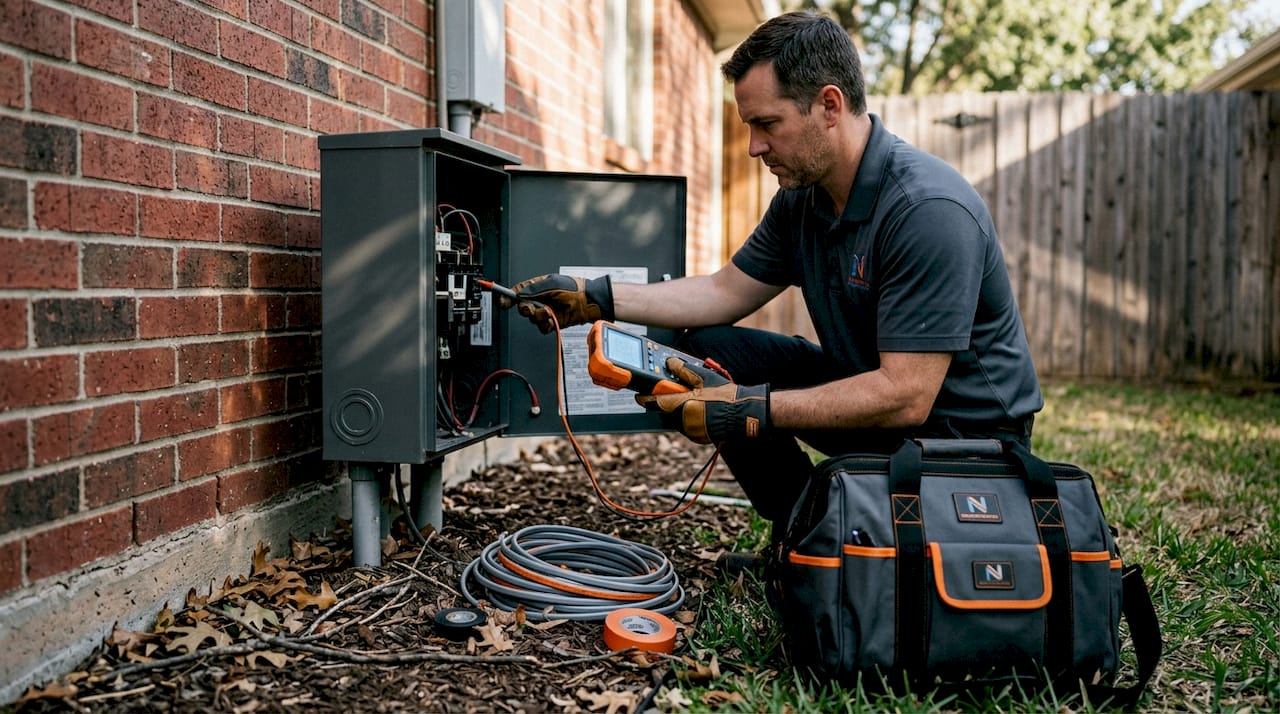
Getting permanent outdoor LED lighting right in the Dallas-Fort Worth area is more demanding than most homeowners expect. Between our brutal summer heat, surprise ice storms, strict HOA guidelines, and city light ordinances, there are a lot of moving parts to manage before a single fixture ever goes up. This checklist covers everything you need to evaluate: power requirements, weather-rated fixture selection, smart layout planning, and side-by-side comparisons of your best options. Follow these steps and you will avoid the costly mistakes we see all too often across Arlington, Fort Worth, Mansfield, and the rest of the metroplex.
Table of Contents
- Evaluate power requirements and safety
- Select fixtures for DFW’s climate
- Plan layout and mounting for lasting results
- Lighting options comparison: At-a-glance checklist
- The overlooked essentials for DFW outdoor lighting
- Upgrade your outdoor lighting with DFW LED Pro
- Frequently asked questions
Key Takeaways
| Point | Details |
|---|---|
| Power planning essentials | Always size your transformer using the 80% capacity rule and low voltage for safety. |
| Weatherproof fixture selection | Choose LED fixtures rated for extreme heat, freeze-thaw, hail, and wind in DFW. |
| Avoid light trespass issues | Confirm your lighting stays within local property line limits to prevent complaints and fines. |
| Layout maps durability | Careful placement and mounting decisions boost performance and reduce maintenance. |
| Professional support matters | Expert help ensures your system meets local codes, lasts longer, and looks great. |
Evaluate power requirements and safety
Power planning is the foundation of any permanent LED system. Get this wrong and you are looking at tripped breakers, damaged transformers, or worse, a fire hazard. Getting it right starts with a few straightforward calculations and some basic safety hardware.
Here are the key steps for assessing your power setup:
- Calculate your total fixture wattage. Add up the wattage for every fixture you plan to install. Include future zones if you think you might expand the system later.
- Apply the 80% capacity rule. Multiply your total wattage by 1.25 to get the minimum transformer size you need. For example, a 200-watt lighting system needs at least a 250-watt transformer. This rule is part of Texas outdoor electrical standards and prevents transformers from running at max load, which shortens their lifespan significantly.
- Choose low-voltage (12V or 24V) systems. Low-voltage LED systems are far safer for residential outdoor use than line-voltage alternatives. They reduce the risk of electrical shock during installation and maintenance, and they are gentler on your home’s electrical panel.
- Install GFCI protection on every outdoor circuit. Ground Fault Circuit Interrupter outlets are required by Texas weatherproof electrical code for all outdoor installations. They cut power instantly if moisture reaches the circuit, protecting both your family and your equipment.
- Check your electrical panel capacity. Before adding a new lighting system, verify that your panel has enough available amperage. A licensed electrician can confirm this during a pre-installation assessment.
- Document your circuit layout. Map out which circuits serve which zones so that future troubleshooting or expansion is straightforward.
Pro Tip: When sizing your transformer, always plan for at least 20% more capacity than your current needs. If you ever want to add landscape lights, pathway lighting, or holiday displays, you will already have the headroom to do it without buying new equipment.
The most common power mistake we see on installs across Cedar Hill and Crowley is a transformer that is right-sized for today but leaves zero room for growth. Revisiting our outdoor lighting tips for south DFW properties gives you a clearer picture of how these systems scale up over time.
With power safety established, the next step is choosing fixtures that can survive Texas weather extremes.
Select fixtures for DFW’s climate
North Texas weather is not gentle. Summer temperatures regularly climb past 100°F, and then we get surprise freezes in January that crack and warp materials not rated for thermal cycling. Choosing the wrong fixtures means you will be replacing them within two to three years. Here is what to look for.
“For DFW, fixtures rated for 100°F+ and freeze-thaw cycles are essential. Anything less is a compromise that will cost you more in the long run.”
Must-have fixture features for DFW installs:
- Heat resistance rated for 100°F+ continuous operation. Many budget LED fixtures are rated for 75°F to 85°F ambient temperatures. In a DFW summer, that is not enough. Look for fixtures explicitly rated for high-ambient-temperature performance.
- IP67 or higher waterproof rating. IP67 means the fixture can withstand submersion in water up to one meter for 30 minutes. In practice, this handles every rain event, hose spray, or standing water scenario you will encounter here.
- Freeze-thaw cycle protection. Fixtures with sealed housings and materials rated for thermal expansion prevent cracking when temperatures swing 50°F or more in a single day, which happens regularly in this region.
- Hail and wind-rated mounting hardware. DFW sits in a zone with frequent severe storms. Fixtures and their mounting points need to be rated for high-wind conditions and impact from hail, which can be significant on spring storms.
- UV-stabilized housing materials. Prolonged Texas sun degrades plastics and composites that are not UV-stabilized. Look for polycarbonate or aluminum housings specifically treated for UV resistance.
Light trespass is another critical factor to address during fixture selection. Local light trespass regulations generally cap illumination at the property line between 0.5 and 1 foot-candle. Fixtures with tight beam control and adjustable aim let you keep all your light on your property and out of your neighbor’s windows.
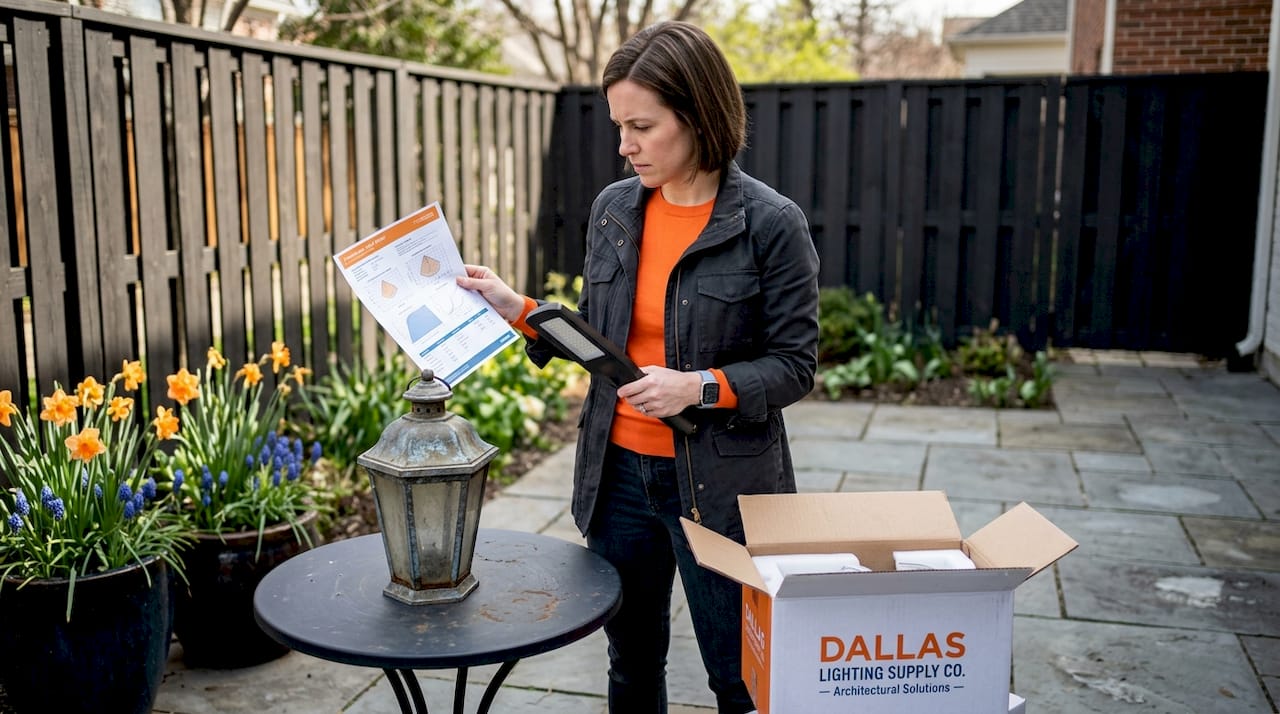
Pro Tip: Always request the photometric data sheet from the manufacturer before purchasing. This document shows you exactly where the light falls and at what intensity. If a manufacturer cannot provide this, that is a red flag worth taking seriously.
Selecting the right Dallas permanent LED lights involves matching these specs to your property’s specific exposure, orientation, and local code requirements. Reviewing LED curb appeal tips for south DFW homes will also help you understand how fixture choices directly affect energy costs and visual appeal.
Once your fixtures are selected, it is time to map out installation and placement for optimal performance.
Plan layout and mounting for lasting results
A strong fixture choice paired with a poor layout is a recipe for frustration. Placement decisions affect light quality, system reliability, and your ability to maintain the system without damaging your home.
Key layout planning tasks:
- Map your lighting zones. Divide your property into distinct zones: front elevation, garage area, roofline, landscaping, pathways, and any entertainment areas. Each zone may have different brightness needs and mounting constraints.
- Estimate fixture count and total wattage per zone. Once you know how many fixtures go where, you can confirm your transformer sizing from the power planning step.
- Identify challenging mounting locations. Brick and stone facades, tile roofs, metal gutters, and mature trees all require specific mounting hardware and techniques. For Fort Worth LED installations on older homes with original masonry, this step saves significant rework time.
- Plan wire runs for minimal visibility. Route cables along natural architectural lines. Use conduit in exposed areas and ensure all penetrations through exterior walls are sealed against moisture.
- Mark utility locations before any drilling or staking. Call 811 before any ground-level installation to identify buried lines.
Mounting hardware and weatherproof ratings comparison:
| Mounting type | Best application | Weatherproof rating | Thermal expansion tolerance | Recommended for DFW |
|---|---|---|---|---|
| Aluminum soffit clips | Soffit and eave runs | Excellent | High | Yes |
| Stainless steel gutter hooks | Gutter-line placement | Excellent | Moderate | Yes |
| UV-stabilized polymer brackets | Brick and stone walls | Good | High | Yes with proper anchors |
| Standard plastic clips | General use | Poor | Low | No |
| Direct-screw aluminum mounts | Fascia boards | Excellent | High | Yes |
Avoiding common placement mistakes matters as much as choosing the right hardware. Do not place fixtures where HVAC condensation drips on them regularly. Avoid locations where landscaping will grow into the light path within two to three years. Keep fixtures away from areas where seasonal decorations or ladders are likely to make contact. Check back on our guide to durable outdoor results for more specifics on mounting best practices across different home styles.
The right layout sets the stage for a system that delivers both function and beauty. Now let’s compare your options at a glance.
Lighting options comparison: At-a-glance checklist
Understanding your fixture and system options side by side helps you make a confident final decision. Not every product or system type is a good match for DFW’s specific demands, and the local light trespass standards that limit output to 0.5 to 1 foot-candle at the property line further narrow the field.
Permanent LED system options for DFW homeowners:
| Feature | JellyFish permanent LED | Standard permanent LED strip | Traditional rope light | Solar accent lighting |
|---|---|---|---|---|
| Heat resistance | 100°F+ rated | Varies by brand | Limited (70°F typical) | Limited |
| Freeze-thaw protection | Yes, sealed housing | Partial | No | No |
| Waterproof rating | IP67 | IP65 typical | IP44 typical | IP44 to IP65 |
| Hail/wind-rated mounts | Yes | Optional | No | No |
| App-controlled color/timing | Yes, full RGB | Limited | No | No |
| Energy efficiency | Very high | High | Low to moderate | High |
| Warranty | Lifetime on hardware | 1 to 3 years typical | 1 year typical | 1 to 2 years |
| HOA code compliance | Easy to configure | Possible with effort | Often non-compliant | Usually compliant |
| Light trespass control | Precise beam aim | Moderate | Poor | Poor |
Quick pros and cons:
- JellyFish permanent LED: Full weather protection, precise light control, app scheduling, lifetime warranty. Higher upfront investment than basic options.
- Standard permanent LED strip: Good energy efficiency and weather ratings in quality brands, but fewer control options and shorter warranty coverage.
- Traditional rope light: Low cost initially, but poor weather ratings, high energy use, and limited durability in DFW conditions.
- Solar accent lighting: Zero wiring, but inconsistent output during cloudy stretches and limited placement flexibility.
Final checklist before you decide:
- Does the fixture meet IP67 or better for waterproofing?
- Is it rated for 100°F+ continuous ambient temperature?
- Does the mounting hardware include hail and wind resistance?
- Can you control light output to stay within property line limits?
- Does the system include GFCI-safe wiring and low-voltage components?
- Is warranty coverage long enough to justify the investment?
Our team handles Cleburne LED installations and properties across the full metroplex, and the JellyFish system consistently performs better than alternatives in real-world DFW conditions on every point in this checklist.
The overlooked essentials for DFW outdoor lighting
Here is something we rarely see discussed in generic lighting guides: the biggest failures we encounter on local installs are almost never about the fixture itself. They are about skipped steps in site preparation and a casual attitude toward local regulations.
Weatherproofing is one area where homeowners consistently underestimate the work involved. Sealing every wire penetration, protecting every junction box, and verifying that no moisture pathway exists into the system takes real time. When it gets rushed, water finds a way in and the repair bill two years later is always more painful than the hour it would have taken upfront. Our durable lighting tips go deeper on this topic and are worth reviewing before any installation starts.
Light trespass is the single most common regulatory mistake we see. Homeowners install a beautiful system, get a complaint from a neighbor, and then discover that their municipality enforces light spillover limits they never knew about. Some HOAs in Mansfield, Grand Prairie, and Burleson have specific rules on top of city codes. Ignoring this step has led to fines and forced fixture relocations that cost more than the original installation.
“A checklist isn’t just about installation — it’s about long-term peace of mind.”
Do not rely solely on manufacturer claims when evaluating weather resistance. We have tested products marketed as “Texas-ready” that failed in the first summer. Check community forums, local reviews, and ask your installer what they have seen perform over multiple years in DFW specifically. Real-world local performance data matters far more than spec sheets alone.
The other overlooked factor is scheduling. The best time to install is spring or fall when temperatures are moderate. Installing during peak summer heat or after a winter storm is harder, more expensive, and harder on the equipment during the initial setup period.
Upgrade your outdoor lighting with DFW LED Pro
Ready to turn your checklist into reality? Working with a team that knows DFW’s climate, codes, and HOA requirements from the ground up makes every step on this list easier and faster to complete.
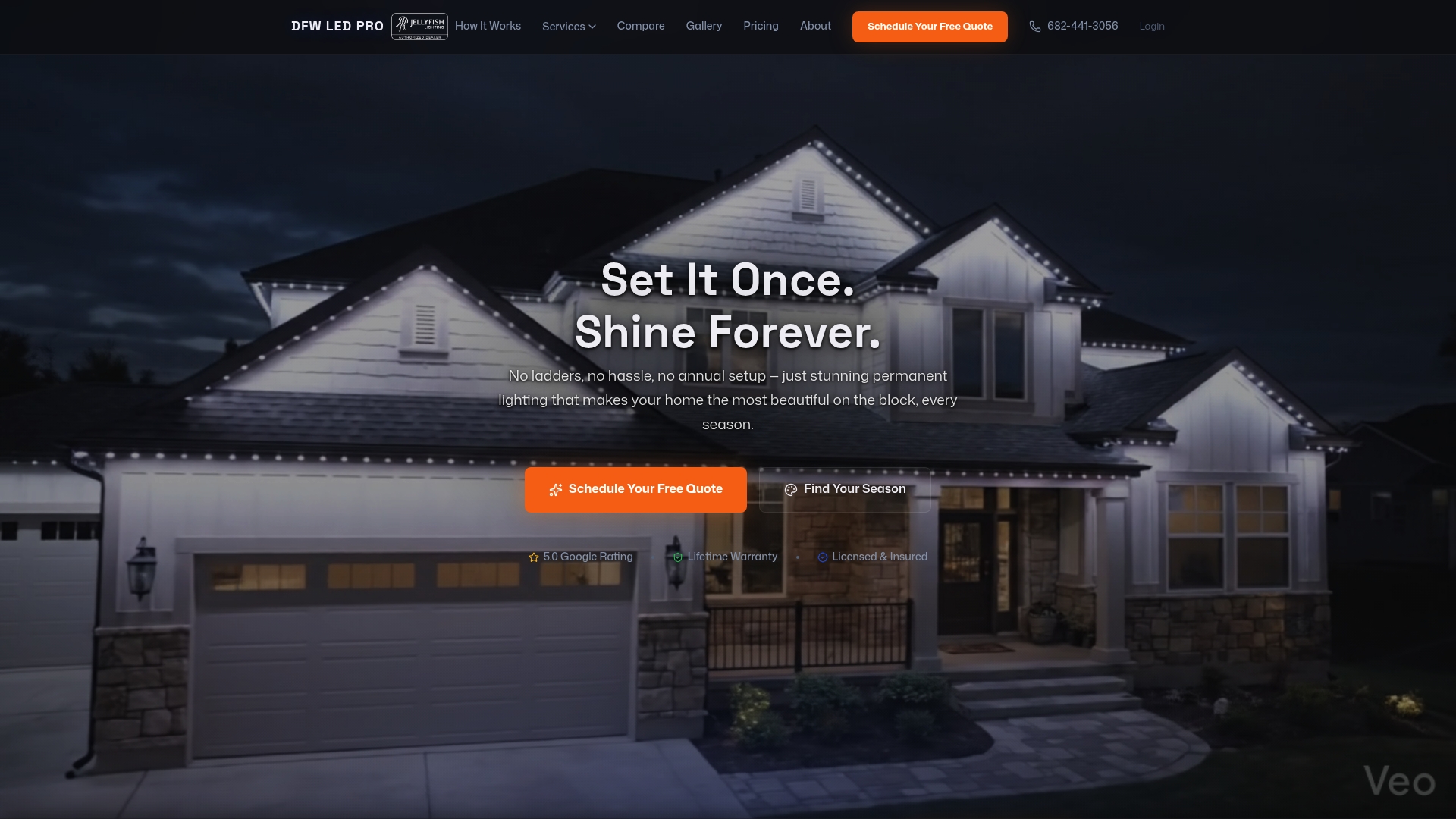
At DFW LED Pro, we handle everything from power planning and transformer sizing to custom fixture placement and light trespass verification. Our Dallas LED installations and Fort Worth installations are built to perform through every Texas weather extreme, backed by the JellyFish lifetime hardware warranty. We also specialize in JellyFish patio lighting for outdoor living spaces that need both beauty and durability. Contact us today to schedule your free consultation and get a system designed specifically for your home.
Frequently asked questions
How do I calculate the transformer size for my outdoor LED lighting?
Multiply your total fixture wattage by 1.25 using the 80% capacity rule, then choose a low-voltage 12V or 24V transformer rated at or above that number for safe, reliable operation.
What types of LED fixtures best handle Dallas-Fort Worth weather?
Choose fixtures rated for 100°F+ with freeze-thaw protection, IP67 or higher waterproofing, and hail and wind-rated mounting hardware to handle DFW’s full range of weather conditions.
How can I avoid light trespass and neighbor complaints?
Ensure your lighting stays within 0.5 to 1 foot-candle at the property line by using fixtures with precise beam control and checking your local municipality’s specific ordinance before installation.
Do I need GFCI protection for my outdoor lighting system?
Yes, GFCI protection is required for all outdoor electrical installations per Texas electrical standards, and it is your primary defense against shock hazards when moisture contacts your outdoor circuits.