Best outdoor LED lighting controls for Dallas-Fort Worth
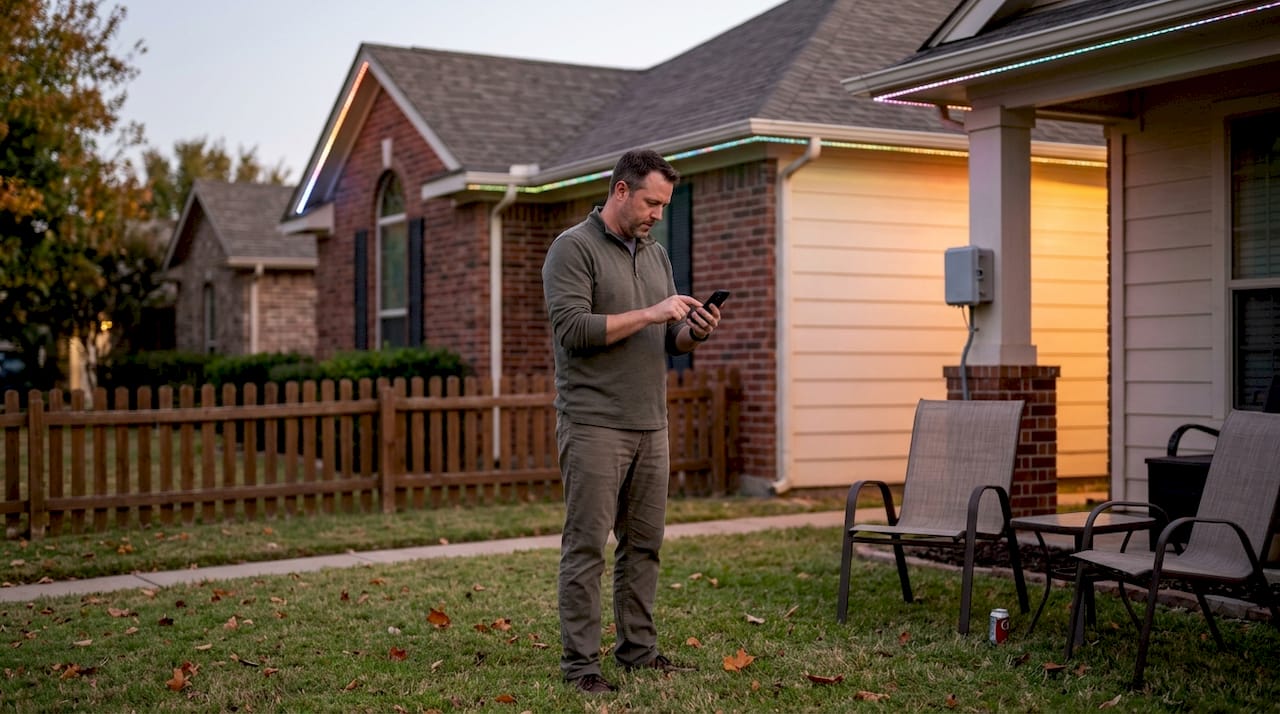
Dallas-Fort Worth homeowners face a real challenge when shopping for outdoor LED lighting controls. Texas summers push temperatures past 100°F, spring storms roll in fast, and properties range from compact suburban lots in Mansfield to sprawling acreage in Midlothian. A lighting control system that works perfectly in a mild climate can fail, flicker, or frustrate you within one Texas summer. This guide breaks down exactly what to evaluate, which systems perform best in DFW conditions, and how to match the right solution to your specific property so you get beautiful, energy-efficient results that actually last.
Table of Contents
- How to evaluate outdoor lighting control solutions
- Top outdoor LED lighting control solutions in Dallas-Fort Worth
- Choose the right lighting controls for your home
- Expert tips for maximizing energy savings and aesthetics
- Our take: What most guides miss about lighting controls in DFW
- Transform your outdoor lighting in Dallas-Fort Worth
- Frequently asked questions
Key Takeaways
| Point | Details |
|---|---|
| Prioritize weatherproofing | Outdoor lighting controls in Texas must have IP65+ ratings to survive harsh weather. |
| Maximize energy efficiency | Sensor-based dimming can cut lighting power use by up to 75 percent. |
| Balance customization and reliability | App-based systems offer advanced features but premium hub options can be more reliable. |
| Consult local experts | Professional installation ensures lighting controls are compatible and safe for Texas properties. |
How to evaluate outdoor lighting control solutions
Choosing a lighting control system is not just about picking an app you like. For Dallas-Fort Worth homeowners, the right framework starts with a few non-negotiable criteria.
Energy efficiency is the first filter. The control method you choose, whether sensor-based, timer-driven, or manual, directly affects your monthly electricity bill. Automatic dimming sensors reduce energy consumption by up to 75.65%, making them one of the most impactful upgrades you can make to any outdoor lighting setup. That kind of saving adds up fast over a Texas summer when your lights are running longer hours.
Weather resistance is non-negotiable in DFW. Texas storms bring heavy rain, hail, and humidity that destroy underrated electronics quickly. Any control device mounted or wired outdoors needs a minimum IP65 rating, meaning it is fully dust-tight and protected against water jets from any direction. For fixtures near pool areas or low-lying zones that flood, IP67 or higher is worth the investment.
Here are the core criteria to run through before committing to any system:
- Control type: App-based, RF (radio frequency), timer, or sensor-driven
- Weather rating: IP65 minimum for all outdoor-mounted components
- Range: Wi-Fi controls top out around 200-300 ft; RF systems extend much farther
- Wiring compatibility: Some dimmers require a neutral wire that older homes may lack
- Outlet type: Plug-in systems need GFCI outlets, which are required by code near water
- Warranty coverage: Look for warranties that cover outdoor use specifically
- Aesthetic fit: Controls and fixtures should complement your home’s exterior, not clash with it
For communication technology, you have three main options. Wi-Fi-based controls are easy to set up and integrate with voice assistants, but signal strength drops across large yards. RF systems use dedicated radio signals and maintain reliability over longer distances, even through walls and landscaping. App-based proprietary systems, like those used by JellyFish Lighting, combine the best of both by using purpose-built software with optimized hardware.
Pro Tip: Before purchasing any system, check whether your outdoor outlets are GFCI-protected and whether your home wiring includes a neutral wire at the switch location. These two factors determine compatibility with most modern dimmers and smart controls. For more lighting tips from experts, browse our full resource library.
For smart lighting ideas that blend controls with interior style, it helps to think about your outdoor zones the same way you would interior rooms.
Top outdoor LED lighting control solutions in Dallas-Fort Worth
With selection criteria in hand, let’s explore leading control solutions and their fit for Dallas-Fort Worth homes.
App-based systems are the most popular starting point. Brands like Govee offer affordable color-changing LED strips with smartphone control, but these are consumer-grade products not built for permanent outdoor installation in Texas weather. Trimlight is a step up, offering professionally installed permanent lighting with app control, but its color customization and zone management are more limited compared to premium systems.
JellyFish Lighting, the system we install across DFW, uses a proprietary app paired with weatherproof LED fixtures rated for long-term outdoor use. It allows pixel-level color control, scene scheduling, and full automation from your phone. This is the control depth that serious homeowners want when they are investing in permanent lighting.
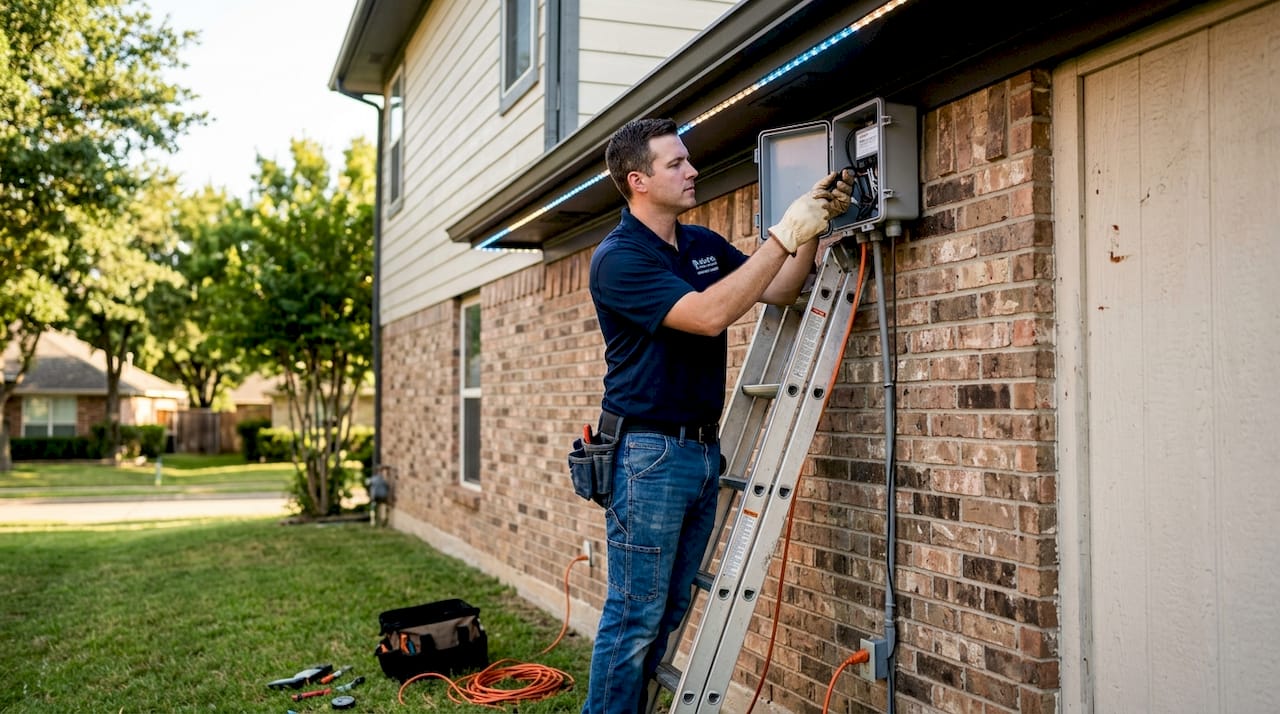
Hub-based systems like Lutron are excellent for whole-home integration, but they are designed primarily for indoor and low-voltage landscape lighting. Lutron’s Caséta and RadioRA lines excel at dimming porch lights and path lighting but are not designed for the kind of full-facade programmable color displays that JellyFish delivers.
Here is a quick breakdown by system type:
- Govee/consumer Wi-Fi strips: Low cost, limited weather durability, good for covered patios only
- Trimlight: Professionally installed, decent app, limited zone control
- JellyFish Lighting: Permanent, pixel-level control, strong weatherproofing, full scheduling
- Lutron Caséta: Excellent dimming, best for landscape and porch lights, not for color displays
- Sensor-only systems: Automatic and energy-efficient but no color or scene customization
For smart home lighting integration with platforms like Alexa, Google Home, or Control4, JellyFish Lighting supports voice commands and smart home routines out of the box.
Wi-Fi-based controls have limited range of 200-300 ft and may be unreliable long-term outdoors, which is a real problem for larger DFW properties where the router signal simply does not reach the back fence line.
Pro Tip: If your property is larger than a quarter acre, prioritize RF or proprietary hub-based systems over standard Wi-Fi controls. You will avoid the frustration of dead zones and dropped connections in your outdoor zones.
Choose the right lighting controls for your home
Once you know your options, it is important to compare how each fits your unique property. No two DFW homes are identical, and the right control system depends on your layout, budget, and what you actually want your lighting to do.
Here is a side-by-side comparison to guide your decision:
| Homeowner situation | Best control type | Key consideration |
|---|---|---|
| Small lot, covered patio only | Consumer Wi-Fi app | Budget-friendly, check IP rating |
| Large yard, complex zones | RF or proprietary hub | Range and zone control matter most |
| Whole-home smart integration | Lutron or JellyFish | Check compatibility with existing system |
| Seasonal and holiday displays | JellyFish Lighting | Permanent install, scene scheduling |
| Energy savings focus | Sensor-driven dimming | Pair with scheduling for maximum savings |
Texas homes require IP65+ ratings for outdoor electronics due to unpredictable weather, so always verify the rating on every component, not just the fixture itself. The control module, junction boxes, and wire connectors all need to meet that standard.
Follow these steps to evaluate your home’s compatibility before buying:
- Walk your property and map every lighting zone you want to control separately
- Identify whether your outdoor outlets are GFCI-protected
- Check your home’s Wi-Fi signal strength at the farthest outdoor point
- Confirm whether your switch locations include a neutral wire
- Review your HOA guidelines for lighting color, brightness, and fixture placement
- Set a realistic budget that includes installation, not just hardware
One of the most common mistakes we see is homeowners buying a control system before checking wiring compatibility. A smart dimmer that requires a neutral wire will not work in a two-wire switch box. That means extra cost and frustration on installation day.
For a Dallas LED installation that handles all of these compatibility checks upfront, working with a local professional saves time and avoids costly rework.
Expert tips for maximizing energy savings and aesthetics
Finally, let’s look at practical ways to optimize both energy savings and curb appeal with expert tips.
Scheduling is the single most underused feature of modern lighting controls. Most homeowners set their lights to run from dusk to dawn, but that often means eight to ten hours of full-brightness operation. A smarter approach: run full brightness for the first two hours after sunset when activity is highest, dim to 30-40% through the night, and use motion sensors to trigger brief full-brightness events when needed. Dimming sensors can slash electricity use by over 75% by adjusting to ambient light, which makes scheduling combined with sensor automation one of the most effective strategies available.
Here is a practical energy and aesthetics reference:
| Strategy | Energy impact | Aesthetic impact |
|---|---|---|
| Dusk-to-dawn scheduling | High savings | Consistent look |
| Ambient dimming sensors | Up to 75% reduction | Natural, adaptive lighting |
| Zone-based scene control | Moderate savings | Highlights architecture |
| Color temperature tuning | Minimal direct savings | Dramatically improves curb appeal |
| Motion-triggered accents | High savings on accent zones | Dynamic, security-focused look |
“The right lighting control is not the one with the most features. It is the one you will actually use consistently, and that holds up through a Texas summer without needing constant maintenance.”
For sensor placement, mount photocell sensors away from artificial light sources so they read true ambient levels. Position motion sensors at entry points and driveways rather than broad open areas to reduce false triggers from wildlife, a real issue in suburban DFW neighborhoods.
A few more expert tips:
- Use warm white tones (2700-3000K) for architectural features and cool white (4000-5000K) for security and pathway lighting
- Coordinate lighting zones with landscaping layers: uplighting for trees, wash lighting for fences, and accent lighting for architectural details
- Clean fixture lenses twice a year; Texas dust and pollen reduce light output noticeably
- Review your scheduling seasonally since DFW sunset times shift by nearly two hours between summer and winter
For homeowners in the southern DFW area, Mansfield lighting solutions from our team factor in neighborhood-specific HOA rules and the tree coverage common to those lots.
Our take: What most guides miss about lighting controls in DFW
Most lighting control guides are written for mild climates. They assume reliable Wi-Fi, standard wiring, and weather that does not push electronics to their limits. DFW is none of those things.
We have seen $300 consumer smart switches fail after one summer of direct Texas heat exposure. We have seen Wi-Fi control systems that work fine in February become completely unreliable in August when router interference peaks and signal degradation from heat-stressed hardware kicks in. The uncomfortable truth is that most off-the-shelf systems are not built for this climate.
The real balance in DFW is not between features and price. It is between customization and proven reliability. A system with 16 million color options is worthless if it goes offline in July. That is why we consistently recommend purpose-built permanent systems over consumer-grade alternatives, and why professional installation matters more here than in most other markets.
Local expertise is not a sales pitch. It is a practical advantage. We know which DFW neighborhoods have older wiring that complicates smart dimmer installs. We know which HOAs have strict color rules that eliminate certain systems from consideration. For more more lighting tips grounded in real DFW experience, our blog covers these local nuances in detail.
Transform your outdoor lighting in Dallas-Fort Worth
If this guide helped clarify your options, the next step is seeing what a professionally installed system looks like on a real DFW home.
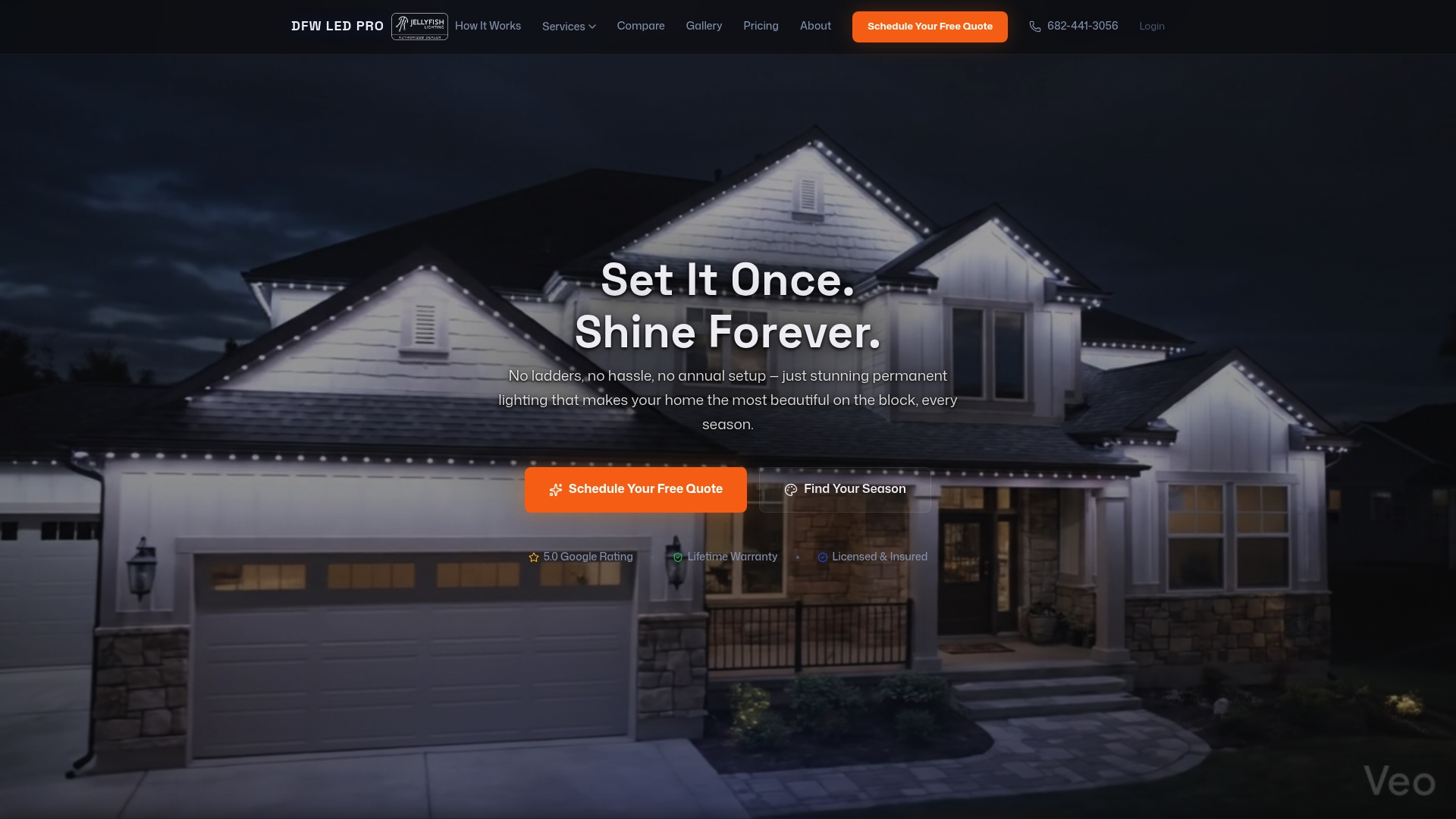
At DFW LED Pro, we specialize in permanent Dallas LED lighting systems using JellyFish technology, built for Texas weather and designed to give you full app-based control over every zone on your property. We also offer smart patio lighting solutions that bring color, scheduling, and automation to your outdoor living spaces. From initial consultation through installation across 35+ DFW cities, we handle every detail so you get results that look great and perform reliably year after year.
Frequently asked questions
What smart outdoor lighting controls work best with Dallas-Fort Worth homes?
Systems with IP65+ weatherproofing, sensor automation, and reliable RF or app control are ideal for Texas properties, where heat and storm exposure quickly expose the weaknesses of consumer-grade electronics.
How much energy can I save with automatic dimming sensors?
Automatic dimming sensors can reduce outdoor lighting energy use by up to 75%, making them one of the highest-impact upgrades available for DFW homeowners looking to cut utility costs.
Can I use Wi-Fi-based outdoor lighting controls in large Texas yards?
Wi-Fi controls are often unreliable beyond 200-300 feet, so large DFW properties are better served by RF or professional hub-based systems that maintain consistent signal across the full yard.
Do I need special electrical outlets for outdoor LED lighting controls?
GFCI outlets are required for plug-in outdoor systems, and some dimmers need a neutral wire at the switch location, so always verify your home’s wiring before purchasing any smart lighting hardware.
Recommended
- Permanent LED Lights in Fort Worth, TX | Professional Installation | DFW LED Pro
- Best Permanent LED Lights in Fort Worth, TX (2026) | DFW LED Pro
- Permanent LED Lights in Dallas, TX | Professional Installation | DFW LED Pro
- Permanent LED Lights in Flower Mound, TX | Professional Installation | DFW LED Pro
- Lighting control apps explained: smart outdoor lighting 2026