LED lights for South DFW homes: Save money and boost curb appeal
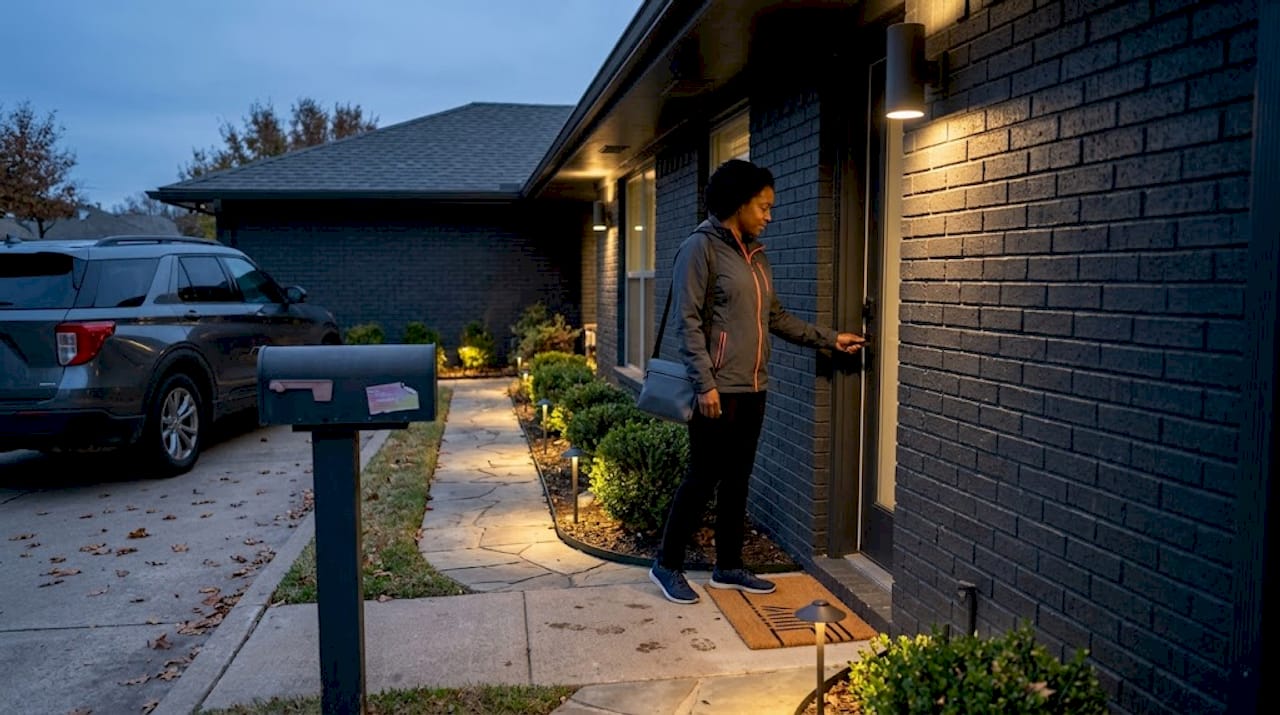
If you own a home in Mansfield, Cedar Hill, Burleson, or anywhere across South DFW, you already know the pain: outdoor bulbs that burn out every few months, electricity bills that spike during long Texas summers, and fixtures that can’t handle the heat and storm cycles this region throws at them year after year. Switching to LED lighting solves all three problems at once. This article breaks down the real numbers on energy savings, lifespan, safety, and curb appeal so you can make a confident, informed decision about upgrading your outdoor lighting.
Table of Contents
- Energy efficiency: Cut your electric bills by 75-90%
- Lifespan and durability: Outlast the heat and storms
- Safety and heat: Lower fire risks and HVAC costs
- Aesthetics and versatility: Better curb appeal, color, and control
- Comparison summary: LED vs. incandescent for South DFW homes
- The real upgrade: Why LEDs are a smart investment for South DFW homes
- Upgrade with permanent LED lighting solutions in South DFW
- Frequently asked questions
Key Takeaways
| Point | Details |
|---|---|
| Major energy savings | Switching to LEDs slashes your power bills by up to 90% compared to incandescent bulbs. |
| Long-lasting durability | LEDs withstand Texas heat, storms, and vibration, lasting 25 to 50 times longer than traditional bulbs. |
| Enhanced safety | LEDs generate minimal heat and significantly lower fire risk, ideal for hot South DFW summers. |
| Superior outdoor aesthetics | With customizable colors, dimming, and high CRI, LEDs let you personalize your landscape lighting. |
| Fast payback on investment | The higher upfront LED cost is quickly recouped through household savings on energy and replacement. |
Energy efficiency: Cut your electric bills by 75-90%
The most immediate benefit of LED lighting is what it does to your monthly electric bill. The difference in power consumption between traditional incandescent bulbs and LEDs is not subtle. According to the U.S. Department of Energy, LEDs use 75 to 90% less energy than incandescent bulbs for the same light output. That kind of reduction adds up fast, especially when your outdoor lights run from dusk to dawn.
Here’s a practical look at the wattage difference for common outdoor fixtures:
| Fixture type | Incandescent wattage | LED equivalent | Energy saved |
|---|---|---|---|
| Porch or entry light | 60W | 8-10W | ~85% |
| Floodlight or security light | 150W | 20-25W | ~83% |
| Landscape path light | 40W | 4-6W | ~88% |
| String lights (per bulb) | 7W | 0.5-1W | ~90% |
For a typical South DFW home running 10 outdoor bulbs, switching to LEDs saves about $60 per year on energy costs alone. Scale that across an entire home’s lighting, and the U.S. Department of Energy estimates the average household saves $225 per year with LEDs.
South DFW homeowners also benefit from LED security lighting efficiency that keeps costs low even when motion-activated or all-night fixtures are in constant use. These savings are not one-time. They compound every year you run LED fixtures instead of incandescents.
Key energy advantages at a glance:
- LEDs convert the majority of electricity directly into light, not heat
- Dimming capability lets you reduce wattage even further during low-traffic hours
- Smart scheduling means fixtures only run at full power when needed
- Lower wattage per fixture allows you to add more lighting without raising your bill
With energy efficiency at the core, let’s dive into how LEDs also outperform on lifespan and durability.
Lifespan and durability: Outlast the heat and storms
Energy savings mean less if you are replacing bulbs every season. This is where LEDs make an even stronger case. Standard incandescent outdoor bulbs last roughly 1,000 hours. LEDs, by comparison, last 25 to 50 times longer, with rated lifespans ranging from 25,000 to 50,000 hours or more. Run an outdoor fixture for six hours a night and a quality LED bulb can last over 20 years before needing replacement.
For South DFW homeowners, durability is about more than just hours. Texas weather is genuinely tough on outdoor lighting. Summer temperatures regularly exceed 100°F, humidity from Gulf moisture cycles can be relentless, and severe spring storms bring wind, hail, and surges. Here’s how LEDs hold up to all of that:
| Factor | Incandescent | LED |
|---|---|---|
| Heat tolerance | Fails faster in high temps | Rated for extreme temperature ranges |
| Moisture resistance | Poor, prone to seal failure | IP65+ ratings common for outdoor use |
| Storm/vibration resistance | Fragile filament breaks easily | Solid-state, no fragile components |
| UV exposure | Glass and filament degrade | UV-stable housing options available |
IP65 is a weatherproofing rating (IP stands for Ingress Protection) that means a fixture is fully dust-tight and protected against water jets from any direction. Many quality outdoor LEDs carry IP65 or IP67 ratings, making them built for Texas rain and humidity.
Pro Tip: When shopping for outdoor LED fixtures, look for an IP rating of at least IP65. In South DFW’s storm-prone climate, IP67 is even better because it adds full submersion protection, which matters during flash flooding and heavy downpours.
For more guidance on getting the most out of your fixtures, check out our durable LED tips for South DFW blog, or explore what permanent LED installation in Dallas can look like for your property.
Durability lets you set and forget your lighting, but LED safety is equally important, especially in South DFW heat.
Safety and heat: Lower fire risks and HVAC costs
Here’s something most homeowners don’t think about: incandescent bulbs convert roughly 90% of their energy into heat, not light. LEDs flip that equation almost entirely, producing only about 5% of their energy as heat. That difference has real safety and comfort implications for your home.
Consider what happens when incandescent bulbs are enclosed in outdoor porch fixtures, soffit recesses, or landscape housing all summer long. The heat buildup inside those enclosed spaces accelerates housing degradation, raises fire risk near wood trim or dry landscaping materials, and contributes to higher temperatures in the areas directly adjacent to your home’s exterior.
Cooler fixtures mean cooler surfaces. In a South DFW summer where your AC is already working hard to keep up, every degree of reduced heat input from your outdoor lighting counts. LEDs won’t single-handedly cut your HVAC bill, but they are one more factor pulling in the right direction.
The safety benefits of cool-running LEDs include:
- Lower fire risk near wood fascia, landscaping mulch, and outdoor furniture
- Safer to touch or replace, even after hours of operation
- Less heat radiating into covered patios, reducing discomfort for outdoor entertaining
- Reduced thermal expansion stress on fixture housings, extending their lifespan
- Lower overall heat load on your home’s exterior walls, which helps HVAC performance in summer
Pro Tip: If you use enclosed porch lanterns or soffit-mounted lights, choose LEDs rated for enclosed fixtures. Not all LEDs handle confined heat well, but those rated for enclosed use are tested to stay cool and reliable even in tight, warm spaces.
Explore more about LED safety benefits and how that translates into real-world performance for outdoor residential setups across South DFW.
Safety and comfort go hand in hand, but LEDs also shine when it comes to transforming your outdoor spaces visually.
Aesthetics and versatility: Better curb appeal, color, and control
Energy efficiency and durability get most of the attention in LED conversations. But for homeowners who care about how their property looks and feels after dark, LEDs offer something equally important: genuine aesthetic control.
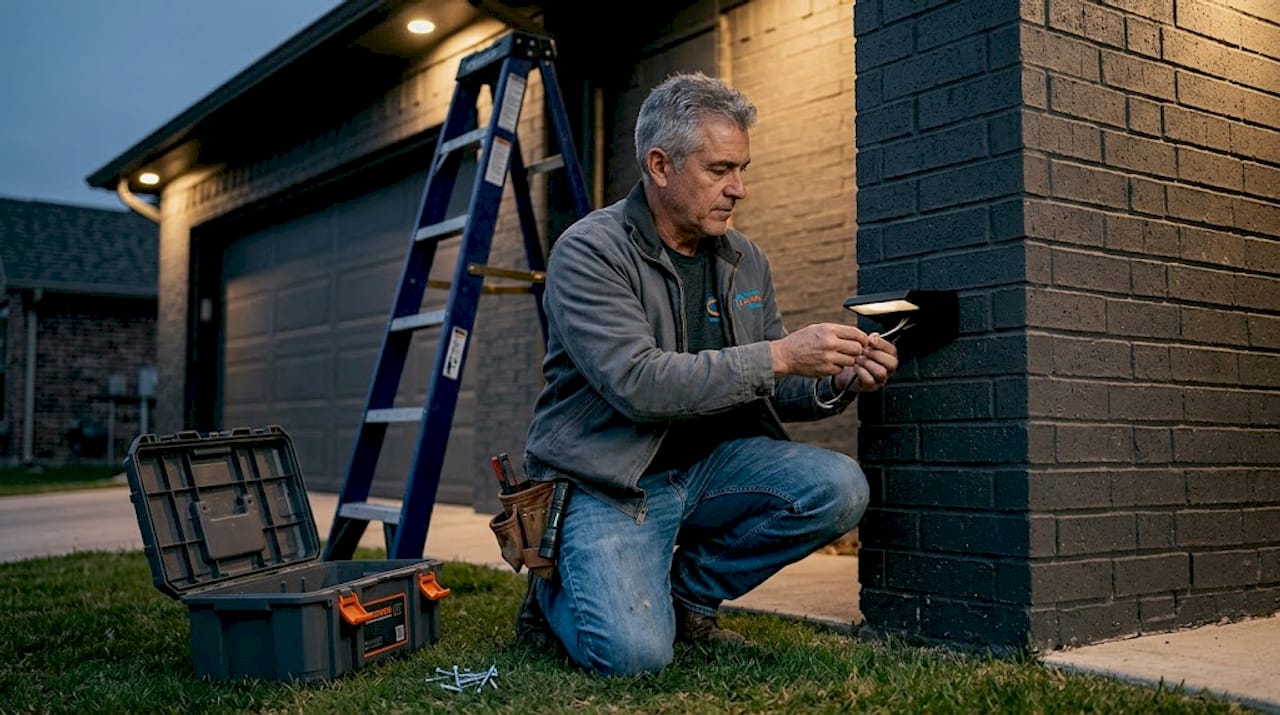
Older incandescent and halogen outdoor lights give you one choice: warm yellow light at whatever brightness the bulb provides. LEDs give you a full range of options. LED outdoor lighting offers a variety of color temperatures, dimming capability, instant on/off switching, and a high Color Rendering Index (CRI) ranging from 80 to 95. CRI measures how accurately a light source reveals the true colors of objects compared to natural daylight. A CRI of 90+ means your landscaping actually looks like your landscaping at night, not a washed-out version of it.
Here’s what that versatility means in practice for your outdoor spaces:
- Color temperature flexibility: Choose warm white (2700-3000K) for welcoming entryways, cool white (4000-5000K) for security zones, or dynamic color options for holiday displays
- Dimming control: Lower brightness for ambient patio evenings, full power for safety when motion is detected
- Instant on: No warm-up time, so motion-activated security lights respond immediately
- App and smart home integration: Schedule lights by sunset time, weather conditions, or personal routine
How to plan an LED lighting upgrade for curb appeal in South DFW:
- Identify the zones you want to light: entryways, garage faces, landscaping, fencing, soffit lines
- Choose color temperature per zone based on function (warm for welcome, bright for safety)
- Select fixtures with CRI 80 or higher to make plants, stone, and wood textures look their best
- Add dimmer-compatible LEDs to patio and entertainment areas
- Consider smart controls that let you manage everything from your phone
LEDs can also increase your home’s value when installed as part of a permanent, well-designed outdoor lighting system. And if terms like CRI, Kelvin, and lumens feel unfamiliar, our outdoor LED terminology guide walks through every definition you need.
Pro Tip: For maximum curb appeal impact, layer your lighting. Use uplights on trees, wall-wash fixtures on architectural features, and path lights along walkways. LEDs make this layered look affordable because the operating costs stay low even with multiple fixture types running simultaneously.
Aesthetic choice can be personal, so let’s now compare all of these factors side by side for a clear summary.
Comparison summary: LED vs. incandescent for South DFW homes
Let’s put everything in one place. The upfront cost of LED bulbs runs $3 to $5 versus about $1 for incandescents. But that cost difference pays back in months through energy and replacement savings, with each LED bulb delivering about $170 in lifetime savings compared to running incandescents over the same period.
| Category | Incandescent | LED | Winner |
|---|---|---|---|
| Energy use | 60W (standard) | 8-10W | LED |
| Lifespan | ~1,000 hours | 25,000-50,000 hours | LED |
| Annual cost (10 bulbs) | ~$100/yr | ~$15-20/yr | LED |
| Heat output | 90% as heat | ~5% as heat | LED |
| Weather resistance | Low | IP65+ rated | LED |
| Color/control options | Limited | Extensive | LED |
| Upfront cost | ~$1/bulb | $3-5/bulb | Incandescent |
| Lifetime savings | Baseline | ~$170/bulb | LED |
The upfront cost is real, but it’s worth noting that North Texas utility providers like Oncor and CoServ do offer commercial-grade rebate programs, so homeowners should confirm current residential incentive availability directly with their provider.
For whole-home outdoor setups, exploring the best outdoor LED controls available in Dallas-Fort Worth helps you maximize every dollar of your investment with the right scheduling, dimming, and automation tools.
Key reasons South DFW homeowners choose LEDs:
- Energy savings compound year after year, especially in high-use Texas summers
- No frequent bulb purchases or ladder climbs for hard-to-reach outdoor fixtures
- Lower fire risk and HVAC strain during peak heat months
- Full aesthetic control for every season, holiday, and occasion
- Built to handle Texas weather with proper IP ratings and solid-state construction
The real upgrade: Why LEDs are a smart investment for South DFW homes
We see a consistent pattern when we work with homeowners across Arlington, Grand Prairie, and Midlothian: most people underestimate how quickly their LED investment pays off, and almost everyone who makes the switch wonders why they waited.
Conventional wisdom treats LED lighting as a slow, incremental upgrade. It’s not. When you factor in South DFW’s long summers, high electricity rates, and the physical wear that Texas weather puts on outdoor fixtures, the payback timeline is often well under two years for a full outdoor LED conversion.
What actually separates a great LED setup from a mediocre one is not the bulb itself. It’s driver quality and installation. The LED driver is the component that regulates power to the bulb. A cheap driver degrades quickly in extreme heat, causing flickering, premature failure, or color shifts. A quality driver, paired with proper fixture placement that accounts for sun exposure and thermal expansion, is what delivers the 20-year lifespan LEDs are capable of.
Smart controls and placement matter just as much as the hardware. We’ve seen homes where premium LEDs were installed in locations that trapped heat or were exposed to direct afternoon sun without adequate ventilation. Those setups failed early. The homes that get the best ROI are the ones where fixture placement, IP ratings, and control systems are chosen together as a complete plan.
Our honest advice: don’t buy the cheapest LEDs at a hardware store for permanent outdoor installation. The fixture quality, driver specs, and weatherproofing ratings are what your long-term results depend on. For South DFW-specific guidance, our South DFW LED advice resource covers exactly what to look for based on local climate realities.
Upgrade with permanent LED lighting solutions in South DFW
If you’re ready to stop replacing bulbs, reduce your electric bill, and genuinely transform how your home looks after dark, permanent LED lighting is the most practical path forward for South DFW homeowners. The difference between a standard bulb swap and a professionally installed permanent LED system is substantial, both in results and in long-term value.
At DFW LED Pro, we install JellyFish permanent LED lighting systems across 35+ cities in the DFW metroplex, including Fort Worth, Burleson, Cedar Hill, and Crowley. Every system is custom-fitted to your home’s roofline and exterior with color-matched hardware that disappears during the day and delivers stunning, programmable light at night. We handle everything from fixture placement planning to final installation, and every system comes backed by a lifetime warranty on the track hardware. Explore your options and see what’s possible for your home at permanent LED lights Dallas.
Frequently asked questions
Do LED lights work well outdoors in South DFW weather?
Yes, LEDs are built for outdoor use with strong resistance to heat, humidity, storms, and vibration, making them well-suited for South DFW homes year-round.
How much can I save by switching to LEDs in my home?
Most households save around $225 per year with LEDs overall, with South DFW homes seeing approximately $60 in annual savings for every 10 outdoor bulbs replaced.
Are LEDs worth the higher upfront cost?
The higher initial price pays back quickly through energy and replacement savings, with each LED bulb offering about $170 in lifetime savings compared to incandescents over the same period.
Do LEDs really produce less heat than other bulbs?
Yes, LEDs convert only about 5% of energy to heat compared to 90% for incandescents, making them significantly cooler and safer for outdoor fixtures during South DFW summers.
Can LED lights improve my home’s curb appeal?
Absolutely. LEDs offer flexible color, dimming, and high CRI options between 80 and 95, giving you full control over how your landscaping, architecture, and outdoor spaces look after dark.