LED entrance lighting: smart, safe & stylish for DFW
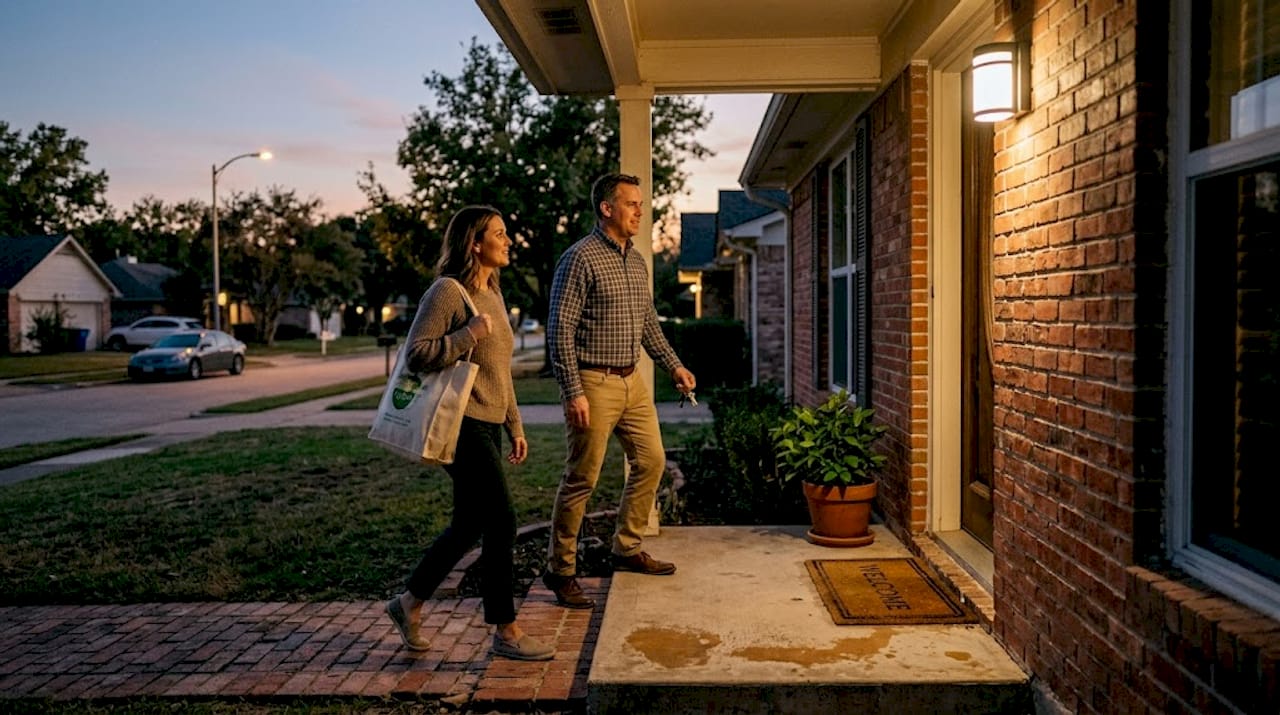
LED entrance lighting does more than replace a bulb. For South DFW homeowners, upgrading to LEDs means 75-90% less energy used at your front door every single night, savings that add up fast in a region where outdoor lights often run from dusk to well past midnight. But a lot of homeowners still hesitate, assuming the upfront cost isn’t worth it or that LEDs are just a trendy energy-saving swap. This guide cuts through that confusion. We’ll walk you through the real numbers, the Texas-specific performance factors, and the practical steps to get entrance lighting that looks great, keeps your family safe, and pays for itself over time.
Table of Contents
- Why LED entrance lighting changes the game
- Comparing LED to other entrance lighting options
- Optimizing LED entrance lighting for South DFW homes
- Common pitfalls and maximizing ROI with LED entrance upgrades
- What most homeowners miss about LED entrance lighting
- Get professional LED entrance lighting for lasting results
- Frequently asked questions
Key Takeaways
| Point | Details |
|---|---|
| Major energy savings | LED entrance lights reduce energy use up to 90%, saving homeowners substantial money every year. |
| Long-lasting and weatherproof | LEDs last far longer than traditional bulbs and withstand South DFW’s heat and storms when rated IP65+. |
| Optimized for ROI | Professional LED entrance upgrades pay for themselves in 2-5 years through lower utility and maintenance costs. |
| Enhanced curb appeal and safety | Properly installed LED lights make entrances safer and more attractive, boosting the home’s value and visibility. |
Why LED entrance lighting changes the game
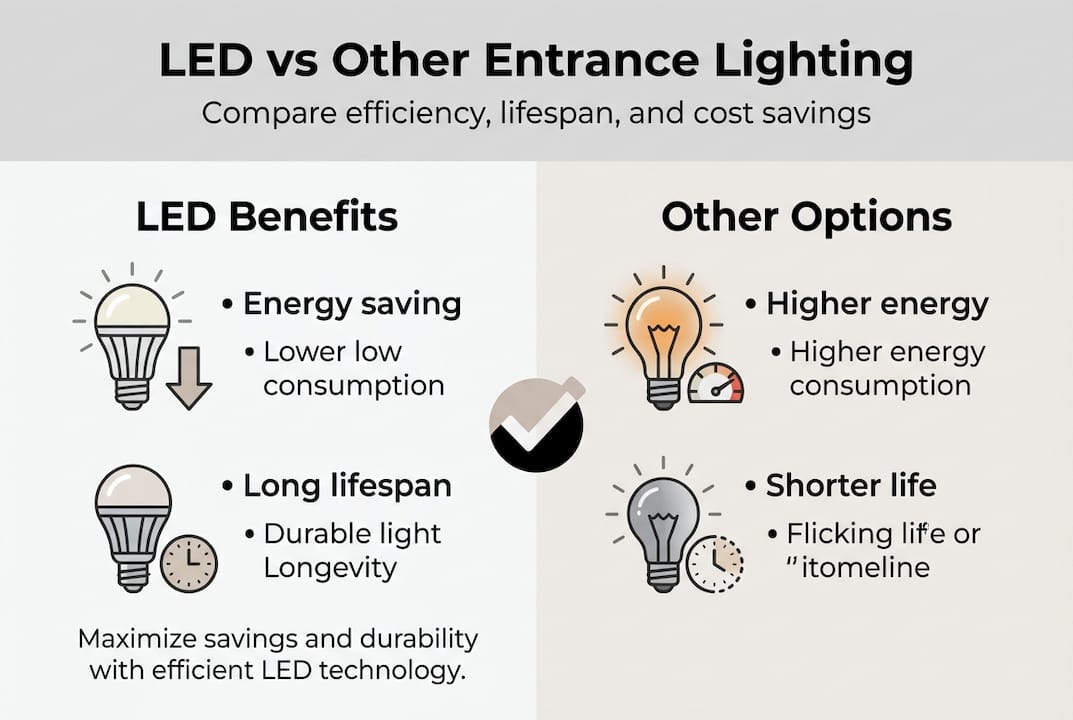
The numbers are hard to argue with. Switching your entrance lighting to LEDs can cut energy use by up to 90%, and average household saves $225/year on lighting costs overall. For a South DFW home where your porch light, pathway fixtures, and house number lighting all run nightly, those savings stack up season after season.
But energy efficiency is only part of the story. LEDs have a lifespan of 25,000 to 50,000+ hours compared to roughly 1,000 hours for a standard incandescent bulb. That means instead of replacing bulbs every few months, you’re looking at a fixture that runs for years without a second thought. Less ladder time. Less hassle. Less money spent at the hardware store.
For South DFW specifically, weather resilience matters just as much as lifespan. Texas summers push temperatures past 100°F, and spring storms bring humidity, rain, and wind that can destroy poorly rated fixtures fast. LEDs with IP65 or higher ratings are sealed against dust and water jets, making them a practical match for our climate. Look for fixtures rated IP66 or IP67 if your entrance gets direct rain exposure.
Here’s what well-chosen LED entrance lighting delivers for your home:
- Brighter, cleaner light at your front door and pathway for improved nighttime visibility
- Consistent color rendering so your landscaping and exterior paint look their best after dark
- Instant-on performance with no warm-up lag, unlike some older alternatives
- Lower surface heat on fixtures, which matters when you have shrubs or mulch nearby
- Reduced insect attraction because LEDs emit less ultraviolet light than incandescents
When you think about LED investment value across several years, the math shifts decisively in LEDs’ favor. And the aesthetic payoff is immediate. A well-lit entrance signals a cared-for home to neighbors and visitors alike.
Pro Tip: Color temperature changes the entire feel of your entrance. Warm white (2700K to 3000K) creates a welcoming, residential glow. Cool white (4000K to 5000K) reads as crisp and modern. Match your choice to your home’s exterior finish and landscaping style.
Comparing LED to other entrance lighting options
Before you invest, it helps to see how LEDs actually compare to the alternatives. Here’s a direct breakdown:
| Feature | LED | Incandescent | Halogen |
|---|---|---|---|
| Energy use (per fixture) | 4 to 12W | 40 to 60W | 20 to 50W |
| Lifespan (hours) | 25,000 to 50,000+ | 1,000 | 2,000 to 4,000 |
| Heat output | Very low | Very high | High |
| Weather durability | IP65+ available | Poor | Moderate |
| Upfront cost | Moderate to high | Low | Low to moderate |
| Long-term cost | Very low | Very high | High |
The upfront cost difference is real. A quality LED entrance fixture costs more than a basic incandescent or halogen option. But break-even typically arrives in 2 to 5 years, and after that, every year is pure savings. LEDs provide energy efficiency and longer lifespans that traditional alternatives simply cannot match over time.
Here’s how to think about the transition in practical steps:
- Audit your current entrance fixtures and note wattage and average nightly run time.
- Calculate your current monthly cost using your electricity rate (DFW averages around $0.12 to $0.14 per kWh).
- Estimate LED cost at equivalent brightness but 80 to 90% lower wattage.
- Factor in bulb replacement frequency: LEDs need replacement far less often.
- Add the payback period to your decision, not just the sticker price.
“The true cost of incandescent lighting isn’t the bulb price. It’s the energy bill and the replacement cycle that never ends.”
Where does incandescent still win? One honest answer: ultra-warm glow. True incandescent produces a rich, amber light around 2400K that some homeowners prefer for a very traditional, old-world entrance aesthetic. Modern warm-white LEDs get close, but the exact quality is slightly different. It’s a minor point for most people, but worth knowing if you have a very specific design vision. You can explore more on our LED lighting guides to find options that come remarkably close to that classic look.
Optimizing LED entrance lighting for South DFW homes
Choosing the right LED is one thing. Placing and configuring it well is what actually transforms your entrance. Let’s get specific.
Wattage and brightness benchmarks for entrances:
| Fixture type | Recommended wattage | Target lumens |
|---|---|---|
| Wall sconce (porch) | 6 to 12W | 600 to 1,200 lm |
| Pathway light | 4 to 6W | 100 to 400 lm |
| Flood or area light | 10 to 20W | 1,000 to 2,000 lm |
| House number light | 4 to 8W | 300 to 600 lm |
Aim for fixtures rated at 130+ lumens per watt for the best efficiency. That efficacy rating tells you how much light you get per unit of energy used. Higher is better. And for Texas weather, IP65 is the floor, not the goal. IP66 or IP67 fixtures handle direct rain and humidity reliably over years of use.
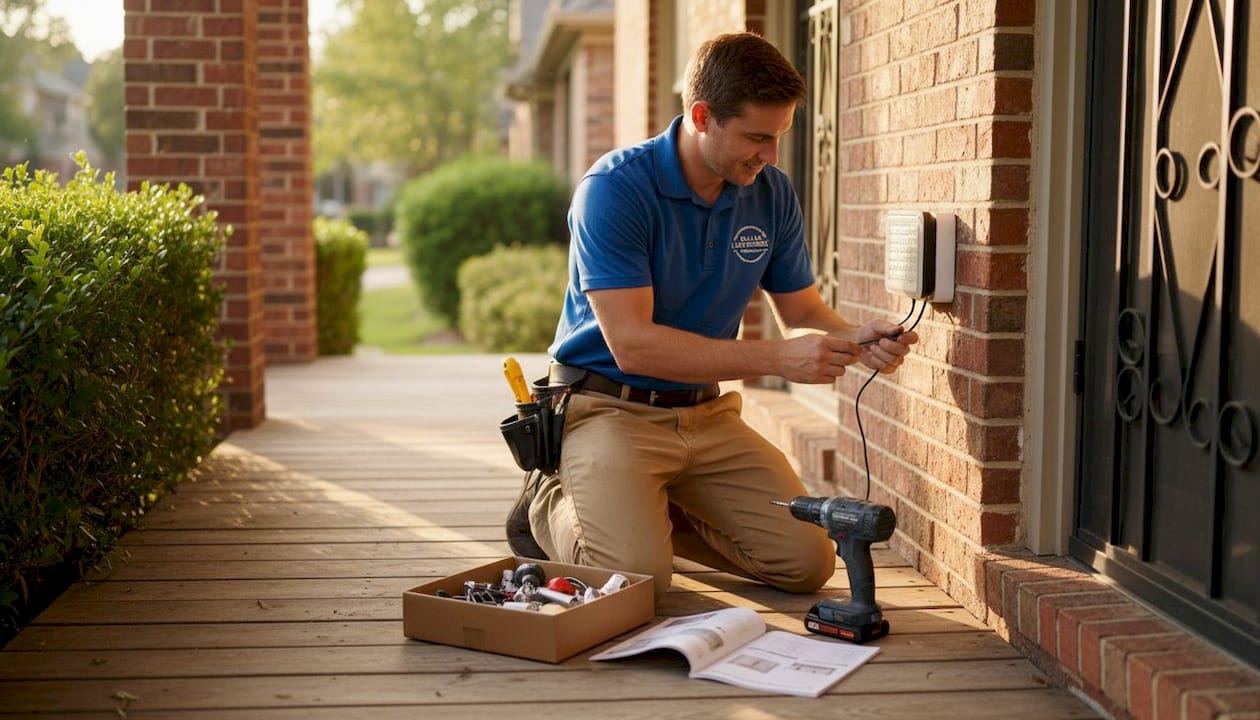
Placement is where most homeowners leave value on the table. A well-placed fixture does three jobs at once: it lights the walkway for safety, illuminates the house number for visitors and emergency services, and frames the entrance for curb appeal.
- Place wall sconces at eye level on both sides of the door for even, shadow-free light.
- Space pathway lights every 6 to 8 feet for a smooth wash without dark gaps.
- Angle flood lights slightly downward to reduce glare toward the street.
- Ensure your house number is front-lit and visible from the curb at night.
Smart controls add another layer of value. Motion sensors reduce energy use by keeping lights dim or off when no one is around. Timers set consistent schedules without manual effort. App-integrated systems let you adjust brightness and color from your phone, which is especially useful when you want a festive look for holidays or a security setting when you’re traveling.
Pro Tip: Layer your entrance lighting rather than relying on a single bright fixture. Combine a warm wall sconce with low-level pathway lights for a result that feels intentional and polished, not just functional. This approach also gives you flexibility in how your entrance looks from the street.
If you’re ready to move from planning to installation, our team handles LED installation in Dallas and LED installation in Fort Worth with weatherproof fixtures sized for Texas conditions.
Common pitfalls and maximizing ROI with LED entrance upgrades
Even with great products available, homeowners make mistakes that reduce their return on investment. Here are the ones we see most often.
Pitfalls to avoid:
- Buying non-weatherproof fixtures. South DFW gets intense summer heat, spring storms, and high humidity. A fixture rated IP44 or lower won’t survive more than one or two seasons outdoors.
- Over-brightening the entrance. More lumens don’t always mean better. Excessively bright fixtures create glare, disturb neighbors, and can actually make it harder to see in the surrounding darkness.
- Choosing price over quality. Budget LED fixtures often use lower-grade diodes that shift color over time, flicker, or fail early. The per-unit savings evaporate quickly when you’re replacing them every two years.
- Ignoring placement. Even a premium fixture poorly placed delivers poor results. Position matters as much as product selection.
- Skipping smart controls. Without timers or sensors, lights often run longer than needed, eating into your energy savings.
On the financial side, the rebound effect is worth understanding. When lighting becomes cheaper to run, some homeowners unconsciously add more fixtures or leave lights on longer. That behavior can partially cancel out the efficiency gains. Being intentional about usage keeps your ROI on track.
The payback period for a quality LED entrance setup runs 2 to 5 years depending on your current energy use, the number of fixtures, and local electricity rates. After that window, you’re generating pure savings every month.
Pro Tip: Work with an installer who has local experience in South DFW. They’ll know which fixtures hold up in Texas heat, how to handle HOA requirements common in communities around Mansfield, Midlothian, and Cedar Hill, and how to place lights for maximum impact. A quality LED installation in Arlington by an experienced team typically delivers better results than a DIY approach with premium components.
What most homeowners miss about LED entrance lighting
We’ve installed LED entrance lighting across dozens of South DFW communities, and one pattern keeps showing up: homeowners focus almost entirely on the bulb or fixture spec and ignore the system as a whole.
A $60 fixture in the wrong spot, aimed the wrong direction, running on no schedule, does less for your home than a $30 fixture placed thoughtfully with a smart timer. The product matters, but the approach matters more.
Most guides talk about lumens and wattage. What they skip is the safety layer. A well-lit entrance deters opportunistic crime. It keeps your family from tripping on an uneven walkway in the dark. It tells delivery drivers where to go and emergency services where to stop. That LED upgrade value is real and measurable, it just doesn’t show up on an energy bill.
We also see homeowners underestimate weatherproofing. Texas weather isn’t like other states. The combination of intense UV exposure, temperature swings, and storm-driven moisture shortens the life of under-spec fixtures fast. Paying more upfront for IP66+ rated hardware in South DFW isn’t a luxury. It’s just the correct decision for this climate.
Get professional LED entrance lighting for lasting results
If this guide has convinced you that LED entrance lighting is worth doing right, the next step is straightforward.
At DFW LED Pro, we bring local expertise to every installation across Arlington, Fort Worth, Mansfield, Midlothian, and surrounding communities. Our Dallas LED installation service uses weatherproof, permanent LED systems built for Texas conditions. We also offer premium landscape lighting that goes beyond the entrance to transform your entire property’s exterior. Contact us for a no-pressure quote and let us help you choose fixtures, placement, and smart controls that deliver results you’ll see every night.
Frequently asked questions
How long do LED entrance lights typically last?
LED entrance lights last 25,000 to 50,000 hours, dramatically outlasting incandescent bulbs rated at roughly 1,000 hours. That translates to many years of reliable use before replacement.
How much money can I save by switching to LED entrance lighting?
Most households save around $225 per year by switching to LED lighting, driven by using 75 to 90% less energy than incandescent bulbs for equivalent brightness.
What wattage should I use for LED entrance lights?
Use 4 to 12 watts per fixture for most entrance applications. Wall sconces lean toward the higher end of that range, while pathway lights work well at 4 to 6 watts.
Do LED lights work well in Texas’ heat and humidity?
Yes. LEDs with IP65 or higher ratings are built to handle Texas heat, humidity, and storm exposure reliably over many years of outdoor use.
Recommended
- Permanent LED Lights in Dallas, TX | Professional Installation | DFW LED Pro
- Permanent LED Lights in Fort Worth, TX | Professional Installation | DFW LED Pro
- Permanent LED Lights in Lewisville, TX | Professional Installation | DFW LED Pro
- Permanent LED Lights in Flower Mound, TX | Professional Installation | DFW LED Pro
- Why install pool lighting? Boost safety and style in 2026
- Lighting Services in DeKalb, Texas | TXK Pro