LED Lighting for Businesses: Save 90% Energy & Boost Appeal
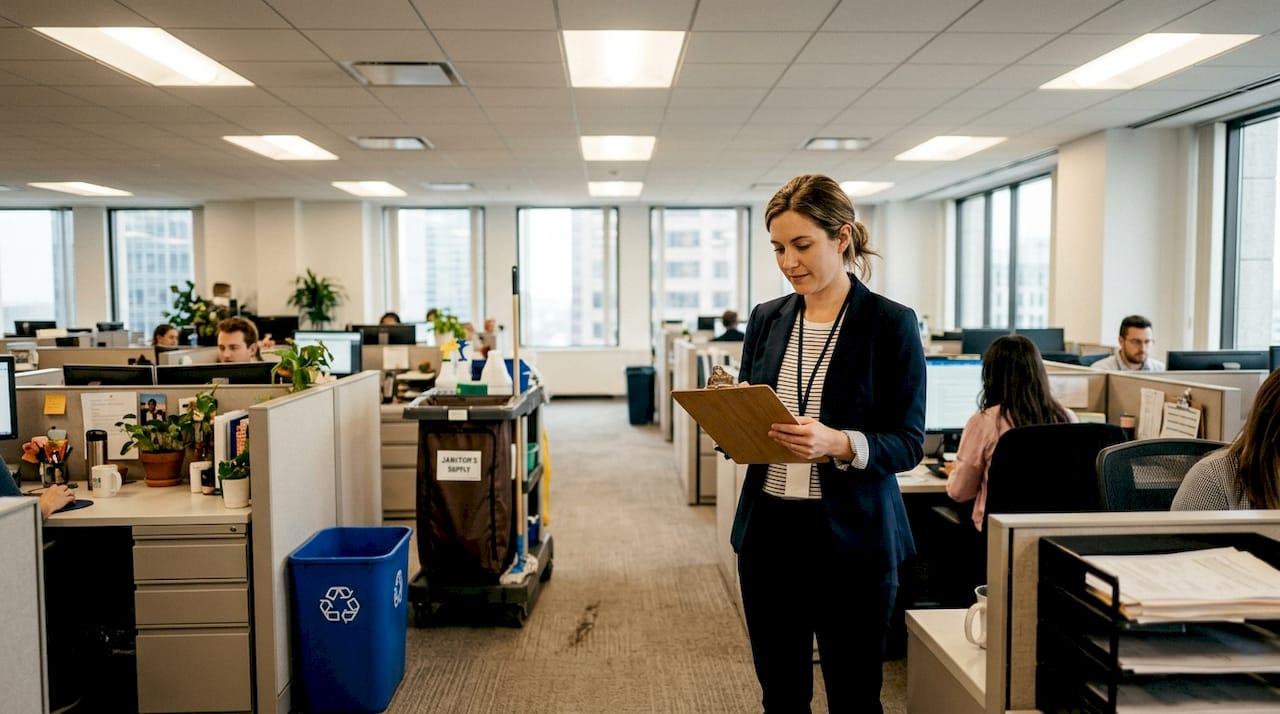
Most business owners think switching to LED is a simple bulb swap. It isn’t. LEDs use up to 90% less energy than traditional incandescent lighting, which means your current fixtures may be burning money every single hour they run. For commercial properties in the Dallas-Fort Worth area, where summer cooling loads are already high and operational costs are under constant pressure, that efficiency gap is a serious financial concern. This guide breaks down exactly how LED technology works, what it saves, and how to make the switch without disrupting your operations.
Table of Contents
- What makes LED lighting different?
- Cost savings and energy efficiency explained
- Beyond efficiency: Durability, maintenance, and appearance
- How to upgrade: Practical steps for Dallas-Fort Worth businesses
- A fresh perspective: Why waiting costs you more
- Ready to cut costs? Talk to Dallas-Fort Worth’s LED experts
- Frequently asked questions
Key Takeaways
| Point | Details |
|---|---|
| Major energy savings | LEDs can cut energy use by up to 90% compared to traditional lights. |
| Long-term cost benefits | LED upgrades pay themselves back through lower bills and minimal maintenance. |
| Enhanced business appearance | LEDs improve lighting quality for a more inviting, modern look. |
| Easy upgrade process | Switching to LEDs is straightforward with expert guidance and local support. |
What makes LED lighting different?
With that surprising efficiency difference in mind, let’s get into what actually makes LED so different from older bulb types.
LED stands for light-emitting diode. Unlike incandescent bulbs that heat a wire filament until it glows, LEDs use solid-state semiconductor technology to convert electricity directly into light. That process is far more efficient. Almost all the energy goes toward producing visible light, not heat.
Traditional bulbs waste energy in a few critical ways. Incandescent bulbs convert roughly 90% of their electricity into heat, not light. Fluorescent tubes require ballasts that add electrical loss. HID (high-intensity discharge) fixtures need warm-up time and cycling periods that burn energy even when light output is inconsistent.
LEDs avoid all of that. They produce directional light, meaning the photons travel where you need them instead of scattering in every direction. This directional quality also means fewer fixtures are needed to achieve the same brightness, measured in lumens per watt (lm/W). A typical LED fixture delivers 80 to 120 lm/W. A comparable incandescent bulb delivers 10 to 17 lm/W.
LEDs use up to 90% less energy than incandescent lighting and 50 to 75% less than fluorescent or HID systems. That is not a minor upgrade. That is a fundamental change in how your building consumes electricity.
Here is a quick comparison of each lighting type:
| Lighting Type | Lumens per Watt | Heat Output | Average Lifespan |
|---|---|---|---|
| Incandescent | 10 to 17 lm/W | Very High | 1,000 hours |
| Fluorescent | 50 to 100 lm/W | Moderate | 7,000 to 15,000 hours |
| HID | 70 to 150 lm/W | High | 10,000 to 20,000 hours |
| LED | 80 to 200 lm/W | Minimal | 25,000 to 50,000 hours |
For DFW businesses exploring LED business lighting upgrades, the efficiency advantage compounds quickly across large commercial spaces with many fixtures running long hours each day.
Cost savings and energy efficiency explained
Understanding the technical edge is great, but what does that actually mean for your business’s budget?
The savings show up in two places: your monthly utility bill and your long-term maintenance expenses. Let’s look at the energy cost side first.
A medium-sized commercial building in Dallas-Fort Worth might run 50 fixtures for 12 hours a day. Here is what the annual energy cost difference looks like across bulb types, based on an average commercial rate of $0.09 per kWh:
| Lighting Type | Wattage per Fixture | Annual kWh (50 fixtures) | Annual Energy Cost |
|---|---|---|---|
| Incandescent (100W) | 100W | 21,900 kWh | $1,971 |
| Fluorescent (40W) | 40W | 8,760 kWh | $788 |
| HID (150W) | 150W | 32,850 kWh | $2,957 |
| LED (15W) | 15W | 3,285 kWh | $296 |
The difference between running incandescent fixtures and LED fixtures in that scenario is over $1,600 per year. For HID systems common in warehouses and parking lots, the gap is even larger, over $2,600 annually.
Beyond the base electricity savings, LED’s directional output means you are not wasting light on ceilings or areas that don’t need illumination. Every watt does productive work.
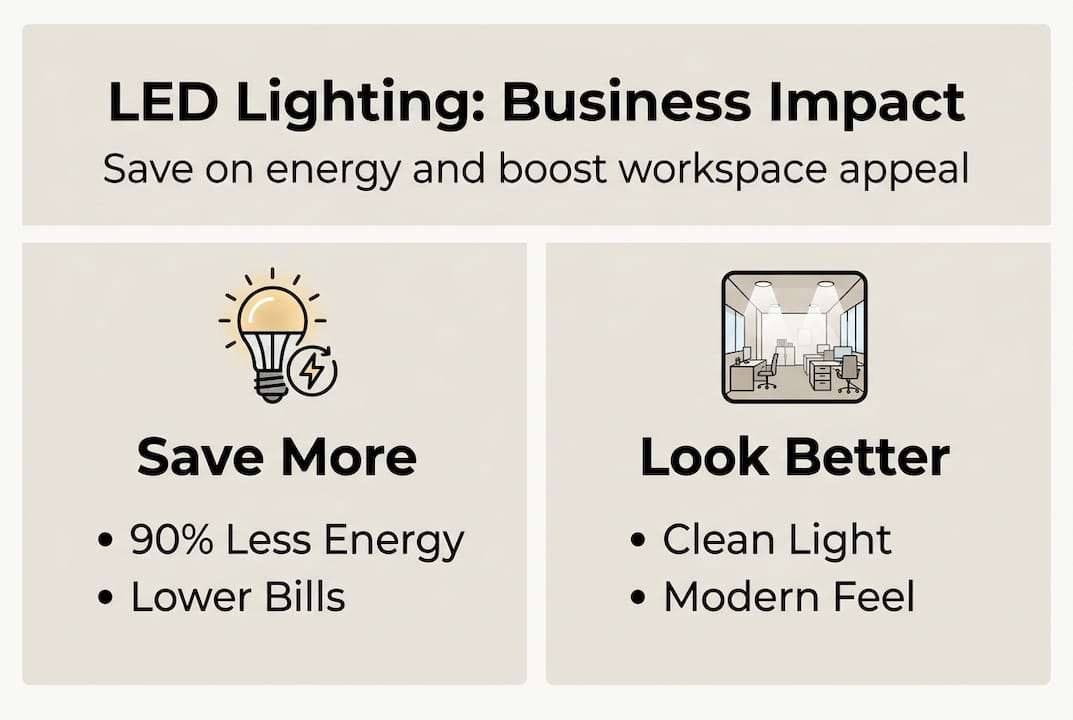
Statistic callout: Businesses switching from HID to LED in warehouse or exterior applications often see annual savings exceeding $2,500 per 50 fixtures, before factoring in any rebate programs.
Pro Tip: Adding daylight sensors and occupancy controls to your LED system can push savings an additional 20 to 40% on top of the base efficiency gains. Oncor and other local utilities serving DFW often offer rebates for qualifying LED installations with smart controls. We help clients identify and apply for those rebates as part of the upgrade process.
Beyond efficiency: Durability, maintenance, and appearance
Savings are important, but there’s more to the story than just energy bills.
LED fixtures produce minimal heat and last significantly longer than incandescent, fluorescent, or HID alternatives because their solid-state design has no filament to burn out and no gas to leak. A quality LED fixture runs 25,000 to 50,000 hours under normal conditions. At 12 hours per day, that is 5 to 11 years before a replacement is needed.
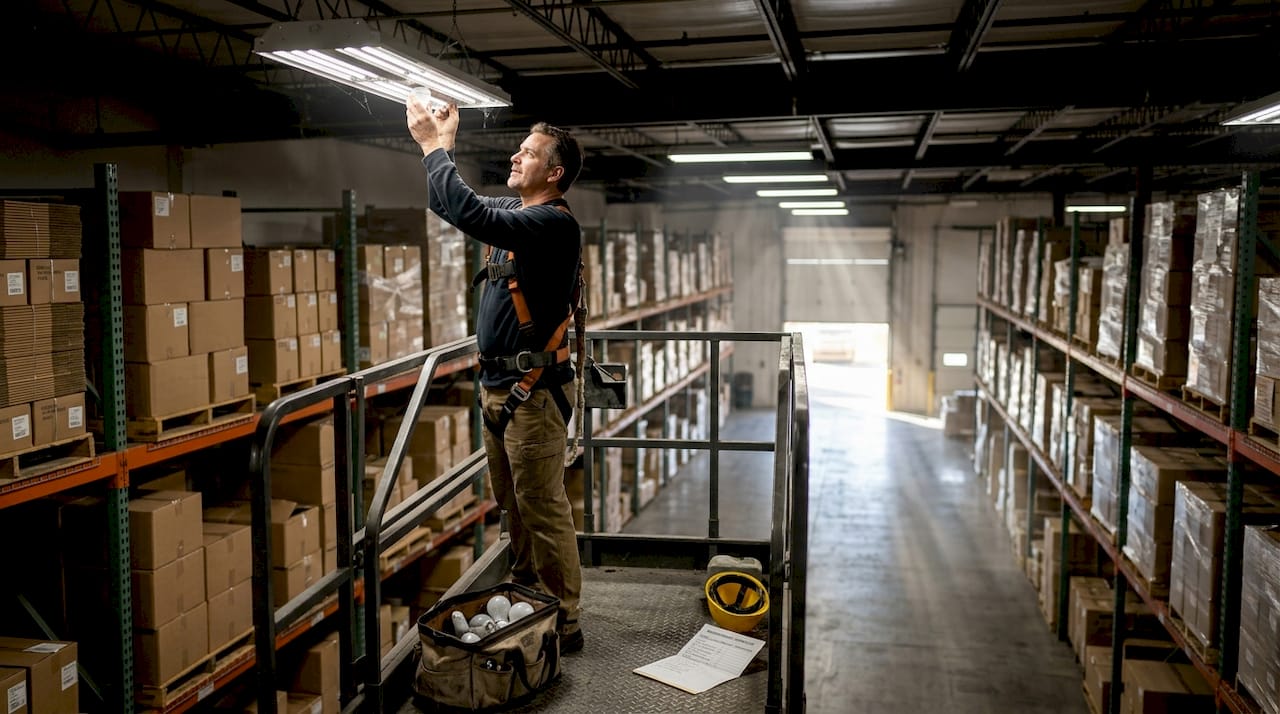
Here is how maintenance requirements compare:
| Lighting Type | Avg. Replacement Interval | Labor Cost Frequency | Lamp + Labor Estimate |
|---|---|---|---|
| Incandescent | Every 1 to 2 months | Monthly | High |
| Fluorescent | Every 1 to 2 years | Annually | Moderate |
| HID | Every 1 to 2 years | Annually | Moderate to High |
| LED | Every 5 to 11 years | Rare | Very Low |
For businesses with hard-to-reach fixtures like warehouse ceilings, parking lot poles, or exterior canopies, reducing how often you need a lift or a contractor on site is a real operational benefit.
Appearance is where LEDs often surprise business owners the most. LED technology delivers a high color rendering index (CRI), which measures how accurately a light source reveals the true colors of objects. A higher CRI means products, signage, and spaces look more vibrant and professional.
Here are specific ways LED improves your commercial image:
- Retail: Products display their true colors, encouraging purchasing decisions
- Exterior signage: Brighter, more consistent illumination that holds attention
- Office environments: Reduced flicker lowers eye strain and improves perceived professionalism
- Parking lots and entryways: Consistent brightness improves safety and customer confidence
- Building facades: Directional LEDs can highlight architectural features cleanly
For businesses looking at commercial LED appearance solutions, exterior lighting in particular has an outsized impact on first impressions. Customers notice before they walk through the door.
How to upgrade: Practical steps for Dallas-Fort Worth businesses
Now that you know the full range of LED benefits, here’s how your business can make the switch effectively.
The process does not have to be complicated or disruptive. Breaking it into clear stages keeps the project manageable and avoids common mistakes.
- Audit your current lighting. Walk through every area of your property and document fixture types, wattages, hours of operation, and problem areas like burnouts or uneven coverage. This gives you a real baseline.
- Identify your priorities. Not every area needs to be upgraded at once. Start with high-usage zones like warehouses, parking structures, or storefronts where payback will be fastest.
- Select the right products. LED fixtures are not all equal. Look for rated lumens, CRI rating, color temperature (measured in Kelvin), and rated lifespan. For outdoor DFW applications, weatherproofing ratings matter too.
- Plan your installation. Most LED retrofits require minimal wiring changes. However, some HID replacements need ballast bypass work. A professional assessment ensures compatibility.
- Leverage controls from day one. Pairing LEDs with the right controls such as occupancy sensors, daylight harvesting, and dimming provides the best possible savings. Installing controls during the initial upgrade is far cheaper than adding them later.
- Document and monitor. Track your utility bills for three to six months after the upgrade. This confirms your actual savings and builds the case for expanding the project to other areas.
Pro Tip: Working with Dallas-Fort Worth LED experts means access to rebate identification, product selection guidance, and installation coordination that most business owners do not have time to manage alone. Local expertise also means understanding DFW’s specific energy codes and utility programs.
The upfront investment typically pays back within two to four years for most commercial applications, often sooner for high-use facilities.
A fresh perspective: Why waiting costs you more
The most common objection we hear from DFW business owners is some version of: “We’ll handle it when the current bulbs burn out.” It sounds reasonable. It is actually an expensive strategy.
Every month you run inefficient lighting, you are paying the efficiency gap in real dollars. If your current system costs $2,000 per year more than LED would, waiting 12 months to upgrade costs you $2,000. That is money that cannot be recovered.
There is also a competitive angle that business owners in the DFW market underestimate. Dallas-Fort Worth is one of the fastest-growing commercial markets in the country. Your property’s curb appeal, energy costs, and operational efficiency all factor into how you compete for tenants, customers, and talent.
Every month of delay is a month of savings, up to 90% on energy, that you are voluntarily leaving on the table.
DFW’s summer heat also means cooling systems work harder when fixtures radiate excess heat indoors. LED’s minimal heat output reduces that secondary load. Waiting is not a neutral choice. It is a choice to keep paying more than you need to.
Ready to cut costs? Talk to Dallas-Fort Worth’s LED experts
If this guide has made one thing clear, it’s that LED lighting is not a future upgrade. It’s an overdue one for most DFW commercial properties.
At DFW LED Pro, we work with commercial property owners and business operators across the Dallas-Fort Worth metroplex, from Arlington to Mansfield, Cedar Hill to Burleson. We assess your current lighting, identify available rebates, recommend the right products for your space, and handle installation with minimal disruption to your operations. You get local knowledge, manufacturer-backed products, and ongoing support. Reach out today to get a tailored assessment for your property.
Frequently asked questions
How much can Dallas-Fort Worth businesses really save with LED lighting?
Switching to LED can cut energy use by up to 90% compared to incandescent lighting, translating to hundreds or thousands of dollars in annual savings depending on your facility size and current system.
Is it hard or disruptive to upgrade my building to LED?
Most LED retrofits are straightforward and can be staged by zone or area, so your business keeps running with minimal interruption during the transition.
Do LEDs really improve the appearance of my commercial space?
Absolutely. LEDs deliver superior color rendering and consistent brightness that makes products, signage, and building exteriors look more polished and professional compared to older lighting types.
Can LED lighting be used with sensors to save even more?
Yes. Pairing LEDs with occupancy and daylight sensors can add an extra 20 to 40% in energy savings on top of the base efficiency gains from switching to LED.