Why Choose LED for Security Lighting: Efficiency, Safety
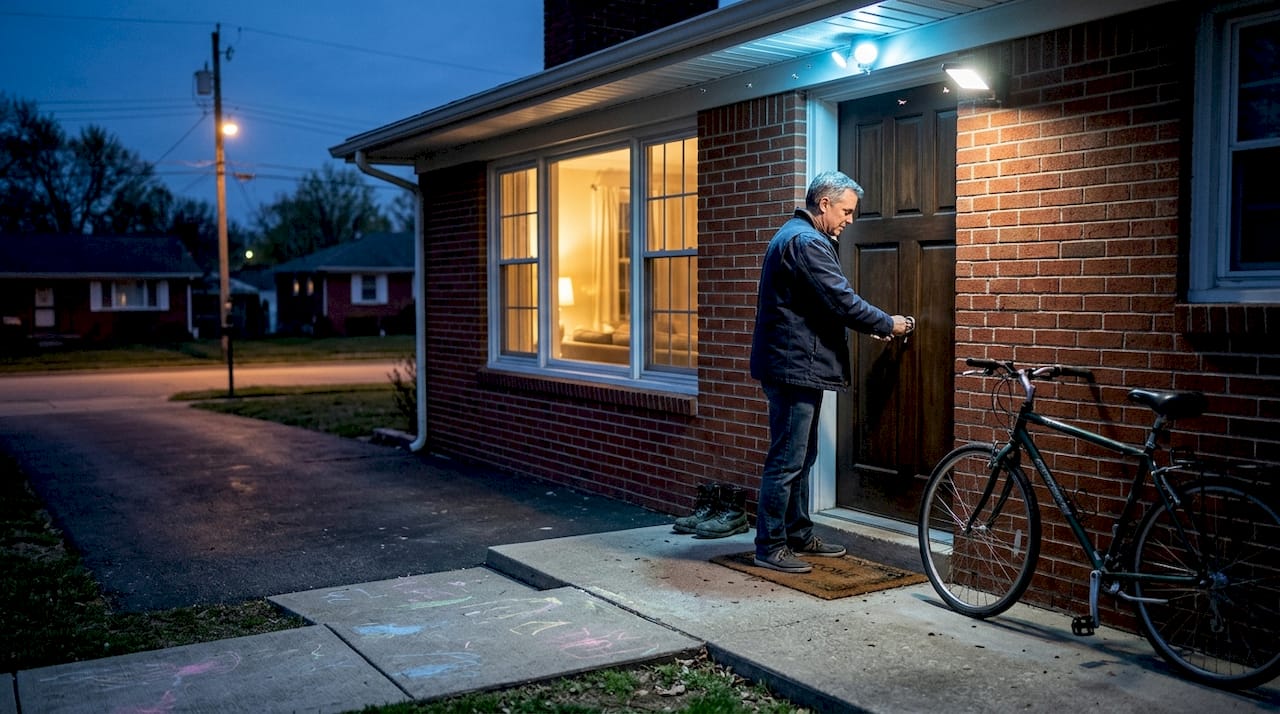
Most homeowners assume that brighter outdoor security lighting means a higher power bill. That assumption keeps a lot of DFW properties stuck with outdated halogen floodlights that burn energy all night and still leave dark corners near the fence line. The reality is different. LED security lighting can cut your exterior energy use dramatically while delivering sharper, more consistent illumination than older bulbs. This guide walks you through the real numbers on energy savings, crime deterrence, total ownership costs, and the practical steps to upgrade your home’s perimeter lighting the right way.
Table of Contents
- How LED lighting transforms home security
- LED vs. traditional bulbs: Energy, cost, and performance
- Understanding the real cost: ROI and total ownership
- How to choose and install LED security lighting
- What most homeowners miss about LED security lighting
- Upgrade your home’s security lighting with expert help
- Frequently asked questions
Key Takeaways
| Point | Details |
|---|---|
| LEDs cut energy use | LED security lights use up to 75% less energy than traditional bulbs, translating to major savings. |
| Improved safety impact | Quality LED lighting can reduce nighttime crime and create a safer home environment. |
| Faster ROI | The investment in LED security lighting typically pays for itself in one to two years through energy and maintenance savings. |
| Better curb appeal | Modern LEDs enhance property aesthetics and integrate seamlessly with security systems. |
How LED lighting transforms home security
Better lighting does more than help you see at night. It signals to would-be trespassers that your property is watched, well-maintained, and not worth the risk. That is not guesswork. Philadelphia’s LED upgrades produced a 15% drop in outdoor nighttime street crimes and a 21% reduction in gun violence, which makes a compelling case for any homeowner thinking about perimeter safety.
Here is what that means for your property specifically:
- Consistent brightness: LEDs hold their lumen output over time. Incandescents and halogens dim as they age, creating gradual blind spots you might not even notice.
- Even coverage: A well-planned LED security lighting installation eliminates the patchy shadows that older fixtures leave near gates, side yards, and garage approaches.
- Superior color rendering: LED fixtures typically deliver a Color Rendering Index (CRI) of 80 or higher. That means your security camera captures faces, clothing colors, and license plates in far more detail than footage shot under the orange glow of sodium vapor or the warm wash of halogen.
- Instant-on performance: LEDs reach full brightness the moment power is applied. No warm-up period. That matters when a motion sensor triggers at 2 a.m.
“Improved outdoor LED lighting in urban areas produced a 15% reduction in nighttime street crimes and a 21% reduction in gun violence, demonstrating that quality illumination is a genuine crime prevention tool.”
For Dallas-Fort Worth homeowners, this translates to practical peace of mind. Your driveway, front entry, backyard perimeter, and side passages all benefit from the kind of steady, high-CRI output that only LEDs consistently deliver. The technology is not just efficient. It is genuinely better at the core job of keeping your property visible and secure.
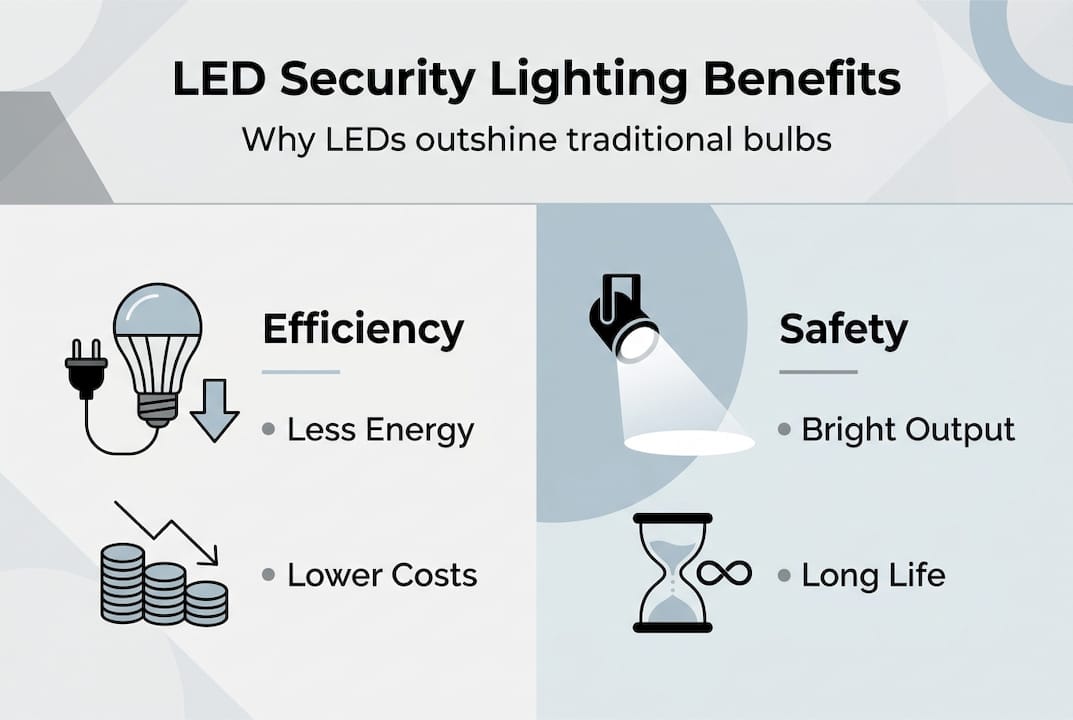
LED vs. traditional bulbs: Energy, cost, and performance
Beyond security, homeowners weigh what they actually pay for lighting choices. The numbers here are stark.
LEDs use up to 75% less electricity than incandescent bulbs for the same light output. An 8-10 watt LED matches the 800 lumens of a 60-watt incandescent. For a typical security floodlight, a 20-watt LED replaces a 100-watt halogen. Run that fixture for 10 hours a night and the savings compound fast.
| Bulb type | Typical wattage | Lumens output | Avg. lifespan | Annual energy cost (10 hrs/night) |
|---|---|---|---|---|
| Incandescent | 100W | 1,600 | 1,000 hrs | ~$36 |
| Halogen | 72W | 1,600 | 2,000 hrs | ~$26 |
| LED | 16W | 1,600 | 25,000 hrs | ~$6 |
The table above uses a national average electricity rate of roughly 13 cents per kilowatt-hour. In the DFW area, summer rates can push higher during peak demand months, making LED savings even more significant from June through September.
Common mistakes homeowners make when switching:
- Buying by wattage instead of lumens: Watts measure power draw, not brightness. Always check the lumen rating.
- Over-lighting the entry: More watts does not always mean better security. Glare can actually reduce visibility on camera footage.
- Ignoring color temperature: A 3000K warm white looks nice on a porch but may not be the best choice for a wide driveway or back fence line where you need crisp, detailed coverage.
Pro Tip: For energy-efficient security lighting on a typical DFW property, look for fixtures in the 4000K to 5000K range for driveways and perimeter areas. That cool, neutral white maximizes camera clarity and feels natural to the eye without the harsh blue tint of daylight-spectrum LEDs.
Understanding the real cost: ROI and total ownership
With efficiency covered, let’s look at the actual dollars-and-cents over the years.
The upfront price of an LED fixture is typically higher than an equivalent incandescent or halogen unit. That gap surprises some homeowners and becomes the single biggest reason they delay upgrading. It is also, more often than not, a false economy. Total cost of ownership for LEDs runs about 80% lower than incandescent alternatives when you account for energy use, replacement bulbs, and maintenance labor over a fixture’s life.

| Cost factor | Incandescent (5 yrs) | Halogen (5 yrs) | LED (5 yrs) |
|---|---|---|---|
| Fixture + bulb cost | $15 + ~$30 replacements | $20 + ~$20 replacements | $40 + $0 replacements |
| Energy cost | ~$180 | ~$130 | ~$30 |
| Total | ~$225 | ~$170 | ~$70 |
Using a single 1,600-lumen security fixture running 10 hours a night, the LED pays for itself in roughly 12 to 18 months. After that, every month it runs is pure savings.
Key points to keep in mind:
- Replacement frequency: Incandescent bulbs fail every 1,000 hours. LEDs last 25,000 hours or more, meaning you replace them roughly 25 times less often.
- Maintenance cost: Every time a bulb in a hard-to-reach fixture needs replacing, there is either your time or a service call involved. LEDs eliminate most of that.
- Scale matters: A full perimeter setup with 6 to 8 fixtures multiplies these savings considerably. A $150 annual energy reduction across a full property is realistic.
Pro Tip: If you are evaluating LED security lighting ROI for a larger property with multiple fixtures, add up your current monthly exterior lighting costs and multiply by 12. That annual number often shocks homeowners into action faster than any per-fixture comparison.
How to choose and install LED security lighting
Ready to make the change? Here is a quick, actionable roadmap to upgrade your outdoor lighting.
Sizing your fixtures
- Entry points and front door: 700 to 1,000 lumens is sufficient for a welcoming but secure entry. This covers the area without creating harsh glare for visitors or your camera.
- Driveways and garages: 1,600 to 2,400 lumens per fixture gives you the wide coverage needed without creating pools of shadow between fixtures.
- Back yards and perimeter fencing: For larger yards common in suburban DFW communities, 2,400 to 4,000 lumen floodlights cover wide open areas effectively.
Placement tips for maximum deterrence
- Mount lights at 8 to 10 feet high. Lower than that and they are easier to tamper with. Higher and you lose precise directional control.
- Angle fixtures slightly downward toward pathways and entry zones rather than outward toward the street, which can cause glare for drivers and neighbors.
- Cover every dark corner. Burglars move toward shadow. A property with consistent, even light around its full perimeter removes that option.
- Professional LED lighting help is worth considering for complex properties where fixture placement interacts with HOA rules or architectural features.
DFW-specific considerations
- Texas summers push temperatures above 100°F regularly. Choose fixtures rated for high-temperature operation with proper heat sinking built in.
- Many HOAs in communities like Mansfield, Cedar Hill, and Midlothian have rules about fixture color, mounting height, and light direction. Check those before purchasing.
- IP65 or higher waterproofing ratings handle DFW’s intense spring thunderstorms without issue. Note that an 8-10W LED delivering 800 lumens uses a fraction of the power of older bulbs, so you can run more fixtures on the same circuit without electrical concerns.
What most homeowners miss about LED security lighting
We talk to homeowners across 35+ DFW cities every week, and the most common gap we see is this: people focus entirely on bulb wattage and monthly savings, and miss the bigger picture entirely.
Security lighting is not just about swapping bulbs. It is about where light lands, how consistently it covers your property, and how the system looks in daylight when it is not on. A poorly placed 20-watt LED is less secure than a well-positioned 10-watt one. Placement, angle, and fixture choice matter more than raw wattage.
There is also a property value dimension that rarely comes up in these conversations. Professionally installed, well-designed outdoor lighting consistently ranks as a high-return home improvement. It reshapes how your home looks at night, which affects curb appeal, perceived safety, and in many cases, resale interest.
Our local LED lighting advice always starts with a full property walkthrough, not a bulb catalog. The right system is one that fits your home’s architecture, your neighborhood’s aesthetic standards, and your actual security needs. Efficiency is a benefit. But smart design is the real upgrade.
Upgrade your home’s security lighting with expert help
If you are ready to boost both security and savings, the next step is easier than you might think. At DFW LED Pro, we handle everything from fixture selection to professional installation across Arlington, Fort Worth, Grand Prairie, Burleson, and 30+ other communities in the metroplex.
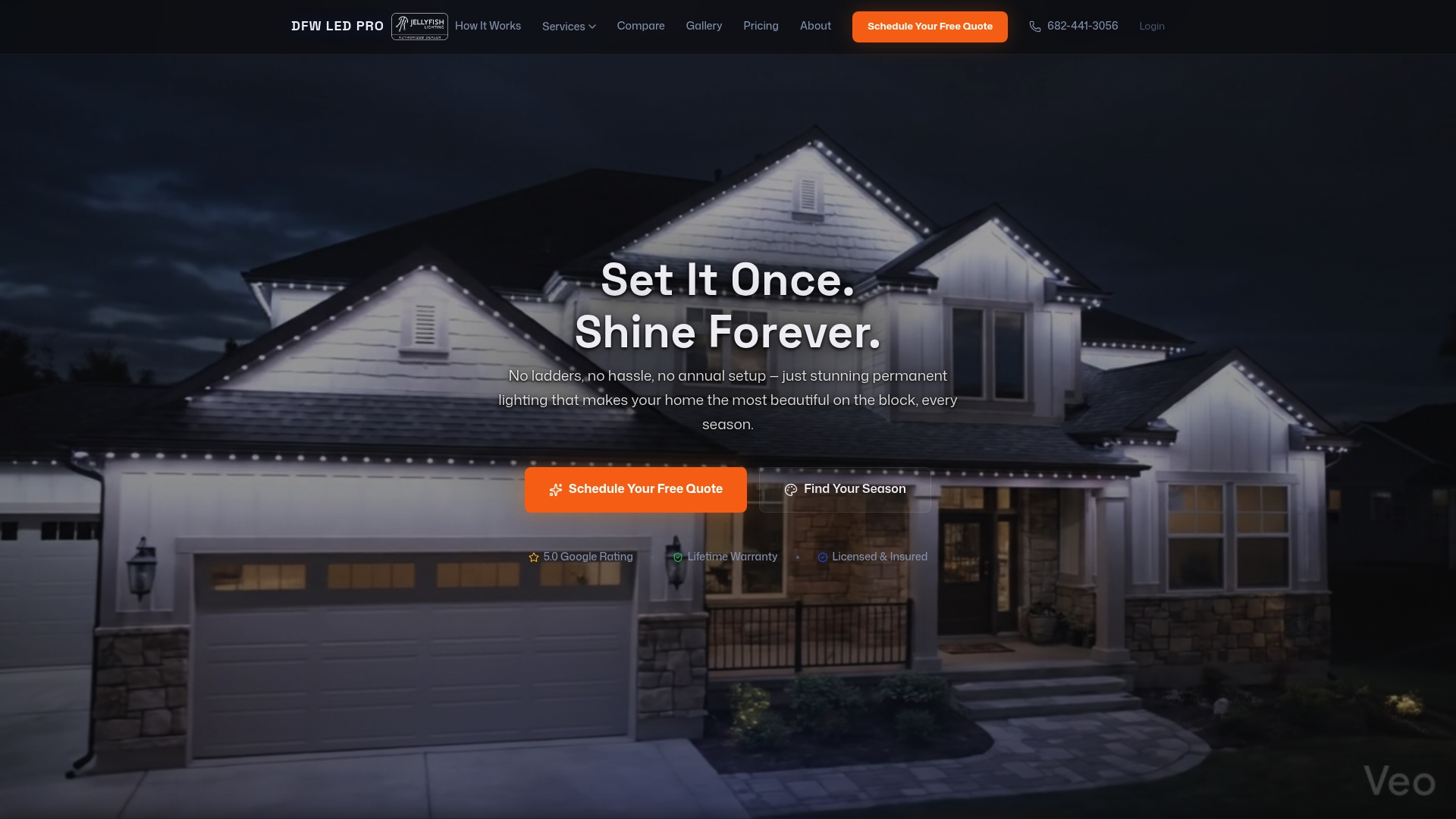
Our team assesses your property, recommends placement for maximum coverage and deterrence, and installs fixtures built to handle DFW weather year-round. You get a system designed for your home, not a generic off-the-shelf solution. DFW LED Pro solutions are backed by professional design expertise and a commitment to getting the details right. Reach out today and let our LED lighting experts in Dallas-Fort Worth show you exactly what your property’s security lighting could look like.
Frequently asked questions
How much energy can I really save by switching to LED security lighting?
LED security lights can cut your exterior lighting energy use by up to 75% compared to incandescents, while providing equal or better brightness. For a typical DFW home running multiple outdoor fixtures nightly, that adds up to real money over the course of a year.
Does LED security lighting actually help deter crime?
Yes. Research on LED street lighting found a 15% drop in nighttime crimes and a 21% reduction in gun violence in areas with improved LED illumination. Better light removes the cover of darkness that opportunistic crime depends on.
Are LEDs more expensive to install than traditional bulbs?
LED fixtures cost more upfront, but total ownership cost runs about 80% lower over time due to reduced energy use and virtually no bulb replacement. Most installations pay for themselves within 1 to 2 years.
What are the best places to install LED security lights?
Prioritize front and back entrances, driveways, garages, side gates, and any dark corners along your fence line. Even coverage across all perimeter access points is more effective than one very bright fixture in a single location.
Recommended
- JellyFish Accent & Security Lighting | Smart Home LED | DFW LED Pro
- Blog | Permanent LED Lighting Tips & Guides | DFW LED Pro
- Are Permanent LED Lights Worth It? Honest Answer for DFW Homeowners | DFW LED Pro
- Why 48V Beats 12V for Permanent LED Lights | DFW LED Pro
- Permanent LED lighting for Calgary homes: curb appeal + security