Lighting terminology guide for outdoor LED solutions
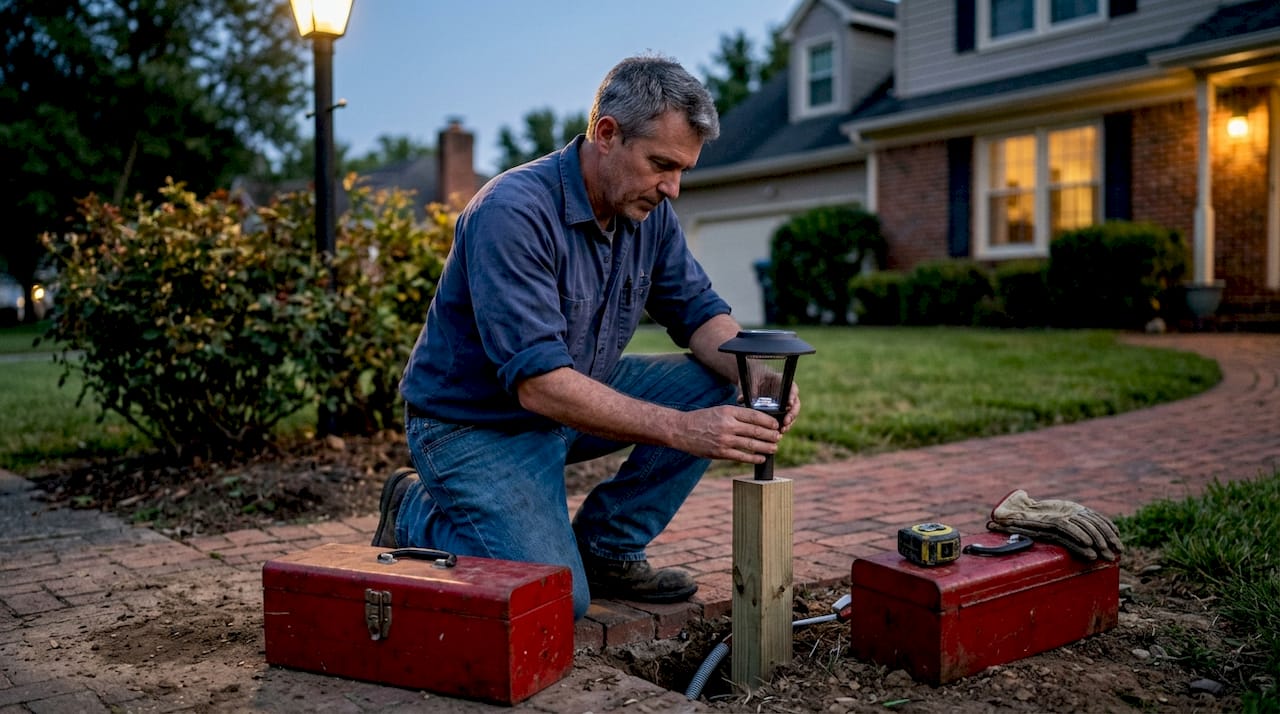
Lighting terminology can feel like a foreign language when you’re shopping for permanent outdoor LED systems in the Dallas-Fort Worth area. Yet those spec sheet numbers directly determine whether your lights survive a Texas hailstorm, whether colors look washed out, and whether your electricity bill stays manageable. Most DFW homeowners pick fixtures based on looks alone, then face expensive repairs or dim results within a few seasons. This guide translates the most critical lighting jargon into plain English, with local context built in, so you can make confident decisions before you spend a single dollar.
Table of Contents
- Decoding outdoor lighting terminology: What you really need to know
- Weatherproofing and longevity: How the right specs protect your investment
- Wire, voltage, and installation: Avoiding pitfalls for consistent results
- Selecting LED fixtures for DFW: Putting terminology into practice
- What most guides miss: Why terminology isn’t just academic
- Next steps: Find the perfect LED solution for your DFW outdoor space
- Frequently asked questions
Key Takeaways
| Point | Details |
|---|---|
| IP rating is crucial | Weatherproofing with IP65+ protects your outdoor LEDs from Dallas-Fort Worth storms and prevents costly failures. |
| Lifespan and efficacy matter | Choosing LEDs rated for L70 and over 130 lm/W means brighter, longer-lasting outdoor lights. |
| Proper wiring prevents dimming | Using the right gauge wire and hub installation methods keeps lighting consistent across your space. |
| Understanding specs saves money | Knowing lighting terminology helps you select products that are durable, beautiful, and efficient for your local climate. |
Decoding outdoor lighting terminology: What you really need to know
Now that we know why understanding lighting terminology is so crucial, let’s break down the actual terms you’ll encounter. Getting familiar with these definitions puts you in the driver’s seat when comparing products, reviewing quotes, or evaluating a JellyFish Lighting installation proposal.
IP rating stands for Ingress Protection. It describes how well a fixture keeps out dust and moisture. The two-digit number tells you everything: the first digit covers solid particle protection, and the second covers water. For DFW homes, IP65 or higher is required because lower ratings allow moisture ingress that causes fixture failures during heavy storms and driving rain. IP66 and IP67 go further, resisting sustained water jets and brief submersion respectively, making them the smart choice for North Texas weather.
Lumens measure the total amount of visible light a fixture produces. More lumens mean a brighter output. Watts measure energy consumed, not brightness. A fixture using fewer watts while producing more lumens is more efficient.
CRI stands for Color Rendering Index. It scores how accurately a light source shows the true colors of objects compared to natural daylight. A CRI of 100 is perfect. For landscaping and architectural lighting, a CRI of 80 or above renders plant colors, stone textures, and your home’s exterior accurately. Anything below 80 tends to make colors look flat or odd at night.
Kelvin refers to color temperature, meaning how warm or cool the light appears visually. A lower Kelvin number, around 2700K, produces a warm amber glow similar to incandescent bulbs. Higher numbers, up to 5000K, produce a crisp, daylight-white tone. Most DFW homeowners prefer 2700K to 3000K for front elevations because it flatters brick and stone without looking clinical.
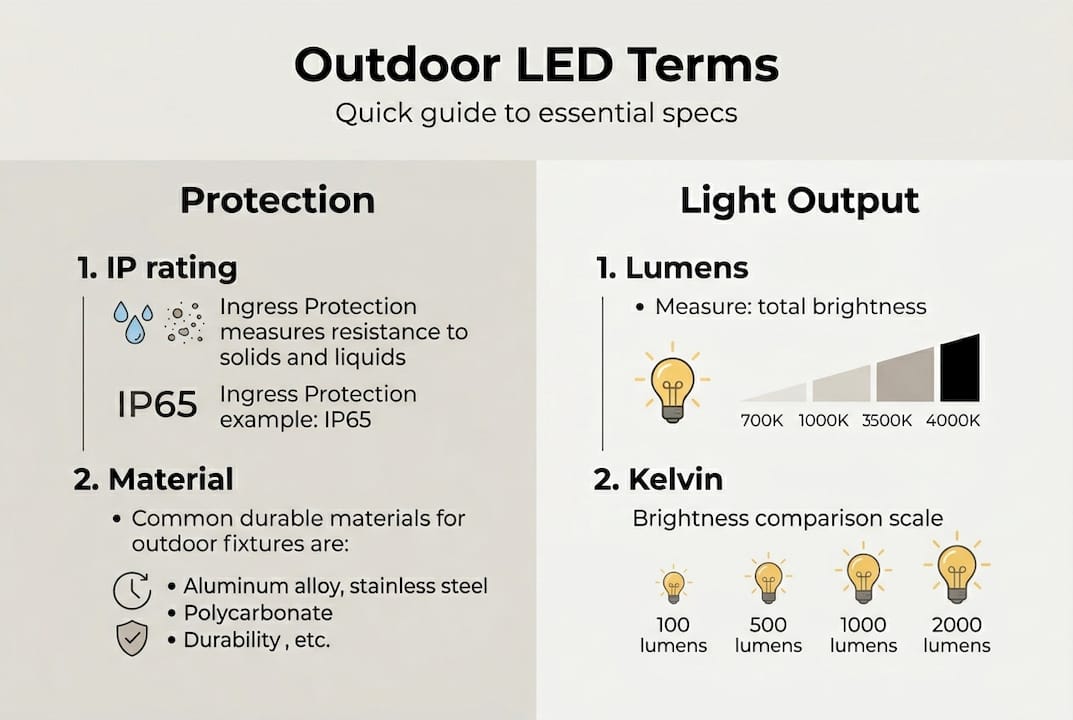
Efficacy measures how efficiently a fixture converts electricity into light, expressed in lumens per watt (lm/W).
Here’s a quick jargon-to-plain-English reference:
- IP rating: How well the fixture blocks water and dust
- Lumens: Raw brightness output
- CRI: Color accuracy score (higher is better)
- Kelvin: Warm vs. cool light appearance
- Efficacy: Brightness per unit of energy used
| Spec | What it measures | DFW benchmark |
|---|---|---|
| IP rating | Dust and water protection | IP65 minimum |
| Lumens | Brightness output | Depends on application |
| CRI | Color accuracy | 80+ |
| Kelvin | Color temperature | 2700–5000K selectable |
| Efficacy | Energy efficiency | 130+ lm/W |
You can explore how these specs translate to real installations for Dallas LED lighting, or review how the right choices affect overall LED lighting value for your property.
Weatherproofing and longevity: How the right specs protect your investment
With the basic terms defined, let’s see how ratings and specs actually protect your outdoor lighting investment. In DFW, outdoor fixtures face brutal conditions: summer heat above 100°F, spring hailstorms, and sudden torrential downpours. Specs that pass muster in mild climates often fall short here.
IP ratings are your first line of defense. As noted earlier, IP65 prevents moisture ingress from water jets, which covers most storm scenarios. But for low-mounted fixtures near the ground or along rooflines exposed to blowing rain, IP67 is worth the upgrade. Moisture inside a fixture corrodes the LED driver, causing flickering and early failure.
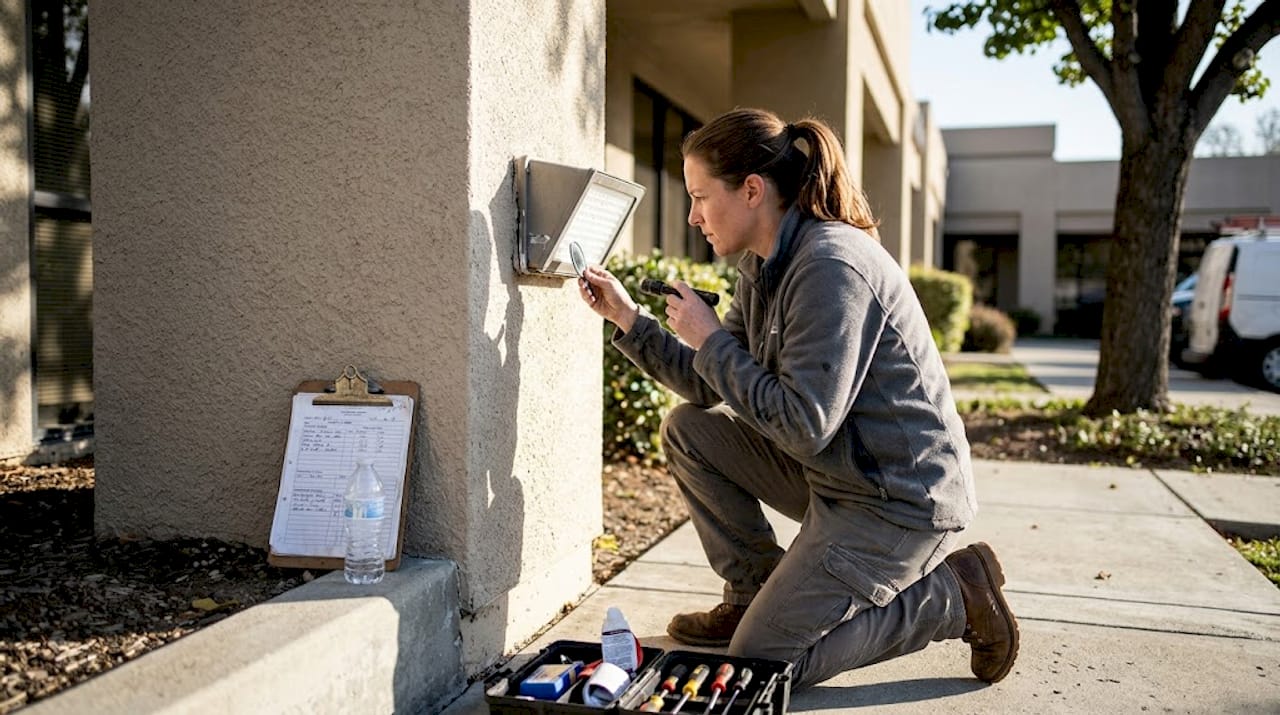
L70 lifespan is another term you’ll encounter on spec sheets. It describes the point at which an LED drops to 70% of its original brightness. The benchmark is 100,000 hours for quality outdoor LEDs. Here’s why that matters in real dollars:
| L70 rating | Hours per night (6 hrs) | Years before replacement |
|---|---|---|
| 25,000 hours | 6 hours | ~11 years |
| 50,000 hours | 6 hours | ~23 years |
| 100,000 hours | 6 hours | ~46 years |
Fixtures with lower L70 ratings not only dim faster, they require more frequent replacement, which adds labor costs and waste. For permanent LED systems meant to stay on your home for decades, a 100,000-hour L70 rating is the standard worth targeting.
Material choices matter just as much as ratings. Aluminum housings dissipate heat better than plastic, which extends LED lifespan. UV-stabilized polycarbonate lenses resist sun-induced yellowing, which is a real issue during Texas summers. Silicone gaskets hold up against thermal expansion and contraction better than foam seals.
Pro Tip: When reviewing a product’s spec sheet, look for L70 ratings tested under high-temperature conditions, not just lab temperatures. Texas heat accelerates LED degradation faster than the test environments used in many standard certifications.
If you’re exploring options for your neighborhood, see what’s available for Flower Mound LED lighting or review our LED lighting pricing to understand what quality specs translate to in terms of investment.
Wire, voltage, and installation: Avoiding pitfalls for consistent results
It’s not just about fixture specs. Installation details also shape lighting outcomes. Here’s how to translate technical wiring terms into practical steps.
Voltage drop is one of the most common culprits behind disappointing outdoor lighting. In low-voltage LED systems, electricity loses power as it travels along a wire. Fixtures at the end of a long run receive less voltage than those near the transformer, causing them to appear noticeably dimmer. Voltage drop at cable ends is preventable with the right wiring strategy.
Here are the steps to mitigate voltage drop effectively:
- Use 12-gauge wire for all runs, especially runs exceeding 50 feet
- Keep individual wire runs under 100 feet whenever possible
- Use the hub wiring method instead of daisy-chain wiring
- Invest in a multi-tap transformer that allows voltage adjustments per zone
- Balance loads across multiple transformer zones to prevent overloading any single run
“Avoid daisy-chain wiring at all costs. The hub method ensures each fixture gets the same voltage from the source, which produces uniform brightness across your entire system. Size your transformer to no more than 80% of its maximum load capacity to give yourself headroom and protect the equipment.”
This advice reflects what experienced installers recommend to prevent premature transformer failure and uneven lighting results.
Transformer sizing means calculating the total wattage of all fixtures and adding a safety buffer. Running a transformer at 100% of its rated capacity shortens its life and risks tripping circuit protections on cool Texas nights when electrical resistance changes.
Wire gauge refers to the thickness of the wire. Lower gauge numbers mean thicker wire. Thicker wire carries more current with less resistance, reducing voltage drop over distance.
Pro Tip: Always size your transformer at 80% or less of its maximum watt capacity. If your system draws 400 watts of fixtures, use a 500-watt transformer at minimum. This single decision prevents more service calls than any other installation choice.
For professionally installed systems in your area, see how we handle Lewisville LED lighting and Euless lighting installation with these exact standards.
Selecting LED fixtures for DFW: Putting terminology into practice
With wiring and installation sorted, let’s apply what you’ve learned to evaluating and selecting the best fixtures for your DFW home. Reading a spec sheet no longer has to feel intimidating when you know what each number represents.
Start with efficacy. Fixtures rated at 130 lm/W or above deliver strong brightness without inflating your power bill. For a permanent system running nightly, even small differences in efficacy add up to meaningful savings across several years.
Next, check the CRI. For most residential applications, 80+ is adequate, but for showcasing landscaping details, stone facades, or custom paint colors on your home’s exterior, a CRI of 90 or above produces noticeably richer results.
Kelvin selection should reflect your property’s existing palette. Warm white tones around 2700K to 3000K complement brick homes, wooden fences, and warm-toned landscape plants. Cooler tones around 4000K to 5000K work well for modern architecture with concrete, steel, or white stucco finishes.
Here are the top specs to prioritize when selecting fixtures for DFW conditions:
- IP65 minimum: Essential for surviving North Texas storms and hail
- CRI 80+: Ensures colors look accurate and vibrant at night
- Efficacy 130+ lm/W: Balances brightness with energy cost
- Selectable Kelvin 2700–5000K: Flexibility for different zones and aesthetics
- Aluminum housing: Better heat dissipation for Texas summers
- L70 rating at 100,000 hours: Long-term performance without early dimming
JellyFish Lighting systems meet all of these benchmarks as a baseline. They’re engineered for year-round permanent installation, which means the components are selected specifically to endure the kind of abuse DFW weather delivers. Learn more about Fort Worth LED installation options or revisit the full picture of LED fixture value for your property.
What most guides miss: Why terminology isn’t just academic
We’ve covered the nuts and bolts. Here’s the perspective most guides overlook.
Most lighting articles treat specs like a checklist. Check the IP rating, confirm the lumens, move on. But in our experience installing permanent LED systems across 35+ DFW cities, the homeowners who skip the terminology often pay for it twice. Once when they install budget fixtures with inadequate ratings, and again when those fixtures fail after one stormy season.
The spec sheet is not fine print. It’s a performance contract.
When you understand what L70, IP67, and efficacy actually mean, you stop comparing prices and start comparing outcomes. That shift changes everything. A higher-rated fixture costs more upfront but eliminates replacement labor, wasted materials, and the frustration of dark patches across your roofline.
There’s also an aesthetic and resale angle most guides ignore entirely. Homes with properly specified, professionally installed permanent lighting photograph better, show better, and command stronger buyer interest. The right LED value perspective is not just about saving money on electricity. It’s about protecting the visual and financial value of your home for years ahead.
Next steps: Find the perfect LED solution for your DFW outdoor space
From knowledge to action, here’s how DFW LED Pro can help you bring your lighting vision to life.
Now that you can read a spec sheet and understand what matters for DFW conditions, the next step is putting that knowledge to work on your specific property. At DFW LED Pro, we don’t just install lights. We walk you through every spec decision and explain exactly why we choose the components we do for your home’s layout and your neighborhood’s conditions.
Whether you’re interested in patio lighting solutions for outdoor entertaining or a full permanent LED lighting service across your home’s entire exterior, we bring the expertise and local knowledge to get it right the first time. Reach out today to schedule a consultation and see how our Dallas LED lighting install team can transform your outdoor space with confidence.
Frequently asked questions
What is the IP rating, and why is it important for Dallas-Fort Worth homes?
The IP rating measures a fixture’s protection against dust and water ingress. For DFW, IP65 or higher is essential because local storms and driving rain can quickly destroy lower-rated fixtures.
How do I mitigate voltage drop in an outdoor LED setup?
Use 12-gauge wire, apply the hub wiring method, and keep wire runs under 100 feet. These steps, combined with multi-tap transformers, maintain consistent brightness across every fixture.
What does ‘L70 lifespan’ mean for LED lights?
L70 lifespan is the point at which an LED reaches 70% of its original brightness. Quality outdoor LEDs hit 100,000-hour benchmarks, meaning decades of reliable output before noticeable dimming occurs.
Which LED specs matter most for DFW climates?
Prioritize efficacy above 130 lm/W, CRI of 80 or higher, selectable color temperature between 2700 and 5000K, and at least IP65 weatherproofing to survive Texas heat, hail, and storms.
Is professional installation necessary for permanent outdoor LED lighting?
Yes. Professional installation prevents voltage drop, ensures correct transformer sizing, and extends overall system lifespan. Expert hub wiring methods and proper load balancing are difficult to achieve reliably without hands-on experience.
Recommended
- JellyFish Patio Lighting | Permanent Outdoor String Lights | DFW LED Pro
- Blog | Permanent LED Lighting Tips & Guides | DFW LED Pro
- JellyFish Commercial LED Lighting | Business & Restaurant | DFW LED Pro
- JellyFish Landscape Lighting | Premium Outdoor LED | DFW LED Pro
- How to upgrade exterior lighting for curb appeal and security