LED lighting control: Smart outdoor solutions explained
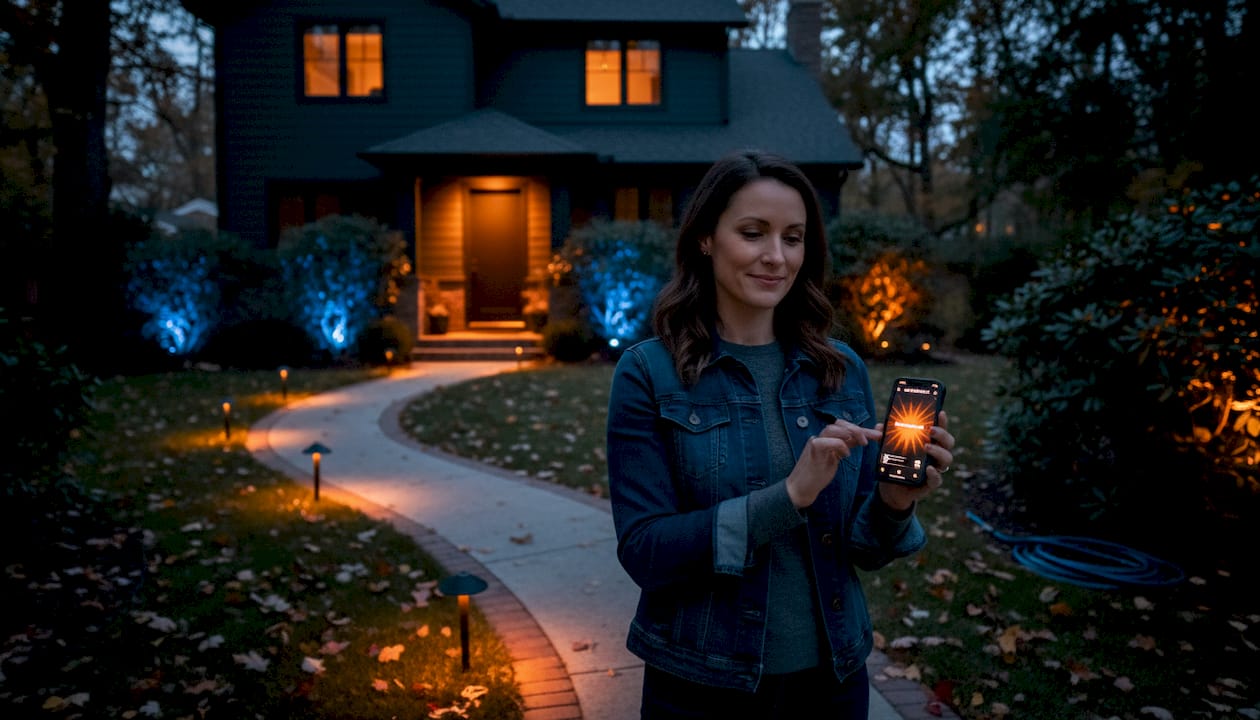
Most Dallas-Fort Worth homeowners install LED lights and call it done. That’s a costly oversight. LEDs are already far more efficient than traditional bulbs, but without a proper control system, you’re leaving real money on the table and settling for a fraction of their true capability. LED lighting control lets you adjust brightness, schedule automatic on/off times, shift colors for seasons or holidays, and monitor energy use right from your phone. For homeowners in Arlington, Mansfield, Fort Worth, and the surrounding communities, understanding this technology is the difference between a good outdoor lighting setup and a genuinely great one.
Table of Contents
- What is LED lighting control?
- Key features and technologies in modern LED lighting control
- How LED lighting controls maximize energy savings and convenience
- Integrating LED controls with smart home and outdoor lighting systems
- Expert perspective: What most homeowners overlook about LED lighting control
- Upgrade your home with professional LED lighting control
- Frequently asked questions
Key Takeaways
| Point | Details |
|---|---|
| More than on/off | LED lighting controls let you personalize brightness, color, and scheduling—outdoor lighting becomes truly dynamic. |
| Significant energy savings | Adding smart controls to LED systems yields 15–30% extra energy savings. |
| Plug into smart homes | Modern LED controls seamlessly integrate with home automation systems for ultimate convenience. |
| Choose the right setup | Weatherproof, outdoor-rated controllers are crucial for North Texas homes. |
What is LED lighting control?
Now that you recognize LED lighting’s potential, let’s define what LED lighting control actually means and why it goes so far beyond a simple on/off switch.
LED lighting control refers to electronic systems and devices that regulate the current, voltage, brightness, color, and patterns of LED lights, which makes it distinctly different from LED drivers that only handle power conversion. A driver keeps your LEDs running safely. A controller makes them perform. That distinction matters enormously when you’re investing in a permanent outdoor lighting system for your home.
Think of it this way. A driver is the engine, and the controller is the dashboard. You need the engine to move, but the dashboard tells you where you’re going, how fast, and lets you adjust along the way. For outdoor residential lighting in the DFW area, that level of control translates directly into better aesthetics, smarter energy use, and a system that works for you rather than just sitting there.
Here’s what a quality LED lighting control system actually gives you:
- Brightness adjustment (dimming): Set the exact light level for any situation, from full brightness during a backyard party to a soft ambient glow on a quiet weeknight.
- Color selection and color changing: Swap between millions of colors for holidays, sporting events, or seasonal themes without replacing a single bulb.
- Scheduling: Program your lights to come on automatically at sunset and turn off at midnight, no manual action needed.
- Pattern and animation settings: Cycle through fades, chases, twinkles, and custom sequences for events or curb appeal.
- Energy monitoring: Track actual consumption in real time so you know exactly what your outdoor lighting costs each month.
- Remote and app access: Make changes from anywhere using your smartphone, whether you’re in the backyard or out of town.
The key distinction: An LED driver regulates power so your LEDs don’t burn out prematurely. An LED lighting controller decides what those LEDs actually do with that power. Without a controller, your system is functional but inflexible. With one, it becomes a fully customizable outdoor experience.
Understanding lighting controllers explained thoroughly before purchasing a system helps you avoid buying more hardware than you need or choosing equipment that won’t support future upgrades. For permanent outdoor installations like the JellyFish Lighting systems we install across the DFW metroplex, integrated control is not optional. It’s what makes the investment worthwhile. You can also control outdoor LED lights remotely through app-based platforms that require no additional hardware if your system is set up correctly from day one.
Key features and technologies in modern LED lighting control
With the basics established, let’s explore the advanced features that make modern LED lighting controls a genuine upgrade for any outdoor setup.
The gap between a basic LED installation and a fully controlled one is substantial. Here’s a direct comparison so you can see exactly what you’re gaining:
| Feature | Traditional LEDs | Controlled LEDs |
|---|---|---|
| Brightness | Fixed output | Fully dimmable |
| Color options | Single fixed color | Millions of colors |
| Scheduling | Manual switch only | Automated scheduling |
| Energy monitoring | None | Real-time tracking |
| Remote access | None | App or voice control |
| Holiday/event modes | Requires replacement | Instant color change |
| Energy savings beyond base LED | 0% | 15% to 30% additional |
That last row is worth pausing on. Advanced networked lighting controls can add 15 to 30% energy savings on top of what LEDs already save compared to traditional bulbs. For a home with extensive permanent outdoor lighting, that number adds up fast over a Texas summer when your system runs every single night.
Here are the core features you should look for when evaluating any modern LED lighting control system:
- Dimming capability: True dimming reduces wattage consumption proportionally. A light dimmed to 50% uses roughly 50% of the power. This alone extends bulb life and cuts costs.
- Scheduling and automation: Set sunrise/sunset triggers or fixed times. The best systems pull local sunrise/sunset data automatically so your schedule adjusts through the year without any input from you.
- Color control: Look for systems that support a full RGB or RGBW color space. This is what gives you the flexibility to light your home red and green in December and burnt orange for Longhorns season in the fall.
- Occupancy and daylight sensing: More relevant for commercial applications but increasingly available for residential systems. Sensors reduce output when no one is outside.
- Energy monitoring and reporting: Know exactly what you spend. Some platforms break down usage by zone or fixture group.
- Smart home integration: Compatibility with Alexa, Google Home, and platforms like Control4 makes your outdoor lighting part of a unified home automation system.
On the technology side, networked lighting control systems allow two-way communication between fixtures and the control hub. This means the system doesn’t just send commands, it receives status updates and adjusts automatically based on real conditions. That’s a significant step beyond single-direction wireless remotes.
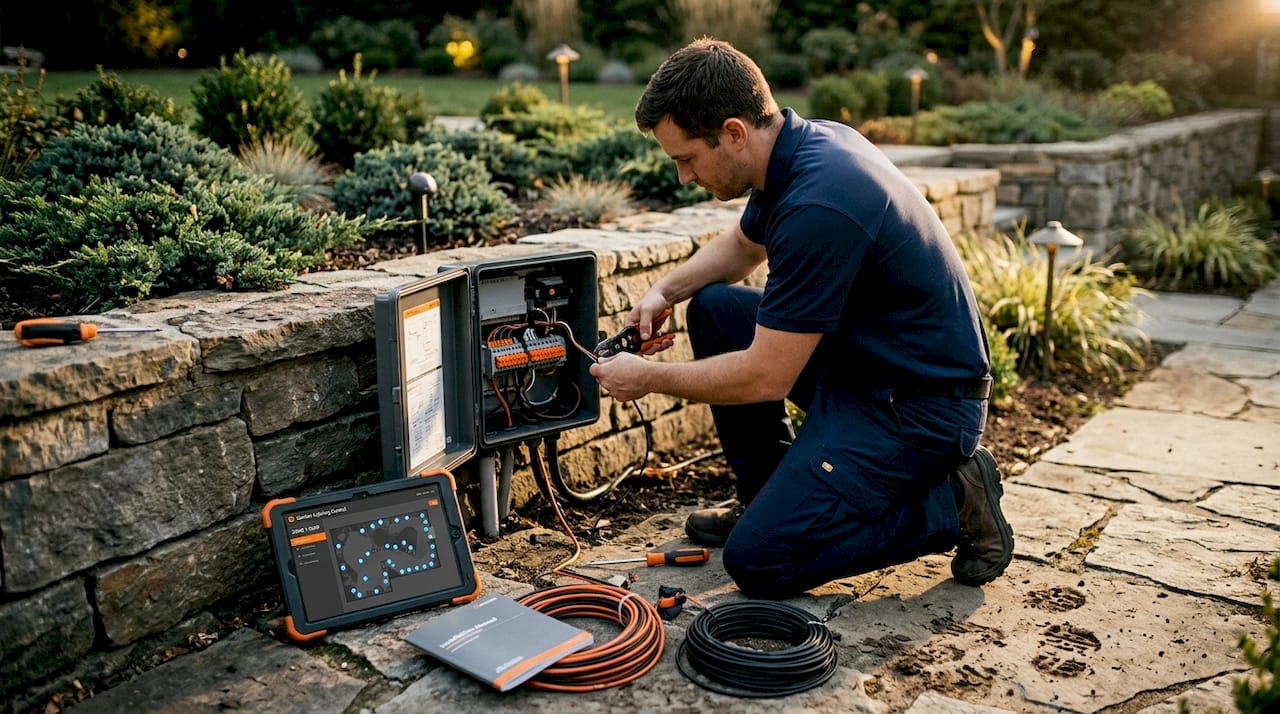
Home lighting automation platforms now allow homeowners to set scenes, group lights by zone, and trigger events based on schedules, sensor inputs, or voice commands all within a single app interface.
Pro Tip: In the DFW area, temperatures swing from below freezing in January to over 100°F in August. Always verify that any outdoor LED controller carries an appropriate weatherproof rating. Look for IP65 or higher for components exposed to the elements. An IP67 rated controller can handle brief water immersion, which matters during those sudden North Texas downpours.
How LED lighting controls maximize energy savings and convenience
Understanding the technology is one thing; seeing the impact on your energy bills and daily routine puts it all in perspective.
Texas electricity rates are not forgiving. The average residential rate in Texas regularly runs between 12 and 16 cents per kilowatt-hour, and DFW homeowners run outdoor lighting systems for hundreds of hours per year. Even modest improvements in efficiency have a measurable effect on annual costs.
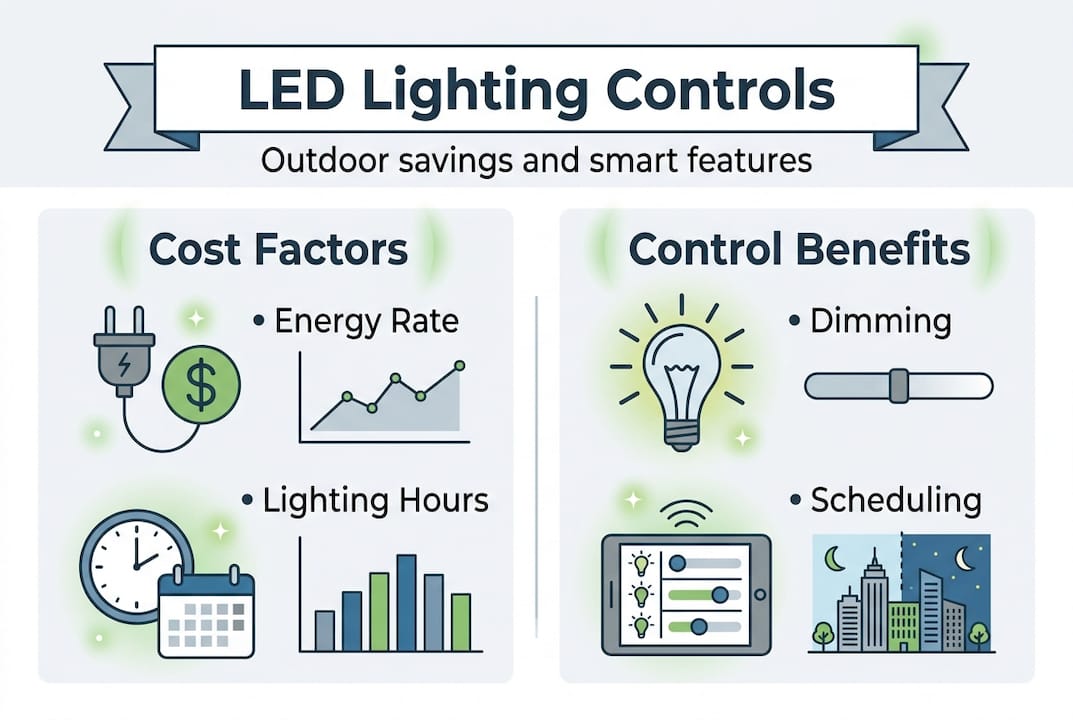
Here’s an estimate of how the numbers can look for a mid-sized permanent outdoor LED installation:
| Scenario | Annual energy cost (estimated) |
|---|---|
| Traditional incandescent outdoor lights | $480 to $600 |
| Basic LED lights, no controls | $120 to $160 |
| LED lights with full control system | $85 to $115 |
Those figures are based on a typical residential installation running four to six hours per night. The 15 to 30% additional savings that advanced controls deliver on top of baseline LED efficiency are what push your system from good to genuinely cost-effective over time.
Beyond the financial side, controls make everyday use dramatically more convenient. Here are real scenarios where a control system earns its place:
- Automatic sunset activation: Your lights come on every evening without you touching a switch. The schedule adjusts seasonally so they’re not burning hours before dark in summer.
- Security scheduling: Set a specific zone of lights to flash or brighten when motion is detected near your driveway or entry points. This adds a visible deterrent without requiring a separate security lighting system.
- Remote adjustments while traveling: Going out of town? Activate your full lighting schedule from your phone so your home looks occupied. Change patterns from anywhere if you want a different look for a neighborhood event.
- Event and holiday color changes: Switch your entire home’s exterior from white to team colors before a game, or set up a holiday pattern weeks in advance. One tap in the app, done.
- Dimming for late nights: Full brightness until 10 PM, then a dim setting overnight for minimal energy draw and neighbor-friendly curb presence.
Checking out the best outdoor LED lighting controls options for the DFW area specifically helps you match the right control system to your home’s size, layout, and existing smart home setup. Not every controller works well in every situation, and local expertise matters when you’re choosing equipment that needs to survive Texas weather year-round.
The convenience factor is genuinely underrated. Homeowners who have lived with a manually controlled outdoor lighting setup for a few seasons consistently report that the automation feature alone justifies the upgrade. You stop thinking about it entirely, and it just works.
Integrating LED controls with smart home and outdoor lighting systems
Once you appreciate the savings and flexibility, here’s how you can make LED controls a seamless part of your home’s outdoor environment.
Integration doesn’t have to be complicated. The process follows a logical sequence, and when done correctly the first time, it creates a system that expands naturally as your home’s technology evolves.
- Assess your current setup: Take stock of what smart home devices you already use. Do you run Alexa, Google Home, Apple HomeKit, or a platform like Control4? Your LED control system needs to be compatible from day one, not an afterthought that requires workarounds later.
- Select the right controller: Match the controller to your fixture count, outdoor zone layout, and integration requirements. A system with smart home LED lighting compatibility built in saves you from needing a separate bridge device.
- Set up your smart hub integration: Follow the manufacturer’s pairing process to connect your lighting controller to your existing hub. Most modern systems use Wi-Fi or a dedicated mesh protocol that keeps outdoor signal reliable even at the far end of your property.
- Configure the app and create schedules: Once connected, build your initial schedule in the app. Start with a basic sunset/sunrise automation, then layer in specific zone behaviors and color preferences as you get comfortable with the interface.
- Plan your outdoor installation for weather resilience: Controller placement matters. Mount control hardware in a protected enclosure rated for outdoor use. Keep wiring runs tight and sealed. Use conduit in areas where physical protection is needed.
As LED controllers regulate current, voltage, brightness, and color, choosing a system that supports over-the-air firmware updates means your control capabilities improve over time without requiring new hardware. Future-proofing is a real consideration, especially if you plan to expand your lighting to additional areas of your property later.
Pro Tip: Integrate your outdoor lighting schedule with your home’s broader automation. If you already run a security camera or alarm system on a schedule, syncing your lighting to activate simultaneously creates a layered deterrent effect. During the holidays, link your lighting program to a dedicated holiday mode that you can trigger with a single voice command or app tap.
Expert perspective: What most homeowners overlook about LED lighting control
We’ve installed permanent outdoor LED lighting systems across more than 35 cities in the DFW metroplex. In that experience, one pattern shows up consistently: homeowners focus almost entirely on the upfront cost of the control system and underestimate how quickly it pays for itself.
The energy savings are real and ongoing. A control system that adds $200 to $400 to an installation quickly recoups that cost through reduced monthly electricity use, especially in a state where outdoor lighting runs hard through long summer evenings. Spread over five years, the math is straightforward.
The second overlooked issue is weatherproofing. Controllers installed without adequate IP ratings fail. DFW weather is not gentle. Ice storms in January, 110°F attic temperatures in July, and sudden heavy rain throughout the year all stress outdoor electronics. Specifying the right rated hardware from the start avoids costly replacements.
The third thing we see homeowners miss is the ongoing value of updating their control settings seasonally. A system that stays on one setting all year is a missed opportunity. Read more about maximizing your system through home lighting automation insights to see how simple seasonal adjustments keep your lighting feeling fresh and working efficiently year after year. The best outdoor LED systems aren’t set and forgotten. They evolve with your preferences and your home.
Upgrade your home with professional LED lighting control
Ready to elevate your curb appeal and energy savings with a system tailored for your Dallas-Fort Worth home?
At DFW LED Pro, we handle every aspect of your installation from system design to programming and long-term support. You get a turnkey permanent LED lighting setup backed by a manufacturer warranty and local expertise that understands exactly what DFW weather demands from outdoor electrical systems.
If you’re considering permanent LED lights in Dallas or anywhere across the metroplex, we’ll assess your home, recommend the right control configuration, and handle every detail of the installation. Explore our JellyFish permanent LED lighting service to see the full range of options available. Contact DFW LED Pro today to schedule your consultation and get a custom quote for your property.
Frequently asked questions
What is the difference between an LED driver and a lighting controller?
An LED driver provides the power conversion that keeps LEDs running safely, while a lighting controller adjusts brightness, color, timing, and patterns to customize how your lights actually perform.
How much more efficient are LED lights with controls?
LED lighting controls can add another 15 to 30% in energy savings on top of what standard LEDs already deliver compared to traditional bulbs.
Can LED lighting controls be integrated with smart home systems?
Yes, most modern LED lighting controllers work natively with platforms like Alexa, Google Home, and major smart home hubs, allowing voice control and app-based automation without additional hardware.
Are LED lighting controls weatherproof?
Outdoor-rated LED controllers are specifically designed to handle weather exposure, but you should always verify the IP rating before installation, particularly in a climate like DFW’s where temperature swings and storm conditions are common.