Lighting controllers explained: Smarter outdoor spaces in 2026
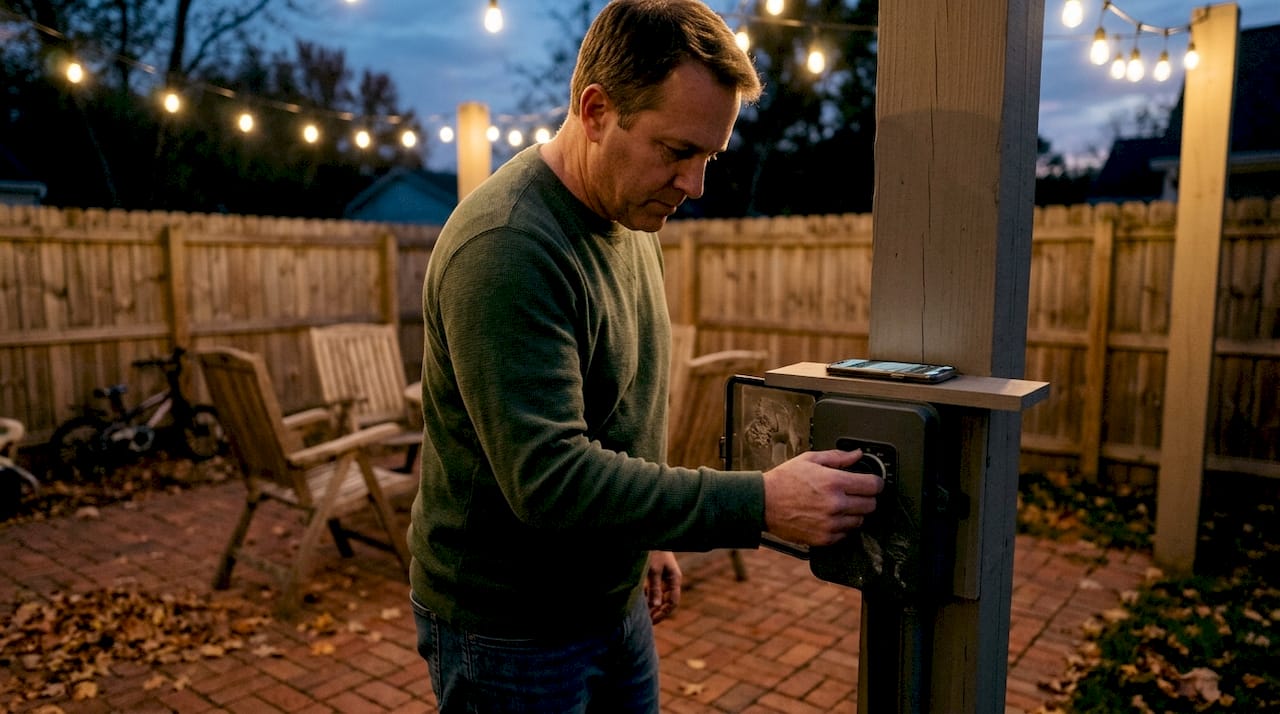
Most homeowners spend months researching LED fixtures but give almost no thought to the controller sitting behind the scenes. That’s a mistake. A quality lighting controller is what separates a static, forgettable outdoor display from a dynamic system that shifts colors for the holidays, dims automatically at midnight, and cuts your energy bill by up to 75%. Whether you’re planning a full permanent LED installation across your home’s roofline or just upgrading your patio setup here in the Dallas-Fort Worth area, understanding controllers is the single fastest way to get more from your investment. This guide breaks it all down without the jargon.
Table of Contents
- What is a lighting controller?
- Types of lighting controllers for outdoor LED systems
- Benefits of installing a quality lighting controller
- Key features to look for in outdoor lighting controllers
- Installation and maintenance essentials
- A professional perspective: Why the cheapest controller may cost you more
- Next step: Enhance your outdoor lighting with professional help
- Frequently asked questions
Key Takeaways
| Point | Details |
|---|---|
| Central control | A lighting controller is the main device that automates and customizes your outdoor LEDs. |
| Variety of options | Controllers range from simple timers to advanced smart systems for every budget and need. |
| Major energy savings | Modern LED controllers can reduce energy use by up to 75% compared to old methods. |
| Future proofing | Investing in a quality, expandable controller gives you more features and fewer hassles long-term. |
| Professional installation | Expert install ensures safety, reliability, and protects your lighting system investment. |
What is a lighting controller?
A lighting controller is the central device that manages every behavior of your outdoor LED system. Think of it as the brain of the operation. Without one, your lights are just lights. With one, they become a fully programmable system that responds to schedules, voice commands, weather triggers, and custom color scenes.
At the most basic level, a controller handles three core jobs:
- Scheduling: Turn lights on at sunset, off at midnight, or run holiday sequences automatically.
- Color and dimming control: Adjust brightness levels and shift through millions of color combinations.
- Smart integration: Connect to apps, voice assistants like Alexa or Google Home, or even full home automation platforms.
Controllers exist on a wide spectrum. On the simple end, you have plug-in mechanical timers that do nothing more than cut power on a schedule. On the advanced end, you have professional-grade systems that manage hundreds of individual LED zones, store complex lighting scenes, and respond in real time to app commands from your phone.
Capacity matters more than most people realize. Controllers support 350-600W+ of LED power when paired with proper power injection, which means a single quality controller can manage a large-scale permanent installation covering your entire home’s exterior. That kind of capacity is what makes permanent LED systems so scalable.
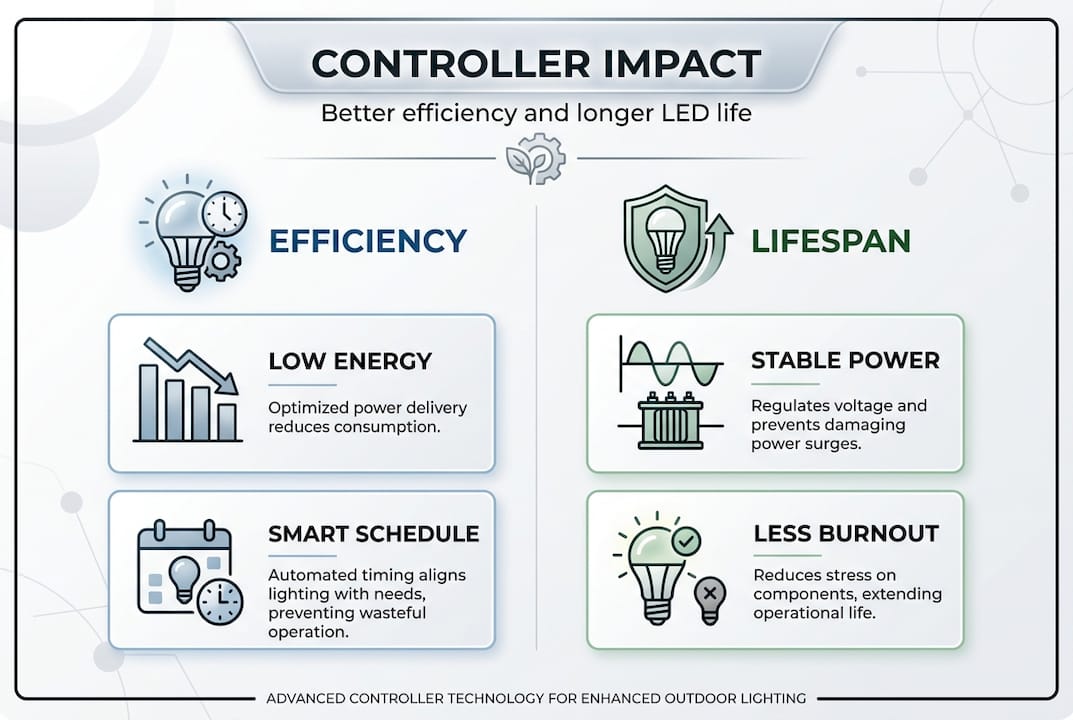
A controller also plays a direct role in the lifespan of your LED fixtures. Consistent, precise power delivery prevents voltage spikes and thermal stress, two of the biggest killers of LED performance. That’s why LED lighting tips from experienced installers almost always include controller quality as a top priority alongside fixture selection.
Bottom line: the right controller maximizes energy efficiency, flexibility, and the long-term lifespan of your entire outdoor lighting system. Skipping on it is like buying a high-performance engine and pairing it with a faulty ignition.
Types of lighting controllers for outdoor LED systems
Not all controllers are built the same. Here’s a clear breakdown of the three main categories you’ll encounter as a homeowner.
| Controller type | Cost range | Key features | Best for |
|---|---|---|---|
| Plug-in timer | $10-$40 | On/off scheduling only | Simple setups, no color needs |
| WiFi app controller | $40-$150 | App control, basic scenes | Mid-range DIY projects |
| Pro-grade smart controller | $150-$500+ | Full scenes, voice control, zone management | Permanent installs, large homes |
Plug-in timers are the most basic option. They flip power on and off on a schedule. No color control, no dimming, no app. They work fine for a single string of white lights, but they offer zero flexibility for modern permanent LED systems.
WiFi app controllers sit in the middle ground. They connect to your home network and let you control lights from your phone. Many support color changing and basic scene programming. The problem? Budget WiFi controllers are often slow or unreliable, and top-tier options like Lutron and Twinkly support advanced features including control of up to 1,440 individual LED nodes and professional system integration.
Pro-grade smart controllers are what we install on permanent LED systems here in DFW. These units support ArtNet protocols, manage 1,000 or more individual LED nodes, and integrate cleanly with platforms like Control4, Alexa, and Google Home. They are built to handle outdoor conditions without glitching.
For smart lighting integration with your existing home automation setup, pro-grade is almost always the right call. And if you’re investing in landscape lighting solutions that are meant to stay on your home for years, a controller that can grow with your system is worth every dollar.
Pro Tip: Outdoor environments are tough on electronics. Heat, humidity, and Texas thunderstorms are real factors. A controller that looks fine indoors can become unreliable fast when it’s exposed to outdoor conditions or managing a large LED load.
Benefits of installing a quality lighting controller
Once you have the right controller in place, the advantages show up fast and keep compounding over time.
- Energy savings: LED systems managed by modern controllers can save up to 75% in energy compared to traditional lighting. Precise dimming and scheduling eliminate wasted run time.
- Scenario-based automation: Program your lights to run one scene for everyday evenings, another for game days, and a full holiday sequence from Thanksgiving through New Year’s, all without touching a switch.
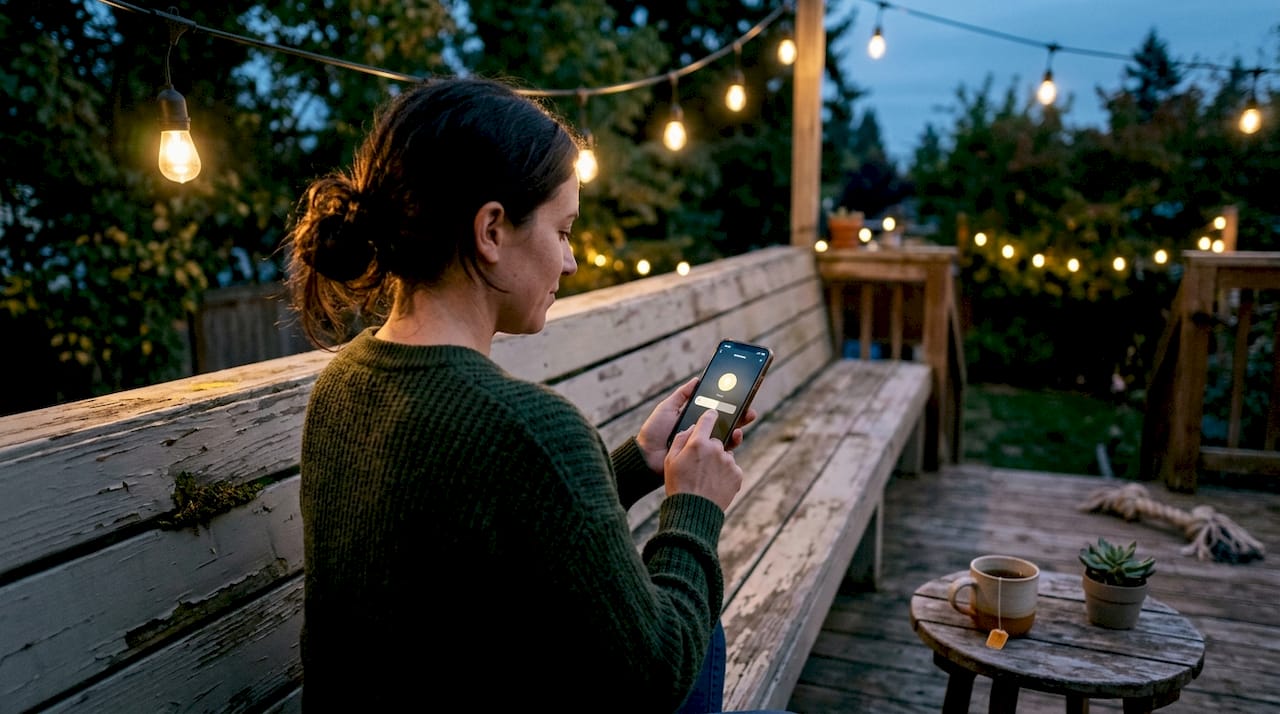
- Phone and voice control: Adjust your entire outdoor display from the couch or give a voice command. This is especially useful for seasonal changes or quick adjustments when you’re entertaining.
- LED longevity: Consistent, regulated power delivery supports the full 50,000-hour LED lifespan that premium fixtures are rated for. Irregular voltage shortens that life significantly.
- Security benefits: Schedule random lighting patterns or motion-based triggers to make your home look occupied and deter would-be intruders.
| Scenario | Avg. monthly energy cost (no controller) | Avg. monthly energy cost (with controller) |
|---|---|---|
| Basic roofline lighting | $28 | $9 |
| Full exterior permanent LEDs | $75 | $22 |
| Patio + landscape combined | $55 | $17 |
For homeowners adding permanent string lights to a patio or entertaining area, the scheduling and dimming features alone pay for the controller upgrade within the first season. And for larger installs, the energy-saving lighting tips we share with every client consistently point to controller quality as the single biggest lever for reducing operating costs.
Key features to look for in outdoor lighting controllers
Not every controller marketed for outdoor use is actually built for it. Here’s what to check before you commit:
- Weather resistance: Look for an IP65 or higher rating on any controller or enclosure exposed to the elements. Texas summers and storm seasons are hard on unprotected electronics.
- Mobile app control: A clean, reliable app makes all the difference in day-to-day use. Test reviews before buying, because app quality varies widely between brands.
- Scene programming: Can you store multiple presets? Holiday, everyday, security, and party scenes should all be saveable and easily switchable.
- LED zone support: Larger homes need controllers that can independently manage multiple zones without signal lag or interference.
- Power capacity: Lutron controllers support up to 15A/200W for robust setups, and top modern options deliver consistent performance under heavy loads and tough conditions.
- Smart home integration: Confirm compatibility with your existing platform, whether that’s Alexa, Google Home, or a full home automation integration system like Control4 or SmartThings.
- Expandability: If you plan to add lighting zones later, your controller needs to support that growth without a complete system swap.
Pro Tip: Always insist on UL-listed components for permanent outdoor installations. This matters not just for safety but also for insurance coverage and compliance with local code in cities across the DFW metroplex.
Professional-grade controllers are also simply more stable. Fewer firmware bugs, faster response times, and better long-term support from the manufacturer all translate into a system you can trust year after year.
Installation and maintenance essentials
Installing a lighting controller is not overly complex, but it does require attention to detail, especially for permanent outdoor systems.
Typical installation steps:
- Mount the controller in a weatherproof enclosure or junction box, positioned for easy access and away from direct water exposure.
- Wire the controller to your LED power supply, following the manufacturer’s load specifications to avoid overloading circuits.
- Connect to your network via WiFi or wired Ethernet, depending on the controller type and your home setup.
- Configure the app and run initial tests, verifying that all zones respond correctly and that scenes save as expected.
- Test under load by running all zones simultaneously to confirm stable performance before completing the install.
Ongoing maintenance tasks:
- Check controller enclosures seasonally for moisture intrusion, especially after heavy storms.
- Apply firmware updates as they become available to keep security and performance current.
- Clean ventilation openings on controller housings to prevent heat buildup during DFW summers.
“Permanent LED lighting installed by professionals can last decades with minimal upkeep, provided the controller and wiring are done right from the start.”
DIY installation can work for small, simple setups. But for permanent systems, professional installation protects your warranty and ensures that LEDs and controllers engineered for 50,000 hours actually reach that potential. Our team handles the full process, from mounting through app configuration, so you walk away with a system that just works.
For additional guidance, our lighting installation tips cover common mistakes and best practices that apply across the DFW area.
A professional perspective: Why the cheapest controller may cost you more
After years of installing permanent LED systems across the Dallas-Fort Worth metroplex, we’ve seen a clear pattern. Homeowners who cut corners on the controller almost always end up spending more in the long run.
Here’s the reality: many budget WiFi controllers fail outdoors or cause glitches in large systems that only surface months later, after the return window has closed and the installer has moved on. You get flickering zones, app disconnections, or outright failures during the one night you actually need your lights working, like hosting a holiday party or showing your home to buyers.
The “buy once, cry once” principle applies here more than almost anywhere else in a lighting project. A premium controller from a reputable brand costs more upfront. But it delivers consistent performance, carries real manufacturer support, and typically comes with coverage that protects your full system investment.
We always recommend professional lighting advice before finalizing any controller purchase, because the right choice depends on your system size, your smart home setup, and your local environment. What works in a mild climate can struggle under a North Texas summer. Invest in reliability from the start, and your system will reward you with years of trouble-free operation.
Next step: Enhance your outdoor lighting with professional help
If this guide helped clarify what lighting controllers do and why they matter, the next step is putting that knowledge to work on your own property. At DFW LED Pro, we handle everything from system design through final programming, so you get a permanent LED setup that performs exactly the way you envisioned.
We serve homeowners across 35-plus cities in the DFW area, offering free estimates and professional-grade JellyFish Lighting installations backed by real warranty coverage. Whether you’re exploring Fort Worth LED installation or looking into patio lighting solutions for your outdoor entertaining space, we’re ready to help you build something that lasts.
Frequently asked questions
How long do outdoor LED systems last with a quality controller?
With proper installation and a reliable controller, modern LEDs are built to last up to 50,000 hours of operation, which translates to decades of use under normal conditions.
Are smart lighting controllers difficult to use?
Most smart controllers are designed for everyday homeowners, with app and voice integration that makes control straightforward. When we handle your installation, we configure everything and walk you through the app before we leave.
What’s the main benefit of upgrading my outdoor lighting controller?
The biggest wins are cost and convenience. Upgrading to a modern controller can cut energy costs by up to 75% while giving you full color control, scheduling, and smart home integration.
Can I install a lighting controller myself or should I hire a pro?
Small plug-in setups can be DIY, but permanent outdoor systems benefit significantly from professional installation, which protects your warranty and ensures every zone is correctly configured and weatherproofed from day one.
Recommended
- JellyFish Patio Lighting | Permanent Outdoor String Lights | DFW LED Pro
- Blog | Permanent LED Lighting Tips & Guides | DFW LED Pro
- Smart Home LED Lighting — Alexa, Google & Control4 Integration | DFW LED Pro
- How JellyFish Permanent LED Lighting Works | DFW LED Pro
- Lighting control apps explained: smart outdoor lighting 2026