DFW Outdoor Lighting Inspiration for South DFW Homes
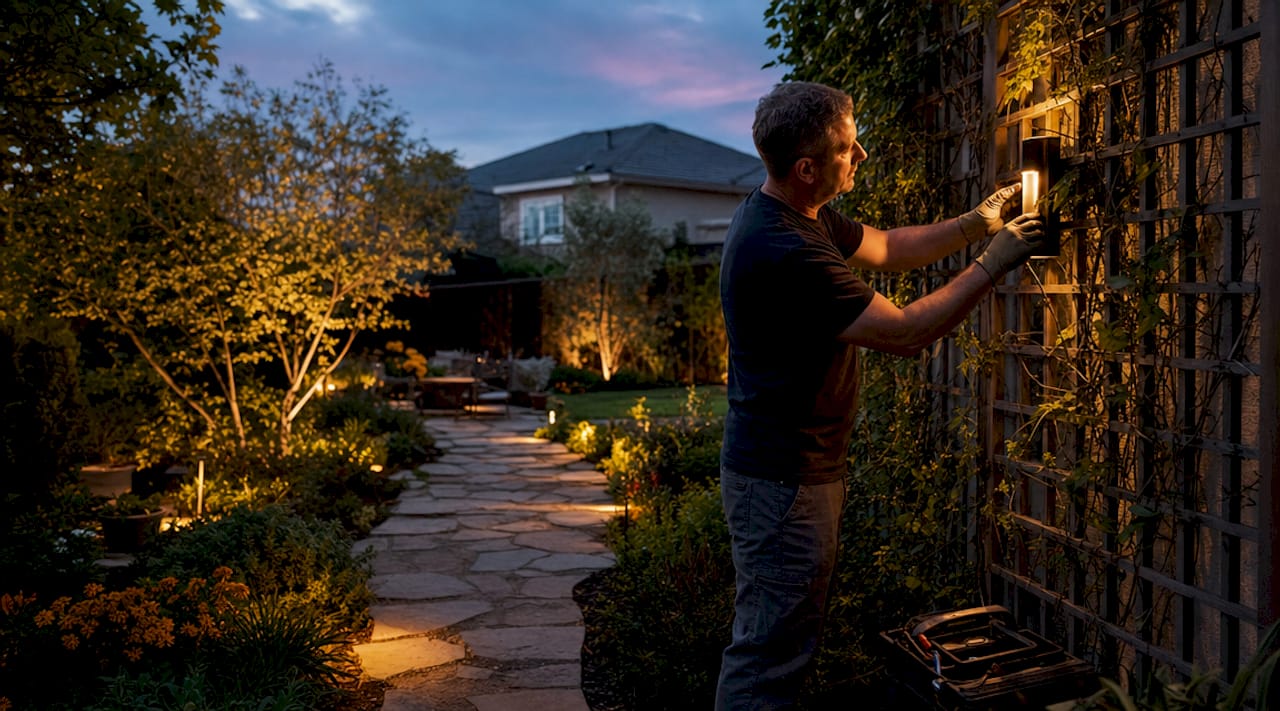
Outdoor lighting inspiration for DFW homes is defined by one principle: layered, warm-toned LED systems that balance beauty, safety, and energy efficiency across your property. South DFW landscapes, with their mature live oaks, cedar elms, and limestone-accented architecture, reward a deliberate lighting strategy far more than a simple floodlight approach. The right system uses ambient, task, and accent lighting working together to transform your yard after dark. At Dfwledpro, we install these systems across Arlington, Mansfield, Fort Worth, Burleson, Cedar Hill, Midlothian, and 30-plus additional South DFW communities every week.
1. DFW outdoor lighting inspiration starts with uplighting your trees
Mature Texas trees are the highest-return elements to highlight with landscape lighting. Uplighting live oaks and cedar elms from the base pushes light through the canopy, creating dramatic depth and natural texture that no other technique replicates. The bark catches the light, the leaves filter it, and the result looks like the tree is glowing from within rather than being blasted by a spotlight.
Position your uplight fixtures 12 to 18 inches from the trunk base, angled at roughly 45 degrees. Use a warm 2700K to 3000K color temperature to keep the effect natural rather than clinical. A single well-placed fixture under a mature live oak does more for your curb appeal than six fixtures pointed at a blank wall.

2. Moonlighting for a natural canopy effect
Moonlighting is the practice of mounting fixtures high in a tree canopy and directing light downward through the branches. The result mimics natural moonlight filtering through leaves, casting soft, dappled shadows across your lawn and hardscape below. It is one of the most visually striking techniques in the outdoor lighting inspiration list, yet it remains underused in South DFW neighborhoods.
This technique works especially well on properties with large pecan trees or spreading live oaks. The fixtures need to be weatherproof and rated for outdoor use at height. Because the light source is elevated and diffused by foliage, moonlighting avoids the harsh glare that ground-level floodlights create.
3. Path lighting for safety and visual rhythm
Path lights spaced 8 to 12 feet apart produce even, warm illumination along walkways and entries without creating the blinding “runway effect” that tighter spacing causes. This spacing recommendation surprises most homeowners who assume more fixtures means better lighting. Wider spacing actually produces a more balanced rhythm and a more polished finished look.
Use 12V low-voltage LED path lights for any walkway, driveway border, or garden bed edge. The 12V system requires no electrician and no permit in most South DFW municipalities, making it one of the most accessible outdoor lighting ideas for DFW homeowners. Fixtures in a brushed bronze or matte black finish hold up well against the region’s heat and humidity cycles.
Pro Tip: Alternate path light placement on opposite sides of a walkway rather than mirroring them directly across from each other. This staggered pattern creates a more natural, less institutional appearance.
4. Accent lighting on architectural features
Architectural accent lighting draws attention to the features that make your home distinctive: stone columns, board-and-batten siding, arched entryways, and decorative gables. Grazing a textured surface with a narrow-beam LED spotlight at a low angle emphasizes the material’s depth and character. Flat surfaces lit from directly in front look washed out; angled grazing light makes them look intentional and premium.
For South DFW homes with brick or limestone facades, a 15-degree to 30-degree beam angle produces the most defined shadow lines. Keep color temperature consistent across all architectural fixtures. Mixing 2700K and 4000K fixtures on the same facade creates a disjointed look that undermines the overall design.
5. Comparing outdoor lighting systems for South DFW homeowners
Not all outdoor lighting systems perform equally in the DFW climate. Here is a direct comparison of the three most common options:
| System type | Lifespan | Permit required | Brightness consistency | Best use case |
|---|---|---|---|---|
| 12V low-voltage LED | 35,000 to 50,000 hours | No | High, consistent | Full landscape and architectural lighting |
| Solar LED | 2,000 to 5,000 hours | No | Low, weather-dependent | Accent or supplemental only |
| Permanent LED installation | 50,000+ hours | Varies by scope | Highest, automated | Whole-home permanent systems |
Solar landscape lighting works as a complement to a 12V LED system, not as a replacement. Shaded yards, overcast Texas winters, and inconsistent sun angles reduce solar output significantly. For any homeowner who wants reliable brightness every night, a 12V LED or permanent LED system is the correct foundation.
Key advantages of 12V low-voltage LED systems for South DFW:
- No electrician or permit required for standard residential installations
- Fixtures rated for IP65 or higher handle DFW’s rain and humidity
- Warm 2700K to 3000K color temperature suits residential aesthetics
- Long lifespan of 35,000 to 50,000 hours reduces replacement frequency
- Low operating cost compared to halogen or incandescent alternatives
6. How to plan and layer your outdoor lighting
Layered outdoor lighting treats your exterior the same way an interior designer treats a living room: ambient fixtures set the base level of light, task fixtures handle functional areas, and accent fixtures highlight focal points. All three layers working together produce a result that feels intentional and complete rather than randomly lit.
Here is a practical framework for layering your South DFW outdoor lighting:
- Start with ambient lighting. Wall lanterns flanking your front entry and soffit-mounted fixtures along the roofline establish the base layer. These fixtures provide general illumination and define the home’s outline after dark.
- Add task lighting next. Path lights along walkways, step lights on stairs, and deck lights over seating areas handle the functional layer. These fixtures guide movement and prevent accidents.
- Finish with accent lighting. Uplights under trees, spotlights on architectural features, and well lights in garden beds complete the design. These fixtures create the visual interest that makes your property stand out.
- Install zone-based controls. Zone-based controllers let you adjust brightness and scheduling by area. You can dim the accent layer on weeknights while keeping the path layer fully active for safety.
- Program dusk-to-dawn automation. Automated sensor lighting keeps safety fixtures active without manual effort. This is particularly useful for homeowners who travel or maintain irregular schedules.
Pro Tip: Plan your lighting design before your landscaping is fully mature. Fixtures installed when trees are young need repositioning as canopies expand. Budget for one adjustment visit two to three years after initial installation.
For a detailed checklist on placement and fixture selection, the DFW outdoor lighting checklist from Dfwledpro covers the full setup process.
7. Avoiding over-lighting: the most common South DFW mistake
Over-lighting creates harsh glare and undermines the aesthetic effect you are trying to achieve. The most common version of this mistake in South DFW is installing too many path lights at too-close spacing, which produces a bright, flat corridor rather than a warm, inviting approach. More fixtures do not equal better lighting. Fewer, well-placed fixtures at the correct beam angle and color temperature consistently outperform dense fixture arrangements.
Focus your fixture count on three to five key focal points per zone. For a typical South DFW front yard, that means two to three tree uplights, four to six path lights, and two architectural accent fixtures. That total of eight to eleven fixtures, placed correctly, will outperform twenty fixtures placed without a plan.
8. Installation and maintenance considerations for South DFW
South DFW’s clay-heavy soil expands and contracts significantly with seasonal moisture changes. This movement can shift conduit runs and stress wire connections over time. Using flexible conduit rather than rigid PVC protects your wiring from soil movement and reduces the risk of connection failures after wet winters or dry summers.
Practical maintenance points for South DFW outdoor lighting:
- Clean fixture lenses twice per year to remove dirt, pollen, and spider webs that reduce output. Exterior lighting cleanliness directly affects brightness and fixture lifespan.
- Check wire connections at transformer terminals after heavy rain events. Water intrusion at terminals is the leading cause of dimming or flickering in low-voltage systems.
- Replace any fixture showing corrosion at the housing seam. Corrosion spreads quickly in DFW’s humid summers and compromises the IP rating.
- Trim plant growth away from uplights seasonally. Overgrown shrubs block beam angles and trap heat around fixture housings.
12V low-voltage systems are the practical industry standard for residential outdoor lighting in DFW. No electrician or permit is required for standard installations, and integrating the system during hardscape construction reduces labor cost significantly. If you are planning a patio, walkway, or retaining wall project, adding conduit runs at that stage costs far less than trenching after the fact.
For color temperature guidance specific to South DFW homes, the popular LED lighting colors resource from Dfwledpro covers warm versus cool spectrum choices in detail.
Key takeaways
Effective DFW outdoor lighting requires layered warm-toned LED fixtures, proper spacing, and zone-based automation to achieve both aesthetic impact and reliable safety.
| Point | Details |
|---|---|
| Layer all three lighting types | Combine ambient, task, and accent fixtures for a complete, polished outdoor design. |
| Use 2700K to 3000K color temperature | Warm LEDs suit South DFW’s residential architecture and natural landscaping better than cool white. |
| Space path lights 8 to 12 feet apart | Wider spacing prevents glare and produces a balanced, professional appearance along walkways. |
| Prioritize trees as focal points | Uplighting mature live oaks and cedar elms delivers the highest visual return per fixture installed. |
| Add zone controls and automation | Dusk-to-dawn sensors and zone-based controllers improve safety and reduce manual effort year-round. |
What I’ve learned after years of South DFW lighting installs
Most homeowners come to us with the same starting point: they want their yard to look better at night, and they assume that means adding more lights. What I have found, after working on properties across Mansfield, Burleson, Cedar Hill, and Midlothian, is that the homes that look best after dark are almost always the ones where we installed fewer fixtures than the homeowner originally requested.
The single most overlooked factor in creative backyard lighting inspiration is restraint. Picking three strong focal points and lighting them well produces a result that looks designed. Lighting everything evenly produces a result that looks like a parking lot. South DFW properties with mature trees have a natural advantage here. One well-aimed uplight under a 40-year-old live oak creates more visual impact than an entire row of path lights.
The second thing I consistently see homeowners underestimate is the value of integrating lighting design early. If you are planning a landscaping refresh or a hardscape project, that is the right time to run conduit and set transformer locations. Retrofitting after the fact costs more and limits your fixture placement options. The best garden lighting inspiration list in the world does not help you if your conduit is in the wrong place.
My honest recommendation: start with a professional consultation before purchasing a single fixture. A 30-minute walkthrough of your property at dusk will reveal focal points, problem areas, and placement opportunities that are impossible to identify from a floor plan or a photo. The exterior lighting design principles we use at Dfwledpro are the same ones that produce the results you see in architectural photography. They are not complicated, but they do require seeing the space in person.
— Adrian
Transform your South DFW property with professional LED lighting
Dfwledpro is the official authorized JellyFish Lighting dealer for the Dallas-Fort Worth metroplex, serving homeowners across Arlington, Fort Worth, Mansfield, Burleson, Grand Prairie, Cedar Hill, Crowley, and 30-plus surrounding communities. We install permanent, warm-toned LED lighting systems designed specifically for South DFW homes, with smart automation, zone-based controls, and fixtures built to handle the region’s climate demands.
Whether you are starting from scratch or upgrading an existing system, our team handles design, installation, and long-term support. Every installation includes a consultation, a custom lighting plan, and fixtures backed by a manufacturer warranty. If you are ready to see what your property looks like after dark with a professionally designed system, explore our permanent LED installation services and schedule your consultation today.
FAQ
What color temperature works best for South DFW outdoor lighting?
Warm white LEDs rated at 2700K to 3000K are the recommended choice for residential outdoor lighting in South DFW. This range complements brick, limestone, and wood finishes common in the area without producing the harsh blue-white look of higher color temperatures.
Do I need a permit for outdoor landscape lighting in DFW?
Most standard 12V low-voltage LED landscape lighting systems do not require a permit or a licensed electrician in South DFW municipalities. Permanent whole-home systems with higher voltage components may require an electrical inspection depending on the city.
How far apart should path lights be spaced?
Path lights spaced 8 to 12 feet apart produce balanced, glare-free illumination along walkways and entries. Spacing fixtures closer than 8 feet creates a bright, flat effect that loses the warm, rhythmic appearance most homeowners want.
What is the lifespan of LED landscape lighting fixtures?
Premium commercial-grade LED fixtures last between 35,000 and 50,000 hours under normal operating conditions. At four hours of use per night, that translates to roughly 24 to 34 years before the LED source requires replacement.
Is solar lighting a good option for South DFW yards?
Solar lighting works as a supplemental option in South DFW but not as a primary system. Shaded yards, overcast conditions, and inconsistent sun angles reduce solar output enough that brightness becomes unreliable. A 12V LED system provides consistent performance regardless of weather.