Cybersecure Lighting Control: A Homeowner’s Guide

Cybersecure lighting control is an intelligent lighting system built with encryption, authenticated access, and secure network architecture to block unauthorized control and cyber threats. The industry term for this approach is “secure-by-design lighting control,” and it applies to both residential smart lighting and commercial building systems. As connected lighting becomes standard in homes and managed properties across the Dallas-Fort Worth area, understanding what separates a truly secure system from a vulnerable one is no longer optional. This guide explains how these systems work, what makes them different from conventional lighting, and why the distinction matters for your property.
What is cybersecure lighting control?
Cybersecure lighting control is defined as a lighting system that uses secure-by-design principles including encrypted communications, authenticated user access, and network segmentation to prevent unauthorized control and cyber intrusion. This is not a marketing label. It describes a specific set of technical standards built into the hardware and software from the ground up.
The core security features include:
- AES-256-GCM or AES-128 encryption on device communications
- TLS 1.2 or TLS 1.3 for all network traffic between controllers and cloud platforms
- Multi-factor authentication (MFA) for user access
- Role-based access controls that limit what each user can do
- VLAN isolation to keep lighting traffic separate from your main network
Platforms like zencontrol deliver cloud-managed secure lighting that replaces the old model of a local PC running unprotected software. That shift removes one of the most common entry points attackers use in building networks. For homeowners and property managers, this means your lighting system is no longer a weak link in your property’s overall security posture.
How does cybersecure lighting control work?
Cybersecure lighting control works through multiple layers of protection applied at the hardware level, the network level, and the operational level. No single layer is sufficient on its own. The strength comes from combining all three.
Hardware-level protections
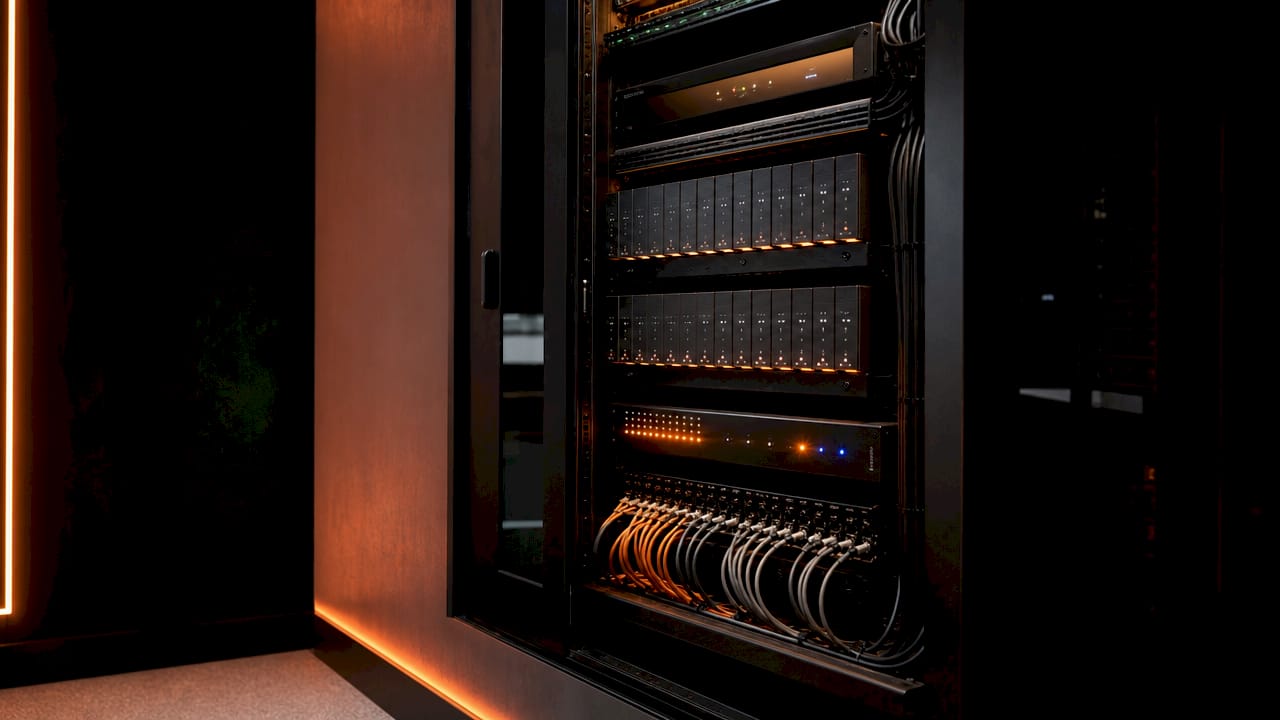
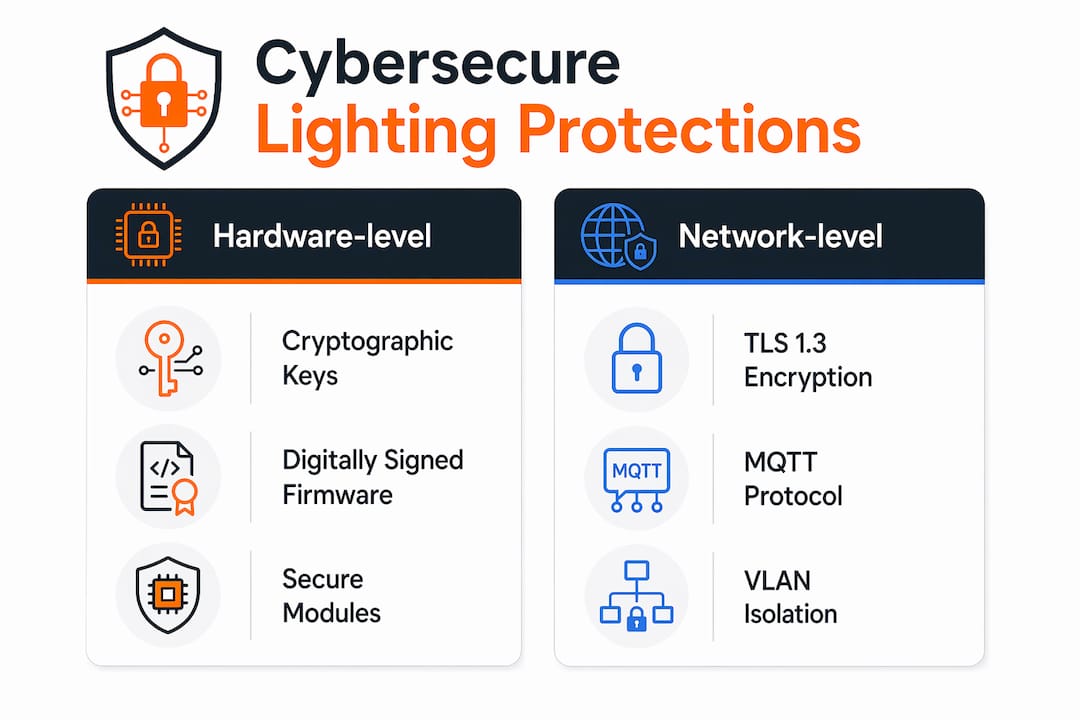
At the device level, controllers store cryptographic keys in secure hardware modules. Firmware is digitally signed, meaning a controller will reject any update that has not been verified by the manufacturer. This blocks a common attack called firmware tampering, where an attacker replaces legitimate software with malicious code.
Network-level protections
Secure MQTT over TLS 1.3 and similar protocols handle communication between devices and cloud management platforms. Lighting traffic runs on its own VLAN, isolated from corporate or home networks. Firewall rules restrict which devices can send commands to lighting controllers, so a compromised laptop on your main network cannot reach your lighting system.
Pro Tip: Ask any lighting vendor whether their system uses VLAN isolation by default or only as an optional add-on. Default isolation is the standard you want.
Commissioning and ongoing monitoring
Secure commissioning uses manual key entry rather than convenience-based protocols like Zigbee Touchlink pairing. Touchlink is fast, but it allows any nearby device to claim a controller without authentication. Professional installations avoid it for exactly that reason. Once deployed, cybersecure systems log every access event and command, creating an audit trail that supports both troubleshooting and compliance reporting.
What makes cybersecure lighting different from conventional systems?
Traditional lighting control systems were built for convenience, not security. Legacy systems commonly run on unpatched PCs, use shared passwords, and rely on open remote desktop access for maintenance. Plain text communications mean any device on the same network can read or inject commands.
The contrast with cybersecure lighting is significant:
| Feature | Conventional lighting | Cybersecure lighting |
|---|---|---|
| Communication encryption | None or plain text | AES-256-GCM, TLS 1.2/1.3 |
| User authentication | Shared passwords | MFA, role-based access |
| Network placement | Shared corporate or home network | Dedicated VLAN, isolated |
| Remote access | Open RDP or VNC | Firewall-restricted, audited |
| Firmware updates | Manual, often skipped | Signed, cloud-managed |
| Audit logging | None | Full event logging |
The risk from conventional systems goes beyond someone dimming your lights without permission. Compromised lighting controllers can serve as pivot points for lateral movement attacks, where an attacker uses one breached device to reach other systems on the same network, including security cameras, access control panels, or file servers.
Cyber insurance policies now reflect this reality. Insurers increasingly require patched, authenticated, and properly segmented connected systems as a condition of coverage. A lighting system running on an unmanaged local PC with shared passwords can disqualify a property from coverage or raise premiums significantly.
What are the practical benefits for homeowners and property managers?
Cybersecure lighting control delivers measurable benefits across security, energy management, and operational cost. These are not theoretical. They show up in your monthly bills, your insurance conversations, and your maintenance workload.
-
Protection against unauthorized access. Encrypted, authenticated systems prevent anyone from remotely switching lights on or off, disabling security lighting, or using your lighting network as an entry point to other systems.
-
Integration with building management. Cloud-managed lighting systems connect cleanly with home automation platforms and commercial building management systems. Scheduling, zone control, and remote monitoring all work through a single authenticated interface.
-
Energy savings through smart scheduling. Secure systems support granular zone control and occupancy-based scheduling. You can set lights to run only when and where needed, which reduces energy consumption without sacrificing security coverage. Dfwledpro’s clients regularly see meaningful reductions in outdoor lighting costs after moving to scheduled, zone-controlled LED systems. For more on what those savings look like in practice, the home lighting automation guide covers the numbers in detail.
-
Audit logs for insurance and compliance. Every command, access event, and firmware update is recorded. That documentation supports cyber insurance applications and demonstrates due diligence to insurers and property auditors.
-
Reduced maintenance burden. Cloud-based firmware updates eliminate the need for a technician to visit every controller manually. Continuous lifecycle management including patching and security audits happens remotely, keeping systems current without disrupting operations.
Pro Tip: Before renewing your property insurance, ask your broker whether your connected lighting system qualifies as a managed or unmanaged device. The answer can affect your premium.
Property managers overseeing multiple buildings gain the most from centralized cloud management. One dashboard covers all sites, all access logs, and all firmware versions. That visibility is difficult to achieve with legacy systems and nearly impossible to document for an insurer.
How do you choose and maintain a cybersecure lighting control system?
Choosing the right system starts with evaluating vendors on security criteria, not just price or feature lists. Human error remains a significant risk vector in lighting deployments, so the vendor’s support for operational security matters as much as the hardware specifications.
Key criteria to evaluate:
- Patch management policy. Does the vendor release signed firmware updates regularly? How quickly do they respond to disclosed vulnerabilities?
- Authentication standards. Does the system support MFA and role-based access out of the box, or only as an optional configuration?
- Network segmentation support. Does the system require a dedicated VLAN, and does the vendor provide configuration guidance for your IT team?
- Commissioning method. Does the vendor use secure out-of-band key entry rather than convenience protocols like Touchlink?
- Audit logging. Are access events and commands logged, and can those logs be exported for compliance purposes?
Once installed, ongoing maintenance requires consistent habits. Change default passwords before the system goes live. Set a quarterly schedule for reviewing firmware versions. Limit access credentials to staff who actively need them, and revoke access immediately when someone leaves the property team.
Physical security matters too. Controllers mounted in accessible locations should be in locked enclosures. An attacker with physical access to a controller can bypass many software protections.
Pro Tip: Treat your lighting control system the same way your IT team treats a server. Schedule quarterly security reviews, not just annual ones.
Smart lighting in critical environments faces risks including DDoS attacks and covert data exfiltration through light modulation. Residential properties face lower-stakes versions of the same threats. The defense is the same: AES-128 or AES-256 encryption, TLS-secured communications, VLAN segmentation, and staff awareness. For property managers looking at commercial deployments, the commercial LED lighting guide covers IT integration requirements in more detail.
Key takeaways
Cybersecure lighting control requires encrypted communications, authenticated access, and network isolation working together as a lifecycle-managed system, not a one-time installation.
| Point | Details |
|---|---|
| Encryption is the foundation | AES-256-GCM and TLS 1.3 protect all device and network communications from interception. |
| Legacy systems carry real risk | Unpatched local PCs and plain text communications create pivot points for lateral movement attacks. |
| Network segmentation is non-negotiable | VLAN isolation keeps lighting traffic separate from systems like cameras and servers. |
| Insurance now requires it | Cyber insurers increasingly require patched, authenticated, and segmented connected systems for coverage. |
| Maintenance is ongoing | Signed firmware updates, quarterly access reviews, and audit logging keep systems secure after installation. |
Why lighting security deserves the same attention as your alarm system
Working with homeowners and property managers across the Dallas-Fort Worth area, I see the same blind spot repeatedly. People invest in alarm systems, video surveillance, and access control, then connect their lighting to the same flat network as every other device in the building. The lighting controller becomes the easiest door into the whole property.
Absolute cybersecurity is impossible. The goal is to reduce risk and limit the impact of any breach. A cybersecure lighting system does that by making your lighting network a poor target. Attackers follow the path of least resistance. If your lighting is isolated, encrypted, and monitored, they move on.
What I find most underappreciated is the audit log. Property managers rarely think about it until an insurance renewal or a security incident forces the conversation. At that point, having a documented record of every access event and firmware update is worth far more than its storage cost.
The trend I expect to accelerate is regulatory pressure. Building codes and insurance requirements are moving toward mandatory cybersecurity standards for connected building systems. Lighting will not be exempt. Properties that treat their lighting as active IT infrastructure now will be ahead of those requirements, not scrambling to catch up.
My honest advice: when you evaluate a lighting vendor, ask them directly how they handle a disclosed vulnerability. If they cannot answer that question clearly and quickly, the system is not ready for your property.
— Adrian
Secure LED lighting installation for your DFW property
Dfwledpro installs permanent outdoor LED lighting systems across 35+ cities in the Dallas-Fort Worth metroplex, including Arlington, Fort Worth, Mansfield, and Grand Prairie. Every installation is tailored to your property’s layout and security requirements.
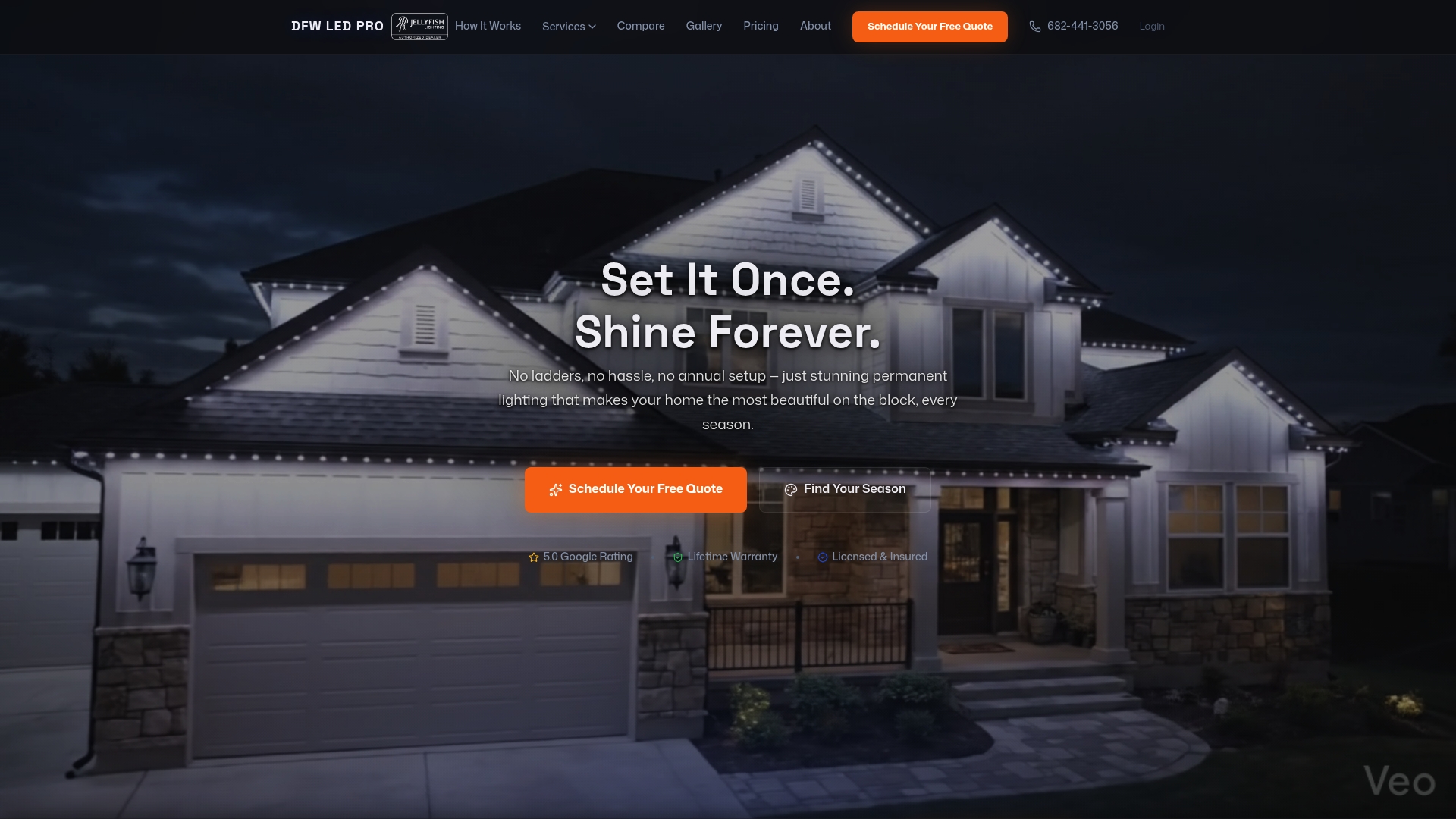
As the authorized JellyFish Lighting dealer for DFW, we bring systems that combine permanent, weather-resistant LED fixtures with app-based control and scheduling. If you are ready to add secure, professionally installed lighting to your home or commercial property, our permanent LED lighting services cover the full process from assessment to installation. For commercial properties, our business lighting solutions include options with cloud-managed control suited to property managers overseeing multiple sites. Contact Dfwledpro for a consultation and get a system built to last.
FAQ
What is cybersecure lighting control in simple terms?
Cybersecure lighting control is a smart lighting system built with encryption, user authentication, and network isolation to prevent hacking and unauthorized access. It treats your lighting as active IT infrastructure rather than a passive electrical system.
How does lighting control work in a secure system?
Secure lighting control uses encrypted protocols like TLS 1.3 and AES-256 to send commands between controllers and cloud platforms, with role-based access determining who can make changes. All activity is logged for audit and compliance purposes.
Can my home lighting system really be hacked?
Yes. Compromised lighting controllers can serve as entry points for attackers to reach other devices on the same network, including cameras and smart locks. VLAN isolation and strong authentication are the primary defenses.
What lighting control cybersecurity standards should I look for?
Look for systems that support TLS 1.2 or TLS 1.3 network encryption, AES-128 or AES-256 device encryption, MFA, and signed firmware updates. Vendors like zencontrol publish their security architecture openly, which is a strong indicator of accountability.
Does cybersecure lighting affect energy efficiency?
Secure systems support smart scheduling, zone control, and remote monitoring, all of which reduce energy use. Cloud-managed platforms also keep firmware current, which maintains efficiency features over the system’s lifetime.