Nighttime Security Lighting Methods for South DFW Homes
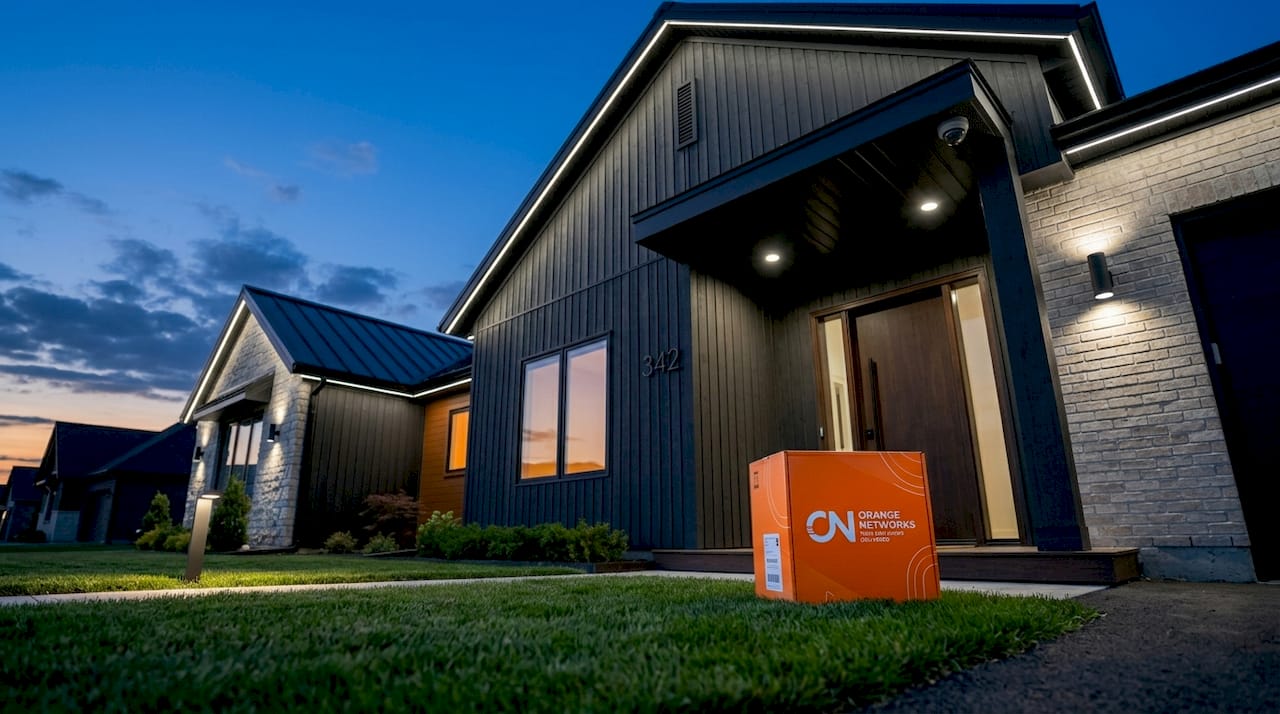
Nighttime security lighting methods are specialized illumination and control techniques designed to deter unwanted activity, improve visibility, and protect residential property after dark. The industry standard term for this discipline is security lighting design, and it covers everything from foot-candle targets and uniformity ratios to fixture selection and smart control integration. For homeowners in South DFW cities like Mansfield, Cedar Hill, Burleson, and Grand Prairie, getting this right means combining the correct light levels with energy-efficient LED fixtures, motion sensors, and photocells. Done properly, outdoor security lighting deters crime, supports camera performance, and keeps you compliant with local nuisance light restrictions.
What are the key lighting metrics for effective nighttime security lighting?
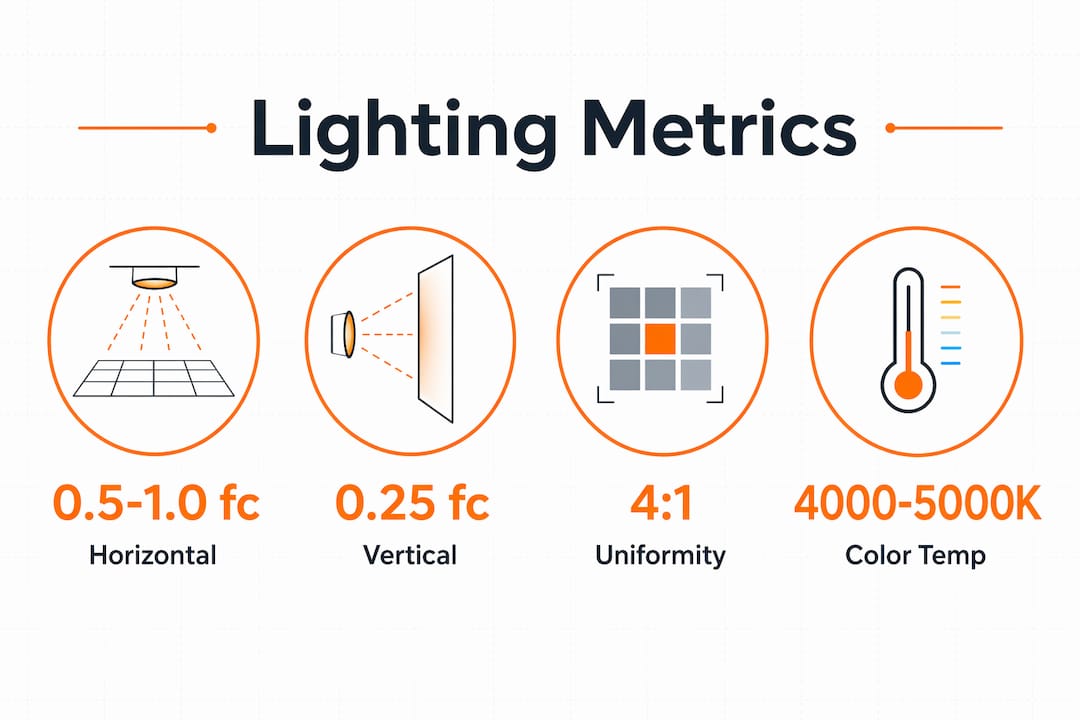
Security lighting design starts with numbers, not fixtures. Maintained horizontal illuminance of at least 0.5 foot-candles (fc) is the baseline target for residential driveways and yards, with higher-risk zones requiring up to 2.0 fc. That number tells you how much usable light actually reaches the ground surface after accounting for fixture aging and dirt accumulation over time.
Uniformity matters just as much as brightness. Uniformity ratios should not exceed 4:1 between the brightest and darkest areas of a covered zone. A ratio beyond that creates shadowed pockets where activity can go undetected, which defeats the purpose of the entire system.
Vertical illuminance is the metric most homeowners overlook. IES RP-20 guidance recommends approximately 0.25 fc at five feet above grade, which is roughly face height. This level of vertical light is what allows a security camera, or a neighbor, to identify a person rather than just detect a silhouette.
Color quality also affects security performance. A color temperature of 4000K to 5000K produces a crisp, neutral white light that improves contrast and detail recognition. Color rendering index (CRI) should be 80 or above so that clothing colors and facial features appear accurately on camera footage.
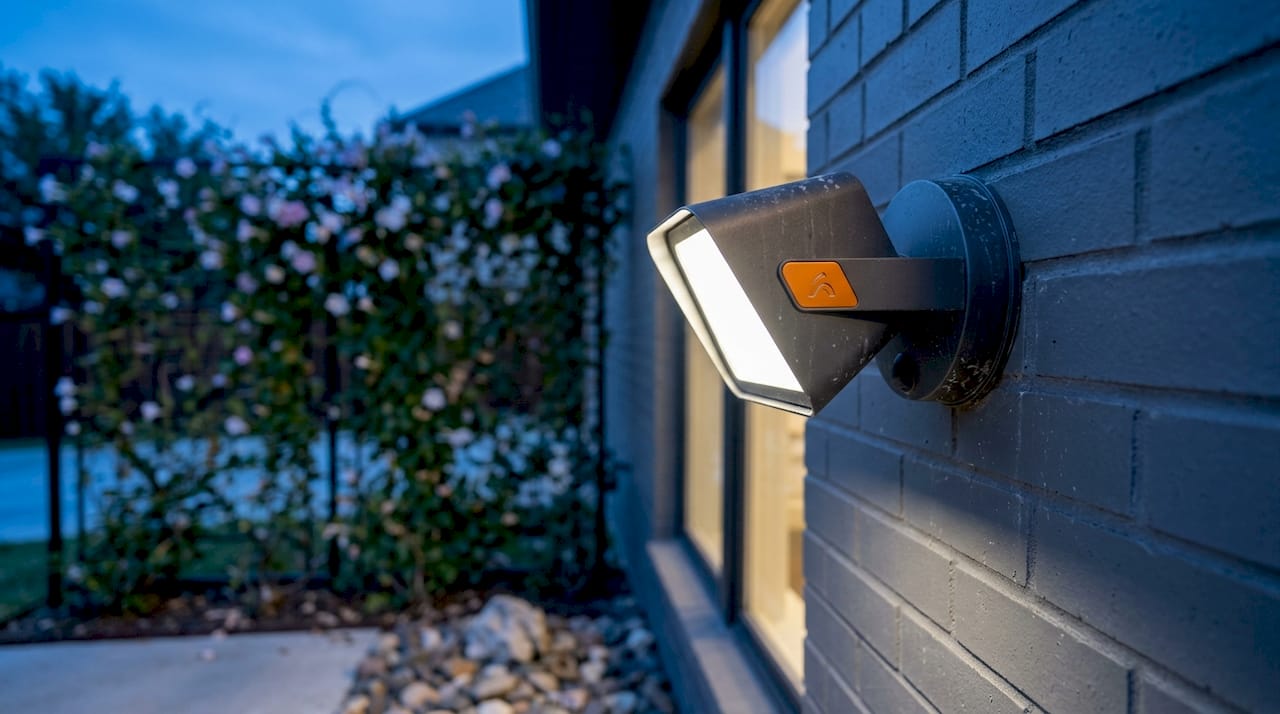
Pro Tip: Before buying a single fixture, sketch your property and mark the areas where you need 0.5 fc or higher. This simple step prevents over-buying in some zones and under-lighting in others.
| Metric | Target value | Why it matters |
|---|---|---|
| Maintained horizontal illuminance | 0.5–1.0 fc (residential) | Sets the minimum usable light level at ground surface |
| Uniformity ratio | 4:1 or better | Prevents dark pockets that compromise coverage |
| Vertical illuminance at face height | 0.25 fc at 5 ft | Supports facial recognition and camera image quality |
| Color temperature | 4000K–5000K | Improves contrast and detail visibility |
| Color rendering index | CRI 80+ | Ensures accurate color reproduction for camera footage |
Which fixture types and placements work best for home security?
Fixture selection and placement are where lighting metrics become physical reality. The two primary approaches are continuous lighting, which stays on all night at a steady level, and motion-activated lighting, which delivers a burst of high output when triggered. Most effective residential systems use both in combination.
Here is how the main fixture categories perform in practice:
- Floodlights cover wide areas like driveways, backyards, and side yards. Mount them at 8 to 12 feet high and aim them downward at roughly a 45-degree angle to maximize ground coverage while minimizing glare toward the street or neighboring properties.
- Wall-mounted lanterns and sconces work well at entry points like front doors, garage doors, and gate posts. They provide continuous low-level illumination that keeps these high-traffic zones consistently visible.
- Pathway lights along walkways and driveways serve double duty as pathway lighting for safety and as a visual deterrent. Spacing them 6 to 8 feet apart creates a smooth wash of light rather than isolated bright spots.
- Integrated camera lights combine a fixture and a camera in one unit. They are convenient but require careful aiming to avoid the camera lens being washed out by its own light source.
South DFW outdoor conditions demand fixtures rated IP65 or higher. Summer heat, humidity, and the occasional severe storm put real stress on outdoor hardware. LED fixtures with polycarbonate or die-cast aluminum housings hold up far better than plastic alternatives in this climate.
Pro Tip: Avoid aiming floodlights directly at your property line. Tilt them inward by at least 15 degrees so the brightest part of the beam lands on your own yard, not your neighbor’s bedroom window.
Mounting height directly affects coverage radius. A floodlight at 10 feet covers a significantly larger area than the same fixture at 6 feet, and it reduces the risk of someone simply unscrewing the bulb. For corner-mounted fixtures, position them to overlap coverage zones by at least 20 percent so there are no gaps between pools of light.
How can smart controls enhance nighttime security lighting effectiveness?
Smart controls turn a static lighting system into an active security tool. The most effective configurations layer multiple control types rather than relying on a single approach. Here is the recommended sequence for a South DFW residential setup:
- Install photocell sensors on continuous fixtures so they activate automatically at dusk and shut off at dawn. This removes the need to remember manual switching and guarantees your baseline lighting is always on during dark hours.
- Add motion sensors to high-output floodlights covering driveways, backyards, and side entries. Motion-activated lights range from a few hundred to several thousand lumens and deliver a sudden burst of bright light that startles intruders and draws attention.
- Set a layered baseline by keeping pathway and entry lights at 30 to 50 percent output continuously, then programming motion zones to jump to 100 percent when triggered. This approach balances energy efficiency with deterrence.
- Connect to a smart home platform such as Google Home, Amazon Alexa, or a dedicated app like the JellyFish Lighting controller. Remote access lets you check lighting status, adjust schedules, and trigger zones manually from your phone.
- Program seasonal schedules to account for DFW’s changing sunrise and sunset times. A system calibrated for June will leave your property dark for an extra hour each morning by December if you do not update it.
The photocell plus motion combination is the industry best practice because it balances energy efficiency with effective deterrence. You get reliable baseline coverage all night and high-output response exactly when it is needed. For more on smart control options suited to DFW properties, the configuration choices are broader than most homeowners realize.
How does security lighting complement nighttime surveillance cameras?
Security cameras and lighting are not independent systems. They are two halves of the same security strategy, and each one limits the other when poorly coordinated. Adequate visible light dramatically improves camera image clarity and reduces blur and noise compared to relying on infrared night vision alone. This matters because infrared footage typically captures movement but rarely captures usable facial detail.
The critical factor is vertical illuminance at face height. Coordinated lighting and camera placement must deliver 0.25 fc or more at five feet above grade to enable facial recognition in recorded footage. Most homeowners light the ground well but leave the upper half of the frame too dark for identification purposes.
Infrared night vision has a practical range of 30 to 60 feet in most consumer cameras, and image quality degrades significantly beyond 20 feet in low-light conditions. Supplemental visible light extends that effective range and produces color footage, which is far more useful as evidence than grayscale infrared images.
Placement coordination between lights and cameras requires one specific check: make sure no fixture is positioned directly in the camera’s field of view. A floodlight aimed toward a camera lens creates washout that renders the footage useless. Mount lights to the side of or above the camera, aimed at the zone the camera is monitoring rather than at the camera itself.
What are common mistakes and local compliance considerations?
The single most common mistake in residential security lighting is installing one bright floodlight and calling it done. High-brightness lighting without uniform coverage creates harsh shadows and glare that actually reduce security by producing dark pockets around bright zones. A single 5000-lumen floodlight on a corner of your house will blind anyone looking at it while leaving the adjacent yard in near-total darkness.
Here are the most frequent compliance and performance pitfalls to avoid:
- Light trespass onto neighboring properties. Local codes require fully shielded fixtures directed downward to minimize spill light. DFW-area municipalities follow similar principles, and nuisance complaints can require you to re-aim or replace fixtures at your own expense.
- Incorrect fixture aiming. Fixtures pointed too high create sky glow and glare without improving ground-level illuminance where it counts.
- Wattage mismatch. Selecting fixtures by wattage rather than lumen output and beam angle leads to either over-lit or under-lit zones.
- Skipping maintenance. Dust, spider webs, and UV degradation reduce lumen output significantly over time. Clean fixture lenses twice a year and test sensor function every six months.
- Ignoring lumen depreciation. Lighting design must account for long-term performance, not just initial output. LED light loss factors typically run 0.70 to 0.85 for outdoor conditions, meaning your system delivers less light in year three than it did on installation day.
Deterrence comes from lighting your own property well, not from spilling light onto your neighbors. Proper aiming and shielding improve both security and neighborhood relations.
Conduct a light level audit once a year. Walk your property at night with a simple lux meter app on your phone and check for dark zones, glare sources, and any fixtures that have shifted position due to wind or physical contact.
Key takeaways
Effective nighttime security lighting requires meeting specific illuminance and uniformity targets, not just adding more wattage to your property.
| Point | Details |
|---|---|
| Start with foot-candle targets | Aim for 0.5–1.0 fc horizontal and 0.25 fc vertical at face height before selecting fixtures. |
| Uniformity beats brightness | A 4:1 uniformity ratio prevents dark pockets that undermine the entire system. |
| Layer your controls | Combine photocell baseline lighting with motion-triggered high-output zones for efficiency and deterrence. |
| Coordinate lights with cameras | Mount lights beside or above cameras, aimed at the monitored zone, never into the lens. |
| Maintain annually | Clean lenses, test sensors, and audit light levels every year to preserve performance. |
Why I think most homeowners are solving this problem backwards
I have worked on residential lighting projects across Arlington, Burleson, Cedar Hill, and Midlothian, and the pattern is consistent. Homeowners buy a fixture first and ask about coverage second. That sequence produces systems that look bright but perform poorly. The real work happens before you touch a single product page.
Starting with a photometric target, meaning a specific foot-candle number for each zone, changes every decision that follows. It tells you how many fixtures you need, where to mount them, and what beam angle to specify. Without that number, you are guessing. And guessing with outdoor lighting usually means one over-lit zone surrounded by shadows.
The other lesson I keep relearning is that uniformity is the hardest thing to explain and the most important thing to get right. A well-designed LED security system with overlapping coverage zones will outperform a higher-wattage system with gaps every single time. I have seen properties with 10,000 lumens of installed capacity that still had a 30-foot dark corridor along the side yard because nobody mapped the beam angles before installation.
For complex properties, a professional photometric study is worth the investment. It takes the guesswork out of spacing and aiming, and it gives you documentation if a neighbor ever questions your fixture placement.
— Adrian
How Dfwledpro can help you get this right
Dfwledpro is the authorized JellyFish Lighting dealer for the Dallas-Fort Worth metroplex, and we install permanent outdoor LED lighting systems built specifically for South DFW residential properties. Our systems include IP67-rated fixtures, smart app control, and photometric planning to meet the illuminance and uniformity targets covered in this article. We serve 35+ cities including Lancaster, Cedar Hill, Mansfield, Burleson, and Grand Prairie, and every installation is designed to comply with local shielding and light trespass requirements. If you are ready to move from guesswork to a system that actually performs, explore our permanent LED lighting options for South DFW homes or browse our JellyFish security lighting service page to see what a properly designed system looks like.
FAQ
What foot-candle level do I need for residential security lighting?
The standard target is 0.5 to 1.0 maintained foot-candles for driveways and yards, with 0.25 fc at face height for camera and facial recognition support. Higher-risk areas may require up to 2.0 fc.
Are motion sensor lights better than continuous outdoor security lighting?
Neither approach alone is optimal. The best practice combines continuous low-level baseline lighting from photocell-controlled fixtures with motion-triggered high-output zones that activate when movement is detected.
How does lighting improve security camera performance at night?
Visible light illumination improves image clarity, color accuracy, and facial detail far beyond what infrared night vision alone can deliver. Cameras need at least 0.25 fc of vertical illuminance at face height to capture identifiable footage.
What LED color temperature works best for home security lighting?
A color temperature of 4000K to 5000K produces neutral white light that improves contrast and detail recognition. Warmer tones below 3000K reduce visibility and camera performance in outdoor security applications.
How do I avoid light trespass violations in DFW?
Use fully shielded, downward-directed fixtures and aim floodlights inward toward your own property. Tilt beams at least 15 degrees away from property lines and check local municipal codes for specific shielding requirements.