How to Choose LED Lights for Your DFW Home
Outdated incandescent bulbs waste energy, burn hot, and drive up your electric bill every single month. If you’ve walked through your Dallas-Fort Worth home and noticed uneven lighting, rooms that feel too dim or too harsh, or a utility bill that keeps climbing, you’re not alone. Choosing the right LED lights can fix all of that, but the sheer number of options on store shelves makes the decision feel overwhelming. This guide cuts through the confusion and walks you through exactly how to pick, install, and verify the best LED lighting for every room in your home.
Table of Contents
- What to consider before buying LED lights
- Essential types of LED lights for every room
- Comparing integrated fixtures, smart LEDs, and traditional replacements
- Installation and common mistakes to avoid
- How to verify your LED lighting results
- A Dallas-Fort Worth expert’s take on choosing LED lights
- Let DFW LED Pro make lighting upgrades easy
- Frequently asked questions
Key Takeaways
| Point | Details |
|---|---|
| Start with your needs | Consider your rooms, fixture compatibility, and lighting goals before buying LEDs. |
| Choose by space | Select the right brightness, color temperature, and features for each area of your home. |
| Compare fixture types | Understand the pros and cons of integrated, smart, and traditional LED options to match your lifestyle. |
| Avoid common mistakes | Confirm fit, turn off power, and use surge protectors for safe, effective LED installation. |
| Verify performance | Test your lighting and check your energy bill after installing LEDs to confirm savings. |
What to consider before buying LED lights
With your lighting frustrations in mind, let’s start by clarifying what you should look for before heading to the store or calling an installer.
The first step is a quick walk-through of your home. Note which fixtures you already have, what bulb bases they use (the most common are E26 medium base and GU10 pin base), and which rooms feel too dark, too bright, or just uncomfortable. Write it down. This simple audit saves you from buying the wrong products and making multiple return trips.
Next, get familiar with a few key terms that will guide every purchase:
- Lumens: Measures brightness. More lumens means more light. A standard living room needs roughly 1,500 to 3,000 lumens total.
- Color temperature (Kelvin): Ranges from warm (2700K) to cool daylight (5000K). Lower numbers feel cozy; higher numbers feel crisp and energizing.
- CRI (Color Rendering Index): Rates how accurately colors appear under the light. A CRI of 90 or above is ideal for kitchens and bathrooms.
- ENERGY STAR rating: A federal certification that confirms the bulb meets strict efficiency and performance standards.
LEDs use 75 to 90% less energy than incandescents, last 15,000 to 50,000 hours (25 times longer), emit directional light, and produce very little heat. That last point matters a lot in DFW, where summer temperatures regularly push past 100°F. Less heat from your bulbs means less strain on your air conditioning system.
For outdoor spaces, DFW’s climate adds another layer of complexity. Heat, humidity, and intense UV exposure can degrade cheap outdoor fixtures quickly. Check out our outdoor LED tips for guidance specific to South DFW conditions, and review security lighting considerations if you’re upgrading your perimeter or driveway lights.
“The single biggest mistake DFW homeowners make is buying the cheapest bulb on the shelf without checking the color temperature or CRI. You end up with a home that looks like a hospital waiting room or a dim cave.”
Pro Tip: Before buying anything, photograph each fixture’s existing bulb and its base. Most smartphone cameras capture the detail you need to match the correct replacement without guessing at the hardware store.
Essential types of LED lights for every room
Once you know what your home needs, let’s examine how to choose the best LED style for each key living space.
Not all LEDs are created equal. A bulb that works perfectly in your kitchen will feel harsh and clinical in your bedroom. Matching the right LED type to the right room is what separates a comfortable, well-lit home from one that just has new bulbs in old sockets.
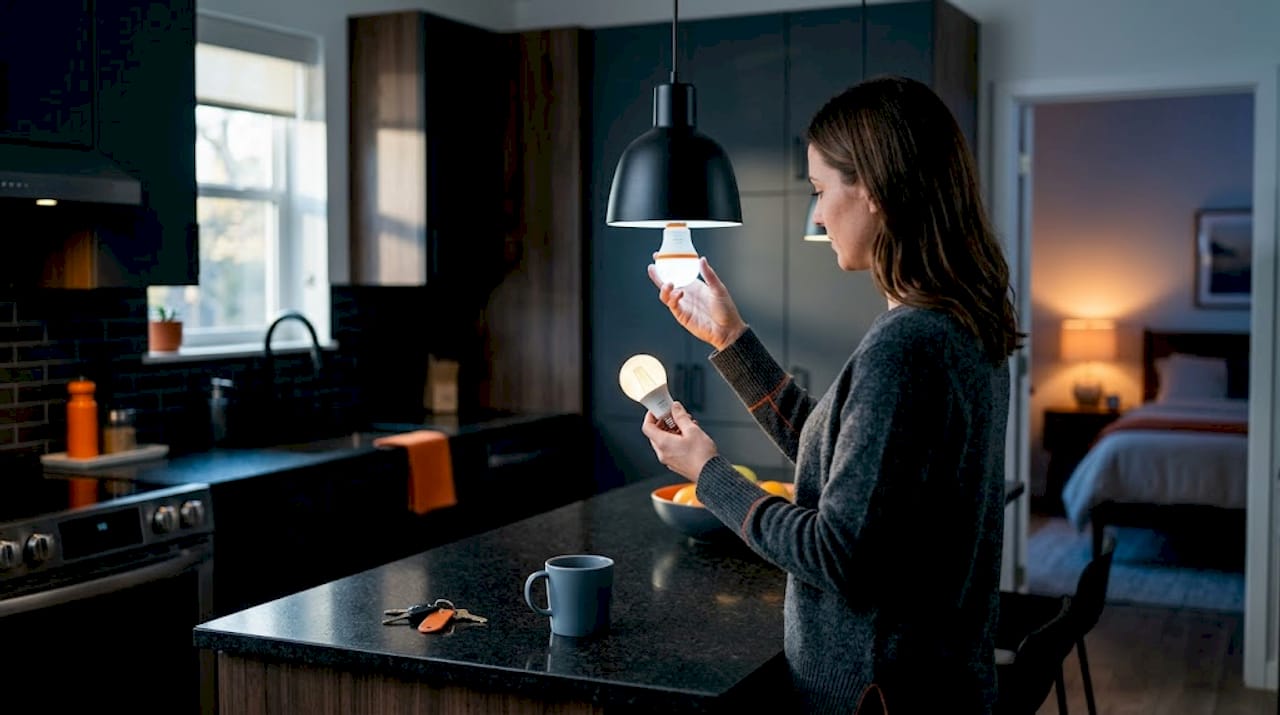
Here’s a breakdown of the most common LED types and where they perform best:
| LED Type | Recommended Lumens | Color Temp (K) | Best Room |
|---|---|---|---|
| A19 standard bulb | 800 to 1100 | 2700 to 3000 | Living rooms, bedrooms |
| BR30 floodlight | 650 to 900 | 3000 to 4000 | Kitchens, hallways |
| PAR38 outdoor flood | 1000 to 1400 | 3000 to 5000 | Exteriors, garages |
| GU10 spotlight | 400 to 600 | 3000 to 4000 | Bathrooms, accent lighting |
| T8/T5 tube LED | 2000 to 3500 | 4000 to 5000 | Garages, utility rooms |
| Candelabra E12 | 300 to 500 | 2700 to 3000 | Dining chandeliers, sconces |
Room-by-room recommendations:
- Kitchen: Use BR30 LEDs with a color temperature of 4000K and a CRI of 90 or higher. You want accurate color rendering when you’re cooking and prepping food.
- Bedroom: Stick with A19 bulbs at 2700K to 3000K. Warm light signals to your body that it’s time to wind down, which supports better sleep.
- Bathroom: High CRI matters here more than anywhere else. A CRI of 90 or above at 3000K gives you accurate color for grooming and makeup.
- Living room: Layered lighting works best. Combine dimmable A19 bulbs for ambient light with accent LEDs for shelving or artwork.
- Exterior: Always choose LEDs rated for outdoor use with an IP65 rating or higher. DFW’s heat and storm season demand fixtures that can handle moisture and temperature swings.
LED options for different rooms vary widely, so it’s worth reviewing what’s available for your specific fixture types before committing. For front entries and porches, our entryway lighting ideas cover both style and safety considerations that DFW homeowners frequently overlook.
ENERGY STAR rated LEDs provide verified savings and performance, so always look for that label when comparing products at the store. It’s your assurance that the bulb has been independently tested and won’t fail prematurely.
Pro Tip: Always check the bulb base type before buying. E26 and E12 bases look similar in photos but are completely different sizes. Bringing the old bulb with you or checking the fixture label prevents a wasted trip.
Comparing integrated fixtures, smart LEDs, and traditional replacements
After exploring room-by-room choices, you’ll also want to decide which LED technology type suits your lifestyle and budget best.
This is where homeowners often get stuck. The market offers three distinct categories, and each one comes with real tradeoffs.
Traditional replaceable LEDs are exactly what they sound like. You swap out the old incandescent for an LED bulb in the same socket. These are the most affordable option upfront, work with virtually any existing fixture, and are easy to replace when they eventually burn out. They’re ideal for renters, for homeowners on a tight budget, or for anyone making incremental upgrades room by room.
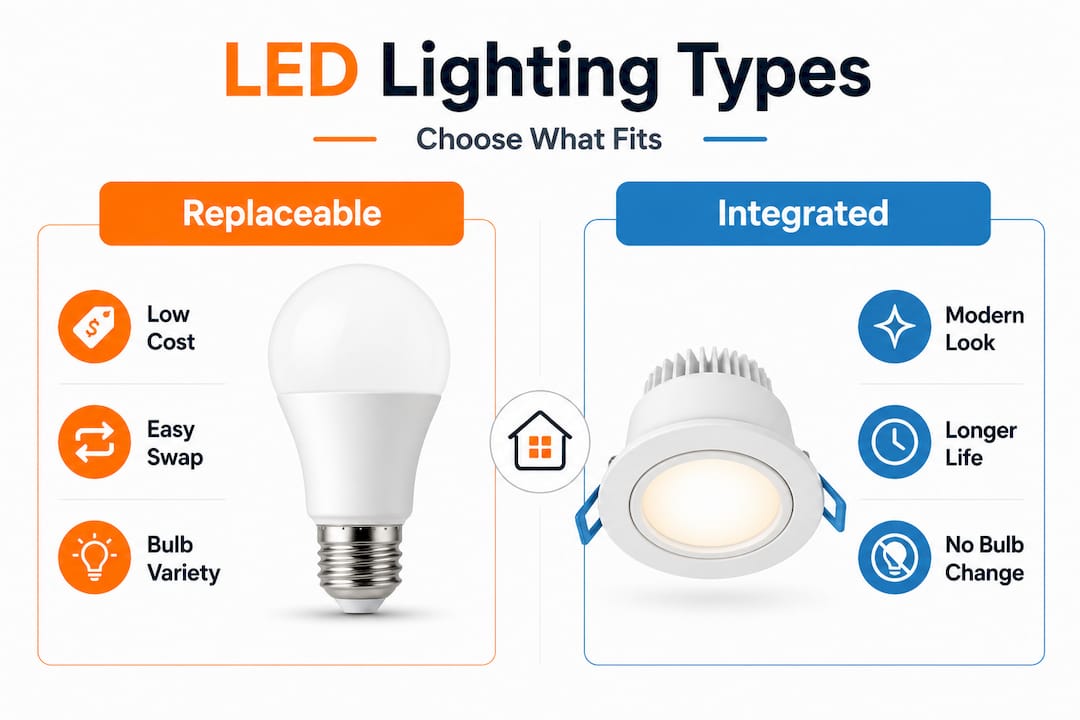
Integrated LED fixtures have the LED built directly into the housing. There’s no separate bulb to replace. These fixtures tend to be more energy-efficient and often have a sleeker, more modern appearance. The downside is cost and repairability. When the LEDs inside eventually degrade, you typically replace the entire fixture rather than just a bulb.
Smart LEDs add a layer of control through apps, voice assistants, or automation schedules. You can dim them, change color temperature, set timers, or trigger them based on motion. The tradeoff is that some systems require a separate hub or bridge device, which adds to your total cost of ownership.
| Type | Upfront Cost | Flexibility | Repairability | Best For |
|---|---|---|---|---|
| Traditional replaceable | Low | High | Easy | Renters, budget upgrades |
| Integrated fixture | Medium to high | Low | Difficult | Permanent installs, remodels |
| Smart LED | Medium | High | Moderate | Tech-savvy homeowners |
Some prefer integrated fixtures for their efficiency and aesthetics, but they’re harder to repair than replaceable bulbs. Smart LEDs add control but carry a higher total cost if a hub is needed. Knowing your priorities upfront prevents buyer’s remorse.
For homeowners interested in app-controlled outdoor lighting, our guide on smart LED lighting options walks through the practical setup steps. If you’re weighing whether the investment is worth it long-term, our breakdown of permanent LED lighting investment gives you honest numbers to work with.
“Smart lighting sounds appealing until you realize you need a separate hub, a stable Wi-Fi connection in every corner of your home, and patience for the occasional connectivity issue. For most DFW homeowners, dimmable traditional LEDs with a quality fixture deliver 90% of the benefit at half the complexity.”
Installation and common mistakes to avoid
Now that you know which LEDs to choose, it’s time to tackle set-up without costly errors.
Most standard LED bulb swaps are straightforward. Here’s a simple, safe process to follow:
- Turn off the power at the wall switch and, for ceiling fixtures, at the circuit breaker.
- Wait two minutes for any residual heat from old bulbs to dissipate before touching the socket.
- Check fixture compatibility. Look at the maximum wattage listed inside the fixture. LED wattage is much lower than incandescent equivalents, so a 10-watt LED replacing a 60-watt incandescent is perfectly fine.
- Install the bulb by screwing it in firmly but not overtightening. Overtightening can damage the base contact.
- Restore power and test. Check for flickering, which often signals an incompatible dimmer switch rather than a faulty bulb.
- Replace dimmer switches if needed. Many older dimmers are designed for incandescent loads and will cause LED flickering or buzzing. Look for dimmers specifically rated for LED use.
Common mistakes DFW homeowners make:
- Buying the wrong base size (E26 vs. E12 is the most frequent mix-up)
- Skipping surge protectors, especially important in DFW where summer thunderstorms can spike voltage
- Ignoring fixture compatibility with dimmable LEDs
- Installing indoor-rated bulbs in outdoor fixtures where moisture exposure will cause premature failure
Because LEDs emit directional light with very little heat, aim them carefully. A recessed BR30 pointed straight down in a kitchen works great. That same bulb angled incorrectly in a track fixture can leave dark spots on your countertops.
Safety note: If your installation involves rewiring, replacing junction boxes, or working with any exposed wiring, stop and call a licensed electrician. No lighting upgrade is worth an electrical hazard.
For outdoor projects or anything involving integrated fixtures, our outdoor installation tips and LED installation best practices are worth reviewing before you start.
Pro Tip: If your new LED flickers on a dimmer, try a different brand of LED before replacing the dimmer. Some LED and dimmer combinations simply don’t play well together, and swapping the bulb brand often solves it instantly.
How to verify your LED lighting results
You’ve installed your LEDs. Here’s how to make sure your choices really pay off.
Installation is only half the job. Verifying that your new setup actually delivers on its promises is what separates a good upgrade from a great one.
Post-installation checklist:
- Walk through every room at night with overhead lights off to check for dark corners or uneven coverage
- Look for flickering or buzzing in any fixture, especially on dimmer switches
- Check that color temperature feels right for each room’s purpose
- Confirm outdoor fixtures are properly sealed and showing no moisture ingress
Monitor your energy bill. After a full billing cycle with your new LEDs, compare your kilowatt-hour usage to the same month last year. Most DFW homeowners see a noticeable drop within the first month, especially if they replaced multiple fixtures throughout the home. LEDs use 75 to 90% less energy than incandescents and last 15,000 to 50,000 hours, up to 25 times longer, so the savings compound over time.
Statistic callout: A home with 30 bulbs switching from 60-watt incandescents to 10-watt LEDs saves roughly 1,500 watts of continuous draw. At DFW’s average electricity rate, that adds up to meaningful savings every single month.
When to adjust or upgrade:
- If a room still feels dim after installing the correct lumens, add a secondary light source rather than going to a higher-wattage bulb
- Reposition track or directional lights if bright spots and shadows don’t match your needs
- Consider upgrading to smart controls if you find yourself wanting more flexibility with timing or dimming
For a detailed look at whether your investment is delivering real returns, our guide on verifying LED savings walks through the numbers in plain language.
Pro Tip: Take a photo of your electric meter reading the day you finish your LED installation. It gives you a concrete baseline to compare against your next bill, which makes the savings feel real and motivates you to finish upgrading the rest of your home.
A Dallas-Fort Worth expert’s take on choosing LED lights
Beyond the checklist, here’s what experience in Dallas-Fort Worth actually teaches us.
Most online LED guides are written for a generic American homeowner. They don’t account for DFW’s specific challenges: summers that push 110°F in direct sun, a power grid that occasionally surges during peak demand, and outdoor conditions that destroy cheap fixtures within a season or two. When we work with homeowners across Arlington, Mansfield, Fort Worth, and Burleson, we see the same pattern repeatedly. Someone bought a highly rated bulb online, installed it in an outdoor fixture, and it failed within six months because it wasn’t rated for the thermal stress our climate delivers.
National guides also tend to understate the importance of installer knowledge. Selecting a bulb is one thing. Knowing which fixture housing handles DFW’s thermal expansion cycles, which outdoor LEDs hold up against our spring hail and summer UV, and which smart systems work reliably on DFW’s grid is a completely different skill set. That knowledge only comes from doing this work locally, repeatedly, and standing behind the results.
DIY is absolutely fine for standard indoor bulb swaps. We encourage it. But for integrated fixtures, major outdoor upgrades, or anything involving your home’s electrical system, the cost of a mistake often exceeds the cost of hiring a pro from the start. We’ve seen homeowners spend twice as much correcting a DIY outdoor installation that used the wrong fixture rating or skipped proper weatherproofing.
The other thing most guides skip entirely is the warranty conversation. A bulb rated for 25,000 hours means nothing if the manufacturer won’t honor the claim or if the installer disappears after the job. When you’re evaluating quotes, ask specifically about product warranty, labor warranty, and what happens if something fails in year two. Our local outdoor LED advice covers this in detail because it’s the question that separates a good investment from an expensive disappointment.
The bottom line from our experience in DFW: buy quality, match the product to the climate, and know when to call someone who’s done it before in your specific region.
Let DFW LED Pro make lighting upgrades easy
If you want guaranteed results or hassle-free installation, here’s how DFW LED Pro can help.
Choosing and installing LEDs yourself works well for simple swaps, but when you’re ready to take your home’s lighting to the next level, expert installation makes all the difference. At DFW LED Pro, we bring local knowledge, quality products, and professional installation to homeowners across 35 cities in the metroplex.
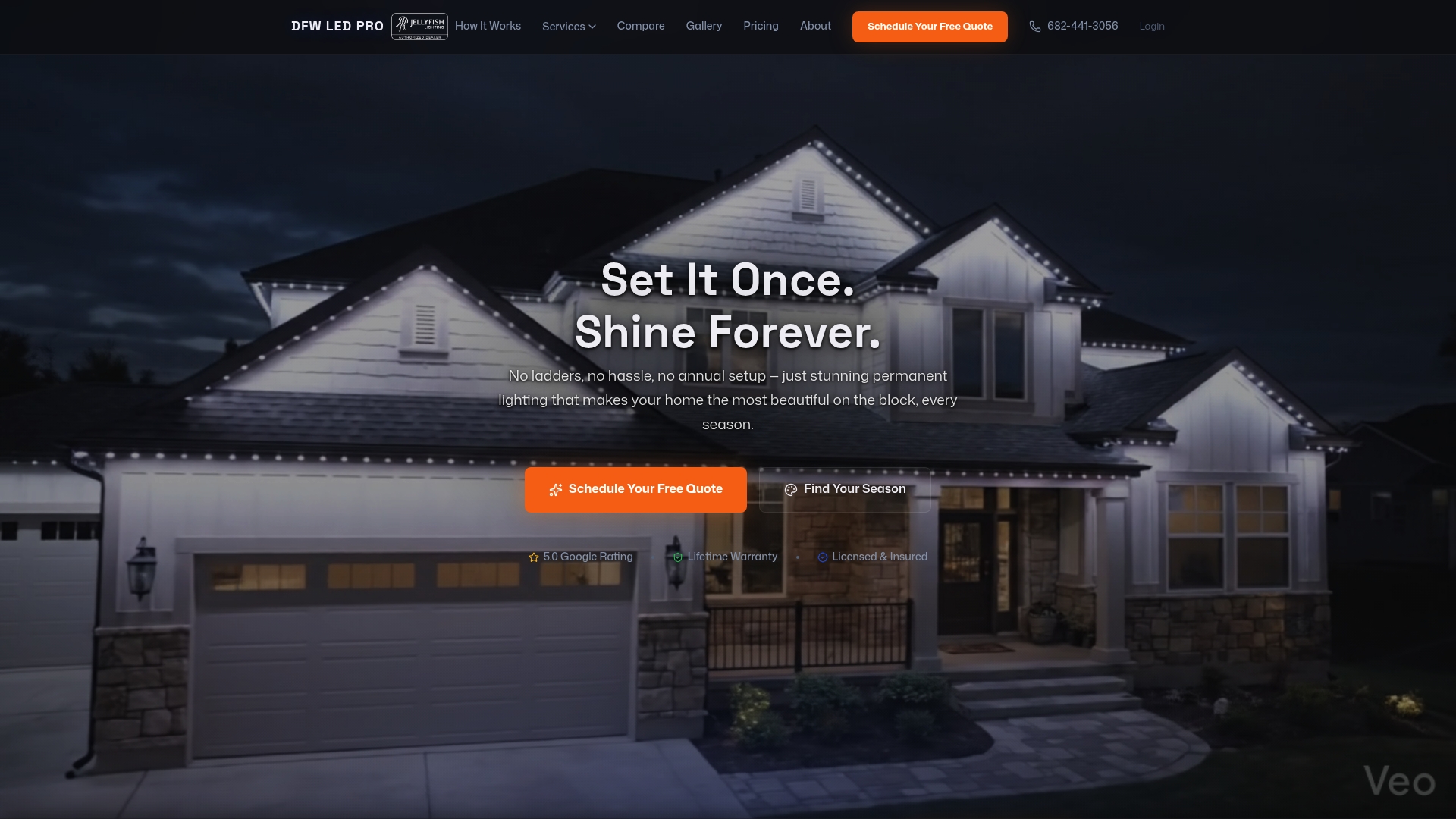
Whether you’re interested in JellyFish Permanent LED Lighting for year-round outdoor color and security, or you’re looking for permanent LED lights for Dallas homes, we handle the entire process from product selection through final testing. No guesswork, no wrong bulbs, no callbacks. Just clean, reliable lighting that’s built for DFW’s climate and backed by our team’s expertise. Contact us today to schedule a free assessment.
Frequently asked questions
How much can I save by switching my whole home to LEDs?
Switching all bulbs to LEDs can save you 75 to 90% on lighting energy costs and reduce the need for replacements thanks to their significantly longer lifespan.
Do I need special fixtures to use LED bulbs?
Most standard LED bulbs fit regular sockets, but always check fixture compatibility and maximum wattage rating before purchasing to avoid flickering or damage.
What’s the difference between warm and cool LED light?
Warm LEDs (2700 to 3000K) create a cozy, relaxed atmosphere ideal for bedrooms and living rooms, while cool LEDs (4000 to 5000K) deliver crisp, energizing light better suited for kitchens and workspaces.
How long will my LED bulbs last?
LED bulbs typically last 15,000 to 50,000 hours, up to 25 times longer than standard incandescent bulbs, which means far fewer replacements over the life of your home.
Is it worth hiring a professional for LED installation?
For complex, outdoor, or integrated LED projects, hiring a local pro ensures proper fixture selection, safe installation, and results that hold up to DFW’s demanding climate conditions.
Recommended
- LED lights for South DFW homes: Save money and boost curb appeal | DFW LED Pro
- Top LED lighting tips for durable outdoor results in South DFW | DFW LED Pro
- LED entrance lighting: smart, safe & stylish for DFW | DFW LED Pro
- Are Permanent LED Lights Worth It? Honest Answer for DFW Homeowners | DFW LED Pro