Holiday Lighting Ideas That Make Your Home Shine
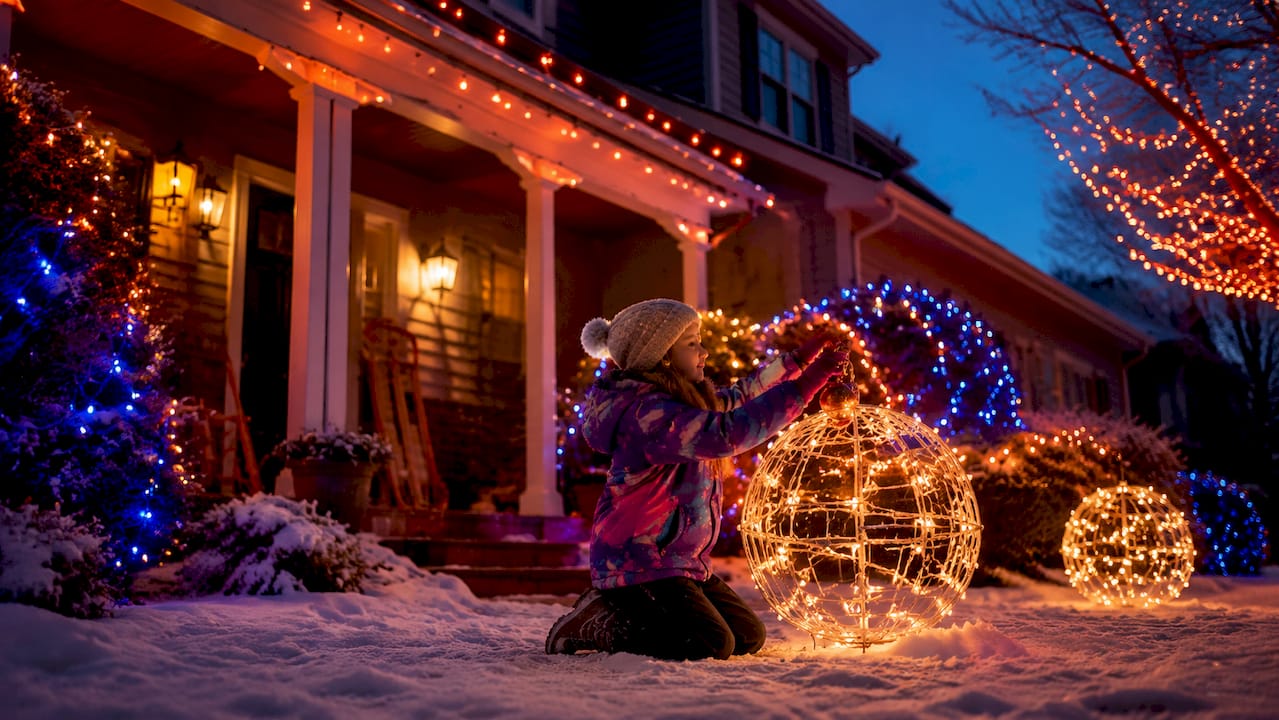
Holiday lighting ideas are creative outdoor light arrangements that combine roofline C9 bulbs, net lights for shrubs, tree-wrapping techniques, and smart timers to produce a festive, professional-looking display. The industry recognizes several distinct methods for each part of your home’s exterior, from the roofline anchor down to pathway markers. Getting the right bulb type for each zone is the single biggest factor separating a polished display from a tangled mess. This guide covers the best bulbs, layout strategies, installation hardware, and automation tools so you can build a display that looks great and runs itself.
1. Best bulbs and string lights for outdoor holiday lighting
Choosing the right bulb for each zone is the foundation of any strong festive lighting display. The wrong bulb in the wrong spot creates uneven brightness, wasted effort, and a display that looks improvised.
C9 bulbs for rooflines
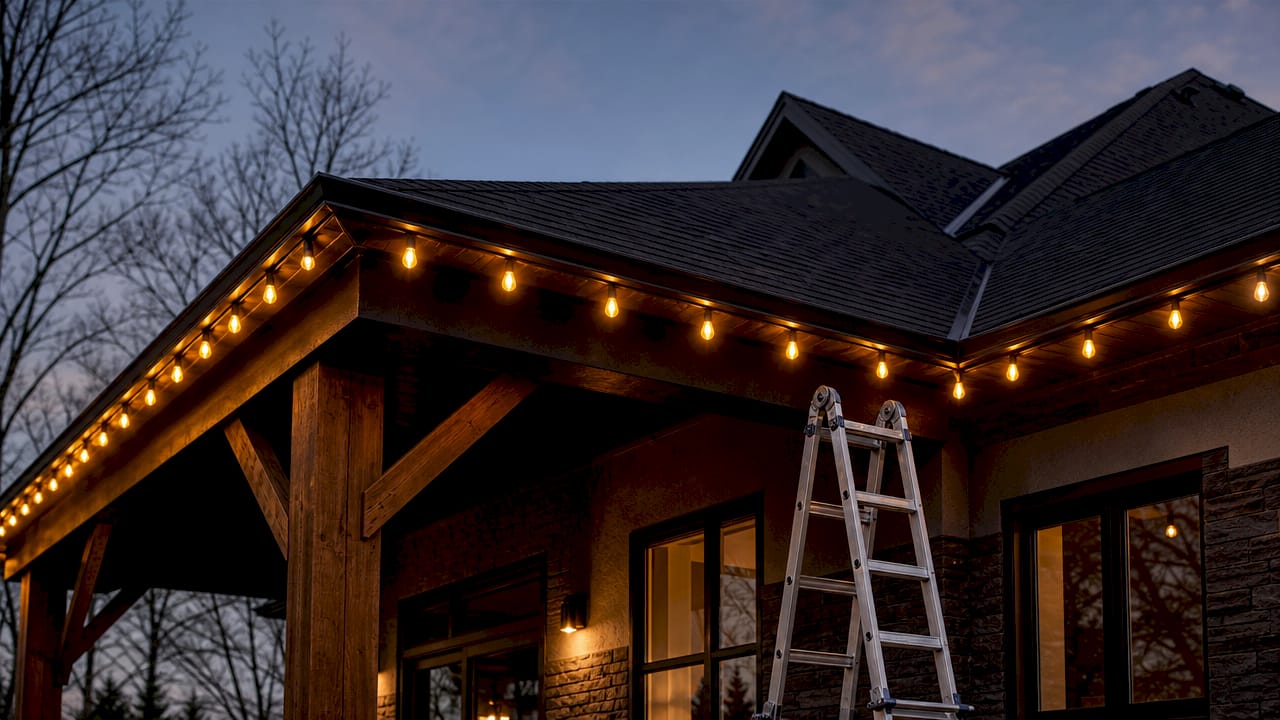
C9 bulbs on 100-foot stringers with 12-inch spacing are the industry standard for clean, professional roofline displays. That spacing creates an even, unbroken line of light that reads clearly from the street. LED versions of C9 bulbs draw a fraction of the power of incandescent versions while producing the same bold silhouette.
5mm warm white LED mini lights for trees and garlands
Warm white 5mm LED mini lights are the go-to choice for wrapping tree branches and garlands. Their small profile disappears into foliage during the day and creates a warm, glowing effect at night. Wrap branches from the trunk outward for the most natural look.
Net lights for bushes and hedges
Net lights cover shrubbery with far less labor than individual strand wrapping. You drape a single net over a bush and plug it in. For a uniform hedge line, use nets of matching size and the same color temperature across every bush.
Icicle lights for eaves and fences
Icicle lights hang from eaves and fence rails to simulate dripping ice. They work best on straight horizontal runs where the varying drop lengths create visual rhythm. LED icicle lights rated for outdoor use carry an IP44 or higher waterproof rating, which matters during Texas winter rain.
| Bulb Type | Best Location | Key Advantage |
|---|---|---|
| C9 LED | Rooflines | Bold silhouette, low energy draw |
| 5mm warm white mini | Trees, garlands | Soft glow, disappears in daylight |
| Net lights | Bushes, hedges | Fast full coverage |
| Icicle lights | Eaves, fences | Cascading visual rhythm |
| Pathway stakes | Walkways, driveways | Ground-level definition |
Pro Tip: Buy all your warm white bulbs from the same manufacturer batch. Color temperature varies between brands, and mixing them creates a patchy, inconsistent look even when every bulb is labeled “warm white.”
2. Creative outdoor lighting layout and design tips
A great outdoor display is built in layers, not placed all at once. Start with the roofline as your anchor, then work downward and outward.
The roofline is the highest-visibility element of any residential display. A clean C9 roofline draws the eye and frames everything below it. Once that line is set, every other element you add should support it rather than compete with it.
Layering works by assigning each zone a specific light type:
- Roofline: C9 bulbs for bold definition
- Trees: 5mm mini lights wrapped from trunk to branch tips
- Bushes: Net lights for fast, even coverage
- Eaves and fences: Icicle lights for vertical movement
- Pathways: Stake lights or luminaries for ground-level warmth
- Focal points: Illuminated motifs, light balls, or wire-frame figures
Maintaining a cohesive color palette before adding animation or complex motifs is what separates a professional display from a cluttered one. All warm white is the safest and most timeless choice. A monochromatic palette in cool white or a single accent color also works well. Mixing red, green, blue, and multicolor strands in the same display creates visual noise that reads as chaotic from the street.
Light balls and illuminated wire-frame motifs add dimension when placed intentionally. A pair of light balls flanking a front door or a wire-frame deer in the yard works because it has a clear focal point. Scattering multiple motifs across a lawn without a visual anchor weakens the display.
Pro Tip: Stand at the street and look at your home before adding any lights. Identify the three strongest architectural features, your roofline, front door, and largest tree, and light those first. Add everything else only if it supports those three anchors.
For more on building a cohesive color scheme, the outdoor color coordination guide from Dfwledpro covers the full decision process.
3. Installation tips and hardware for a reliable display
Good hardware is what keeps your display looking sharp through december wind, rain, and temperature swings. Skimping on clips and connectors is the most common reason DIY displays fail mid-season.
- Measure your roofline before buying string lengths. Walk the perimeter with a tape measure. Add 10% to your total for corners and overhangs. Buying short forces awkward joins that break the clean line.
- Use brick clips for masonry surfaces. Brick clips and height-appropriate stakes are the professional standard for securing lights reliably through winter. Adhesive clips fail in heat and cold. Brick clips grip without drilling or damaging your home.
- Choose waterproof connectors over hand-soldering. Waterproof standardized connectors like XConnect improve reliability and make future display expansions far easier than DIY wiring. They snap together, seal against moisture, and pull apart cleanly at the end of the season.
- Space bulbs evenly from the start. Uneven spacing is visible from the street. On a 100-foot C9 stringer with 12-inch spacing, you get 100 sockets. Count them before you start and mark your midpoint so you know you will reach the end of the roofline without running short.
- Plan for voltage over long runs. Upgrading from 5V to 12V power in pixel-based LED displays reduces voltage drop and keeps color accurate and brightness consistent across long distances. For dense or large-scale displays, 12V systems are the reliable choice.
Pro Tip: Label your clips, connectors, and extension cords by zone before you store them. Next season, you pull out a labeled bag and reinstall in half the time. This one habit turns a two-day job into a two-hour job.
The holiday lighting setup workflow guide from Dfwledpro walks through the full installation sequence for residential properties.
4. Using automation and smart controls for outdoor holiday lights
Digital timers and smart switches are the 2026 standard for managing holiday lighting without daily manual effort. Plugging your display into a basic mechanical timer is the minimum. A smart switch or app-controlled outlet takes that further.
Automation delivers four concrete benefits for homeowners:
- Energy savings: Lights run only during peak viewing hours, typically dusk to 11 p.m., instead of all night.
- Consistency: Your display turns on and off at the same time every day without you remembering to flip a switch.
- Remote control: App-controlled systems let you turn lights on for guests or off when you leave early, from anywhere.
- Seasonal scheduling: Smart switches let you program different schedules for weekdays versus weekends, or extend hours during the holiday week.
Transitioning from manual DIY methods to app-integrated lighting control makes annual upgrades easier because your schedule and zone settings carry over from year to year. You add a new zone, plug it into the existing system, and assign it a schedule in the app.
For a full breakdown of remote control options, the Dfwledpro guide on controlling outdoor LED lights remotely covers every current method. If you want to go further, the smart controls setup guide explains how to integrate smart switches into an existing display without rewiring anything.
Pro Tip: Set your timer to turn lights on 15 minutes before sunset rather than at a fixed clock time. Most smart switches have a sunrise/sunset mode that adjusts automatically as days get shorter through december.
Key takeaways
The most effective holiday lighting displays combine C9 roofline anchors, layered LED types for each zone, waterproof hardware, and smart automation to produce a consistent, professional result every season.
| Point | Details |
|---|---|
| Roofline is the anchor | Start with C9 bulbs at 12-inch spacing to define the display’s structure. |
| Layer by zone | Assign net lights to bushes, mini lights to trees, and icicle lights to eaves for a cohesive look. |
| Hardware quality matters | Use brick clips and waterproof connectors to prevent mid-season failures. |
| Automate your schedule | Digital timers or smart switches save energy and remove daily manual tasks. |
| Color consistency wins | Stick to one color temperature across all zones before adding motifs or animation. |
What I have learned from years of holiday lighting installs
The single biggest mistake homeowners make is buying lights before measuring. They pick up whatever looks good at the store, get home, and discover they are 30 feet short on the roofline or have three extra boxes of net lights for two bushes. Every professional installation starts with a site measurement, and yours should too.
The second thing I have noticed is that homeowners underestimate how much the color temperature decision matters. Warm white and cool white look completely different on a house, and mixing them looks worse than choosing either one. Pick your palette before you buy a single bulb. The lighting color coordination resource is worth reading before you spend anything.
The third insight is about hardware. Homeowners spend money on lights and nothing on clips, connectors, and stakes. Then they wonder why the display sags or fails by mid-december. Quality hardware is what makes a display repeatable. You install it once, store it carefully, and pull it out next year in perfect condition. That is the difference between a display that takes a weekend and one that takes an afternoon.
Finally, automation is not a luxury. It is the feature that makes a great display sustainable year after year. Once your lights run on a schedule, you stop thinking about them and start enjoying them.
— Adrian
Permanent LED lighting for DFW homeowners
Seasonal installs take time, and the hardware adds up year after year. Dfwledpro installs permanent LED lighting in Lancaster and across the Dallas-Fort Worth area, giving homeowners a display that is always ready, never stored, and never tangled.
JellyFish Lighting systems from Dfwledpro use app-controlled LEDs mounted permanently to your roofline. You switch from holiday colors to everyday accent lighting with a tap. No ladders in december, no storage bins in january, and no annual hardware replacement. Dfwledpro serves 35+ DFW cities including Arlington, Fort Worth, Mansfield, and Cedar Hill. For Dallas homeowners, permanent LED installations in Dallas are available with the same professional-grade JellyFish system.
FAQ
What is the best bulb type for roofline holiday lighting?
C9 LED bulbs on 100-foot stringers with 12-inch spacing are the industry standard for rooflines. They produce a bold, even line of light that reads clearly from the street.
How do net lights work for bushes and hedges?
Net lights drape directly over shrubbery to provide full coverage without individual strand wrapping. They are the fastest method for decorating hedges and produce a uniform look across multiple bushes.
What hardware do I need for a reliable outdoor display?
Brick clips for masonry, waterproof connectors, and height-appropriate stakes are the professional standard. These prevent sagging, moisture failure, and mid-season outages better than adhesive clips or hand-soldered connections.
How do smart timers improve holiday lighting efficiency?
Digital timers and smart switches automate your lighting schedule so lights run only during peak viewing hours. This reduces energy use and removes the need for daily manual operation.
What is the advantage of permanent LED holiday lighting?
Permanent LED systems like JellyFish Lighting mount once and stay in place year-round. You control colors and schedules through an app, eliminating annual installation labor and storage.