Why Upgrade to LED Lights Outside Your Home
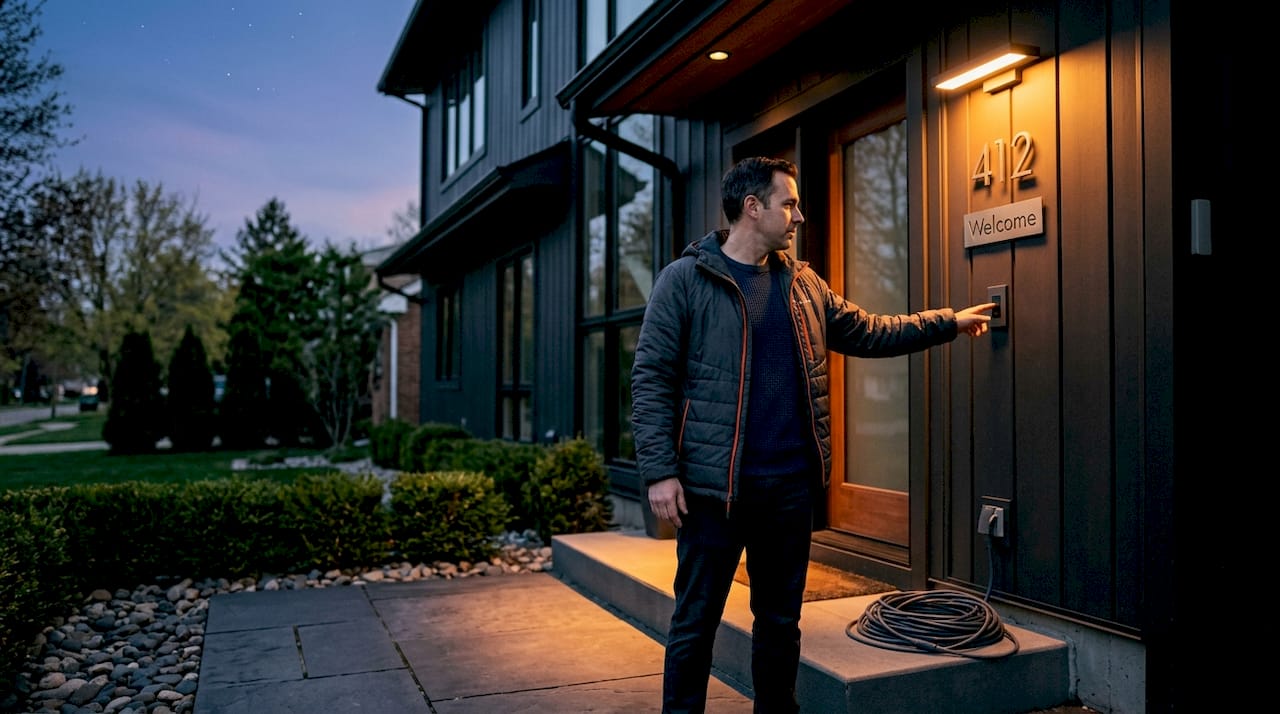
Most homeowners in the Arlington and DFW area don’t realize how much their outdoor lighting is costing them every month. Whether you’re running old halogen floodlights, incandescent porch fixtures, or high-pressure sodium security lights, the reasons why upgrade to led lights outside go well beyond the electric bill. You’ll gain better curb appeal, fewer maintenance headaches, and lighting that actually works the way you need it to. This article breaks down every major benefit so you can make a confident decision about your next outdoor lighting upgrade.
Table of Contents
- Key takeaways
- Why upgrade to LED lights outside: the energy savings case
- Better curb appeal and lighting quality
- Durability and reduced maintenance
- Smart controls that maximize your LED investment
- My take on outdoor LED upgrades for DFW homeowners
- Upgrade your outdoor lighting with Dfwledpro
- FAQ
Key takeaways
| Point | Details |
|---|---|
| Massive energy savings | LEDs use at least 75% less energy than incandescent bulbs, cutting your outdoor lighting costs significantly. |
| Far longer lifespan | LED fixtures can last up to 25 times longer, dramatically reducing how often you replace bulbs or fixtures. |
| Better light quality | Directional output and adjustable color temperatures improve visibility, security, and curb appeal at the same time. |
| Weather-ready durability | LEDs resist shock, vibration, and temperature extremes common across the DFW area. |
| Smart controls multiply savings | Pairing LEDs with motion sensors or timers reduces operating time and squeezes out even more cost reductions. |
Why upgrade to LED lights outside: the energy savings case
The numbers here are hard to argue with. ENERGY STAR-rated LEDs use at least 75% less energy than incandescent lighting and last up to 25 times longer. For a DFW homeowner running multiple outdoor fixtures through the hot Texas summer nights, that gap adds up fast.
Here is what that efficiency difference looks like in practical terms:
- A standard 60-watt incandescent porch bulb replaced with a 9-watt LED equivalent delivers the same light output at 85% lower wattage
- Running eight outdoor fixtures for six hours a night, the savings from switching to LED can easily top $150 to $200 per year on electricity alone
- Outdoor lighting accounts for a significant share of total residential energy savings from LED adoption nationally, which means this is one of the highest-impact places to upgrade in your home
- Reduced bulb replacements mean fewer trips up a ladder and lower spending on replacement stock
LEDs also produce directional light output, which means they send light where you actually aim them rather than scattering it in every direction. Traditional bulbs waste a portion of their energy sending light backward into the fixture housing. LEDs don’t do that, so you get more usable light per watt consumed.
Pro Tip: When calculating your potential savings, don’t just count the watts. Factor in how long each fixture runs per night and multiply across the whole year. DFW summers mean longer nights of security lighting, which makes the annual savings even higher than national averages.
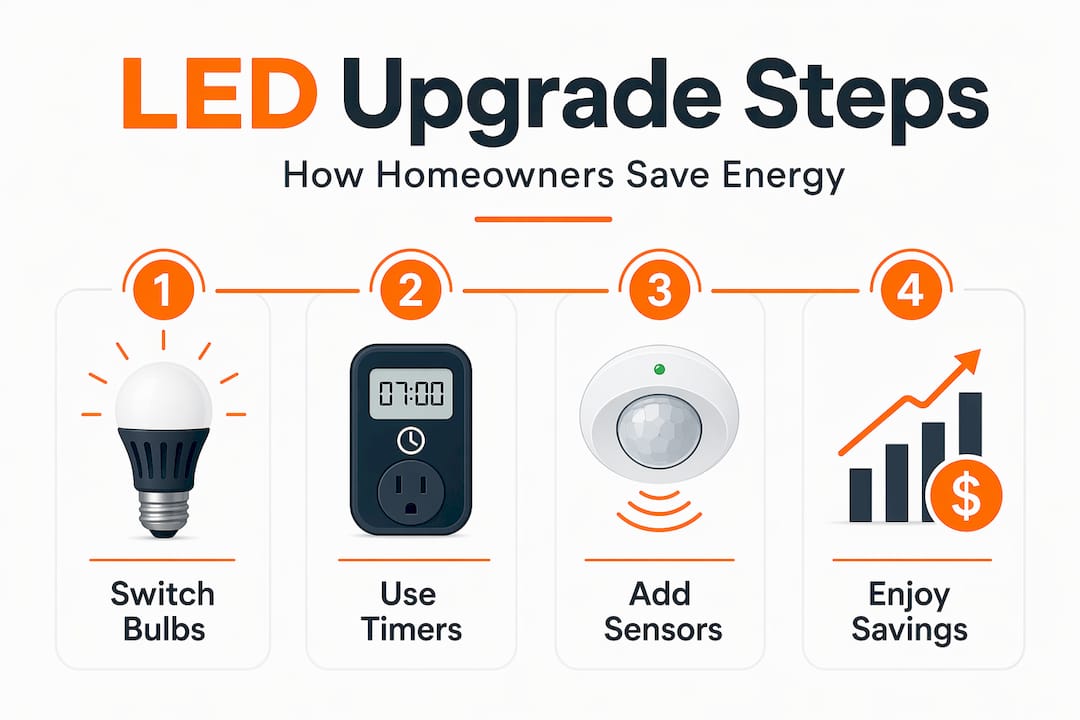
You can also pair LED fixtures with motion detectors and timers to cut operating hours dramatically. A floodlight that only activates when someone walks up the driveway uses a fraction of the energy of one running all night. That combination of efficient hardware and smart controls is where the biggest cost reductions happen.
Better curb appeal and lighting quality
Energy efficiency gets most of the attention, but the visible quality difference between LED and traditional outdoor lighting is just as compelling. One of the core benefits of outdoor LED lights is how precisely they can be aimed and controlled. That precision translates directly into a better-looking property at night.
The key factors that improve your home’s appearance with LEDs:
- Color temperature options let you choose between warm white (2700K to 3000K) for a welcoming porch glow or cooler white (4000K+) for crisp security lighting. Variable color temperatures and beam spreads allow you to customize each zone of your outdoor space separately.
- Glare reduction is a real benefit. Because LEDs are directional, proper aiming and shielding reduces spill light and glare onto neighboring properties. Your yard looks intentional rather than overlit.
- Zone lighting design means you can layer your outdoor lighting across pathways, landscaping beds, the porch, and the roofline rather than relying on one or two bright floodlights to cover everything. The result feels designed rather than functional.
- Dark-sky compliance is increasingly relevant in DFW communities. LEDs with proper cutoff optics reduce upward light scatter, which keeps your lighting neighbor-friendly and compliant with many HOA guidelines.
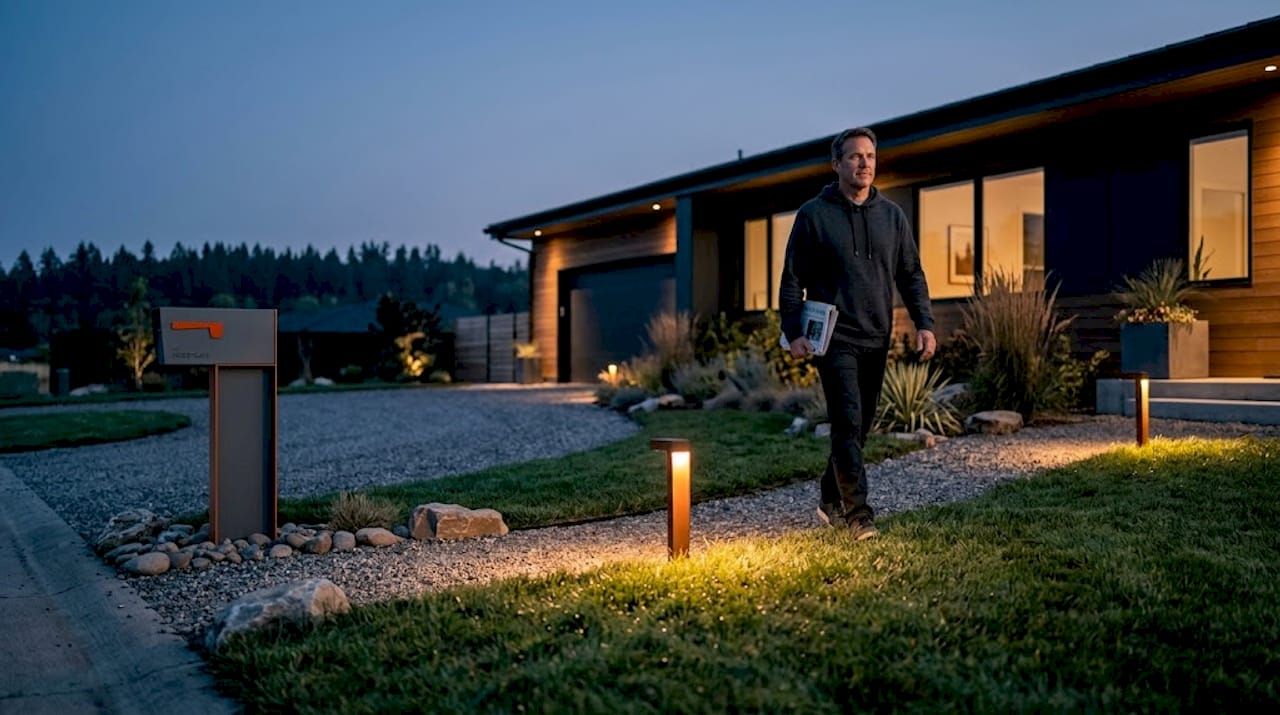
Think about the difference between a property where a single halogen floodlight blasts white light across the entire front yard versus one where pathway lights create depth, a warm porch fixture sets the right tone, and accent lighting highlights the architecture. That second property looks like the homeowner put thought into it. That’s what LED lighting for outdoor spaces makes achievable without a complicated installation.
Better visibility at night also improves practical safety. Well-lit pathways reduce trip hazards. A well-lit driveway makes it easier to see who is approaching the house. These aren’t just aesthetic points; they are functional upgrades that make your property more livable after dark.
Durability and reduced maintenance
Traditional outdoor bulbs, halogen especially, don’t tolerate the DFW climate well. The temperature swings between January freezes and July heat over 100 degrees create thermal stress that shortens the lifespan of filament and gas-discharge bulbs. LEDs handle those extremes much better.
Outdoor LEDs are built to resist shock, vibration, and physical impact in ways that incandescent and halogen bulbs simply cannot match. There is no fragile filament or pressurized glass envelope to crack. That construction difference matters when storms roll through the Metroplex and fixtures take wind-driven debris hits.
The maintenance reduction is one of the most underrated outdoor LED benefits:
- LED fixtures rated for 50,000 hours mean you could run an outdoor light for six hours every single night and not need to replace it for over 22 years
- Fewer replacements mean fewer times you need to access high or awkward mounting locations
- Lower heat output reduces wear on fixture housings, wiring connections, and surrounding trim materials over time
Pro Tip: In the DFW area, choose LED fixtures with an IP65 or higher weatherproofing rating for anything mounted in an exposed location. That rating confirms the fixture can handle the dust storms and heavy rain the region sees regularly.
Lower heat output also has a secondary environmental benefit. Traditional halogen and incandescent bulbs convert most of their energy into heat rather than light. LEDs stay cool, which means less heat radiating into your soffits and attic space on summer nights. That is a small but real contribution to keeping your cooling costs in check.
Smart controls that maximize your LED investment
Switching to LEDs is the first move. Pairing them with smart controls is what takes your outdoor lighting from good to genuinely efficient. The combination of efficient LED fixtures and adaptive controls consistently delivers the greatest energy and cost savings in outdoor applications.
Here is a comparison of common control types and what each delivers:
| Control type | How it works | Primary benefit |
|---|---|---|
| Motion sensors | Activates lights when movement is detected | Reduces operating hours significantly |
| Timers | Sets fixed on/off schedules | Prevents lights running through daylight hours |
| Daylight harvesting | Uses photocells to detect ambient light levels | Automatically adjusts to sunset and sunrise |
| Networked controls | App or hub-based management across zones | Full customization and real-time adjustments |
Motion-activated floodlights are the most common upgrade and among the most cost-effective. A light that only runs for 30 seconds when triggered uses a tiny fraction of what a continuous fixture consumes overnight. That said, the greatest savings come from system-level thinking: choosing the right fixture, driver, and control together rather than just swapping a bulb for a lower-wattage LED.
For DFW homeowners who want full flexibility, networked controls let you set separate schedules and brightness levels for each zone of your outdoor lighting from your phone. You can dim pathway lights to 30% after midnight, keep a motion-activated driveway light at full output, and shut off decorative accent lights on a timer. That level of control wasn’t practical with traditional outdoor fixtures. If you want to understand what these systems look like in practice, the smart outdoor solutions explained resource from Dfwledpro walks through the options clearly.
The security payoff is worth noting as well. Adaptive lighting that responds to activity around your home is a deterrent. A house where lights activate the moment someone approaches the front walk is noticeably less attractive to intruders than one with static or predictable lighting.
My take on outdoor LED upgrades for DFW homeowners
I’ve seen a lot of outdoor lighting projects across Arlington and the surrounding DFW communities, and the single biggest mistake homeowners make is treating this like a bulb swap. You pull out the old halogen, screw in an LED, and call it done. That works fine for the energy savings side. But you leave most of the value on the table.
The properties that look genuinely impressive after an LED upgrade are the ones where someone thought about fixture aiming, color temperature consistency, and zone separation before anything got installed. Most homeowners have never considered that pointing a floodlight slightly differently or choosing a 2700K bulb for the porch and a 4000K for the garage creates a completely different visual impression. These decisions cost nothing extra. They just require planning.
What I’ve learned about the DFW climate specifically is that durability matters more here than in most U.S. markets. The combination of intense summer heat, occasional ice storms, and wind events means cheap LED fixtures fail faster than their rated lifespans. Spending a little more on quality fixtures with solid weatherproofing ratings pays off in the DFW context in ways it might not in a milder climate.
One more thing worth saying: the neighborhoods where multiple homes have made thoughtful LED upgrades look noticeably better. Good outdoor lighting is contagious in the best way. Once a few properties on a street upgrade, the bar shifts for everyone. If you want a head start on understanding what a well-planned DFW setup looks like, the outdoor LED lighting checklist is a practical place to start.
Treat your outdoor LED upgrade as a lighting design project. Plan the zones, match the color temperatures, and add controls from the start. That approach delivers returns that a simple bulb swap never will.
— Adrian
Upgrade your outdoor lighting with Dfwledpro
Dfwledpro is the official authorized JellyFish Lighting dealer for the Dallas-Fort Worth metroplex, and we install permanent outdoor LED lighting systems across 35+ cities including Arlington, Fort Worth, Mansfield, Grand Prairie, Burleson, and Midlothian. When you work with us, you get expert fixture placement, custom color-matched installations, and full smart control integration from day one.
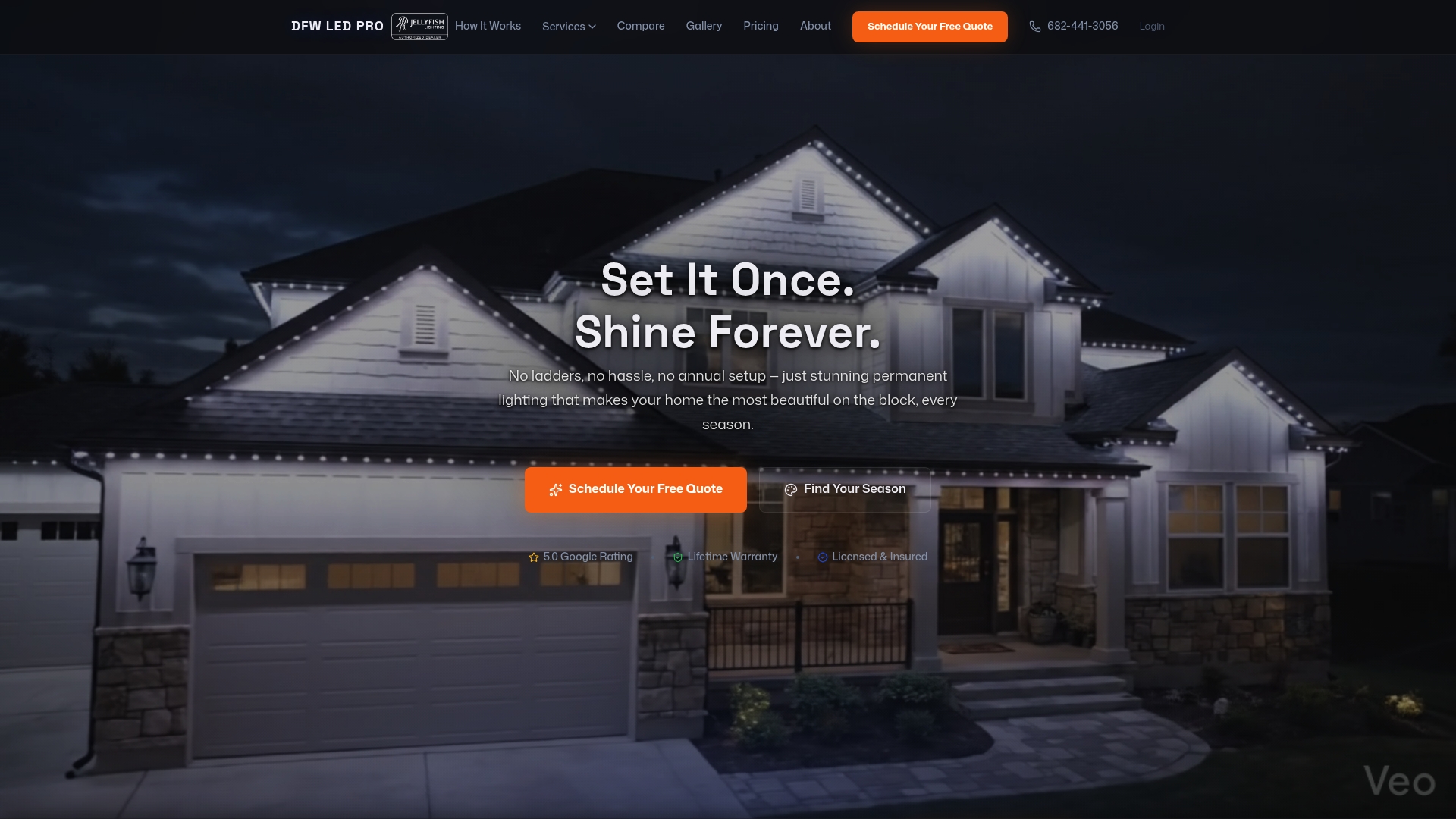
If you’re ready to move beyond the guesswork and get outdoor lighting that looks sharp, holds up to the Texas climate, and actually cuts your energy bills, we’re ready to help. Homeowners in Lancaster, Dallas, and Fort Worth can reach out today for a consultation and quote. We handle the planning, the installation, and the fine-tuning so your property looks exactly the way you want it after dark.
FAQ
How much energy do outdoor LEDs actually save?
ENERGY STAR-rated LEDs use at least 75% less energy than incandescent bulbs. For a home running multiple outdoor fixtures nightly, that can translate to $150 to $200 or more in annual electricity savings.
How long do outdoor LED fixtures last?
Quality outdoor LED fixtures are rated for 50,000 hours or more, which can mean over 20 years of regular nightly use. That lifespan is up to 25 times longer than a standard incandescent bulb.
Do outdoor LEDs work well in extreme heat and cold?
Yes. Unlike halogen or incandescent bulbs, LEDs have no filament to fail under thermal stress. Look for fixtures with an IP65 or higher weatherproofing rating for exposed outdoor locations in the DFW area.
What smart controls work best with outdoor LED lighting?
Motion sensors, photocell timers, and networked app-based controls all pair well with LEDs. Pairing motion-activated controls with efficient LED fixtures delivers the largest reductions in both energy use and operating costs.
Will outdoor LED lighting improve my home’s curb appeal?
Absolutely. Directional light output, adjustable color temperatures, and zone-based design give you precise control over how your property looks at night. A well-planned LED setup creates a premium appearance that traditional floodlights simply cannot match.