Why LED Is Better Than Halogen for Your Home
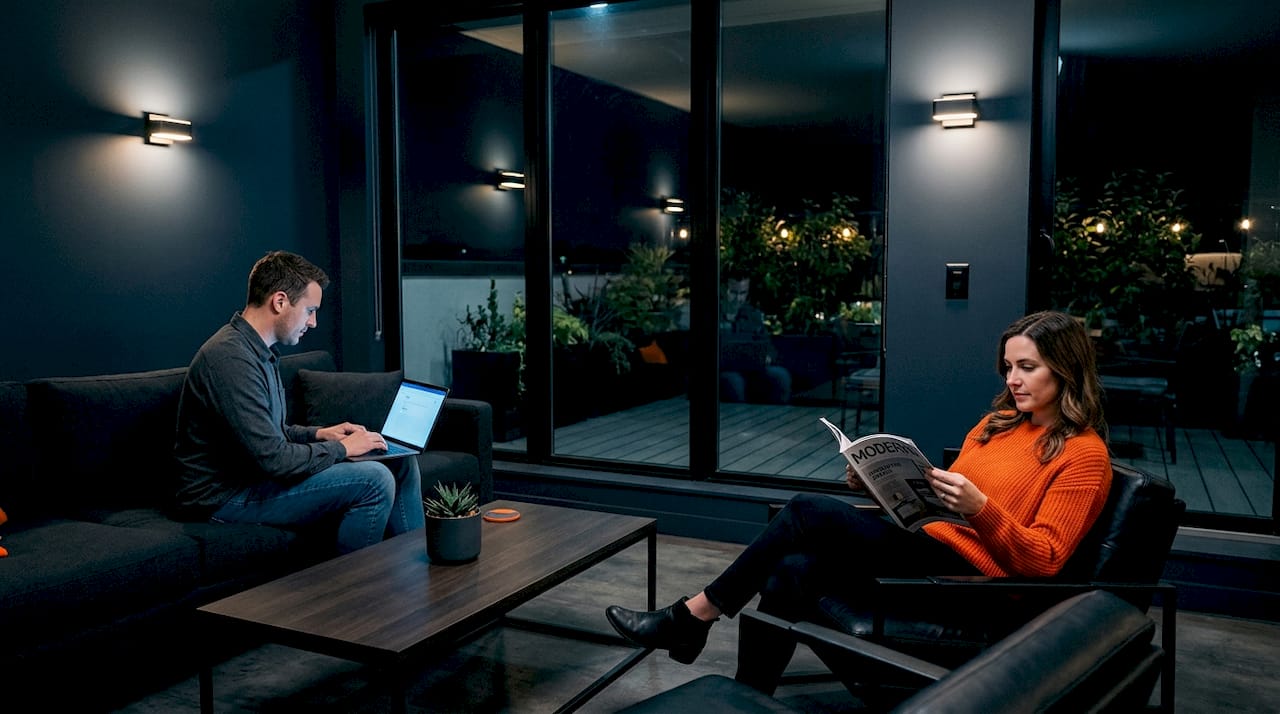
Most homeowners assume halogen bulbs are the safe, familiar choice. The real numbers tell a different story. Understanding why LED is better than halogen comes down to three things: how much electricity each bulb consumes, how long it lasts, and what it actually costs you over time. If you still have halogen bulbs in your recessed fixtures, track lighting, or outdoor spots, you are almost certainly paying more than you need to. This article breaks down the real differences so you can make a lighting decision based on facts, not habit.
Table of Contents
- Key takeaways
- Why LED is better than halogen: the core technology difference
- Energy costs and long-term savings compared
- Light quality, dimming, and safety at home
- How to transition from halogen to LED at home
- My honest take on the LED vs. halogen debate
- Ready to upgrade your home’s LED lighting?
- FAQ
Key takeaways
| Point | Details |
|---|---|
| Massive energy savings | LEDs use up to 85% less electricity than halogen for the same brightness output. |
| Far longer lifespan | LED bulbs last 25,000 to 50,000 hours versus 1,000 to 4,000 hours for halogen. |
| Lower total cost | Higher upfront LED cost is offset quickly by reduced energy bills and fewer replacements. |
| Modern light quality | Today’s LEDs match halogen’s warm color and high color rendering without the heat risk. |
| Safer for your home | Halogen surfaces exceed 250°C. LEDs run cool, reducing burn and fire hazards. |
Why LED is better than halogen: the core technology difference
To understand the performance gap, you need to know how each bulb actually produces light. It is not complicated, and the difference explains almost everything else.
A halogen bulb works the same way a standard incandescent does. It passes electricity through a tungsten filament until the filament gets hot enough to glow. That process generates both light and a significant amount of heat waste. Most of the energy a halogen bulb consumes goes straight into heat you cannot use.
An LED works entirely differently. It passes current through a semiconductor diode, which produces light directly at the junction. LEDs use heat sinks to draw heat away from the semiconductor, which keeps the bulb surface cool to the touch. The result is that far more of the energy input becomes visible light rather than wasted heat.
Here is what this means in practical terms:
- A 50-watt halogen bulb can be replaced by a 7 to 10 watt LED producing the same amount of light
- Brightness is measured in lumens, not watts. Watts only measure energy consumption
- Halogen bulbs convert roughly 10 to 15% of their energy into visible light. LEDs convert 80 to 90%
- LED fixture heat also reduces thermal load on HVAC systems, cutting secondary cooling costs in warm climates like North Texas
That last point matters more than most homeowners realize. Every halogen bulb in your home acts like a small heater. In a Dallas summer, your air conditioner works harder because of it.
Energy costs and long-term savings compared
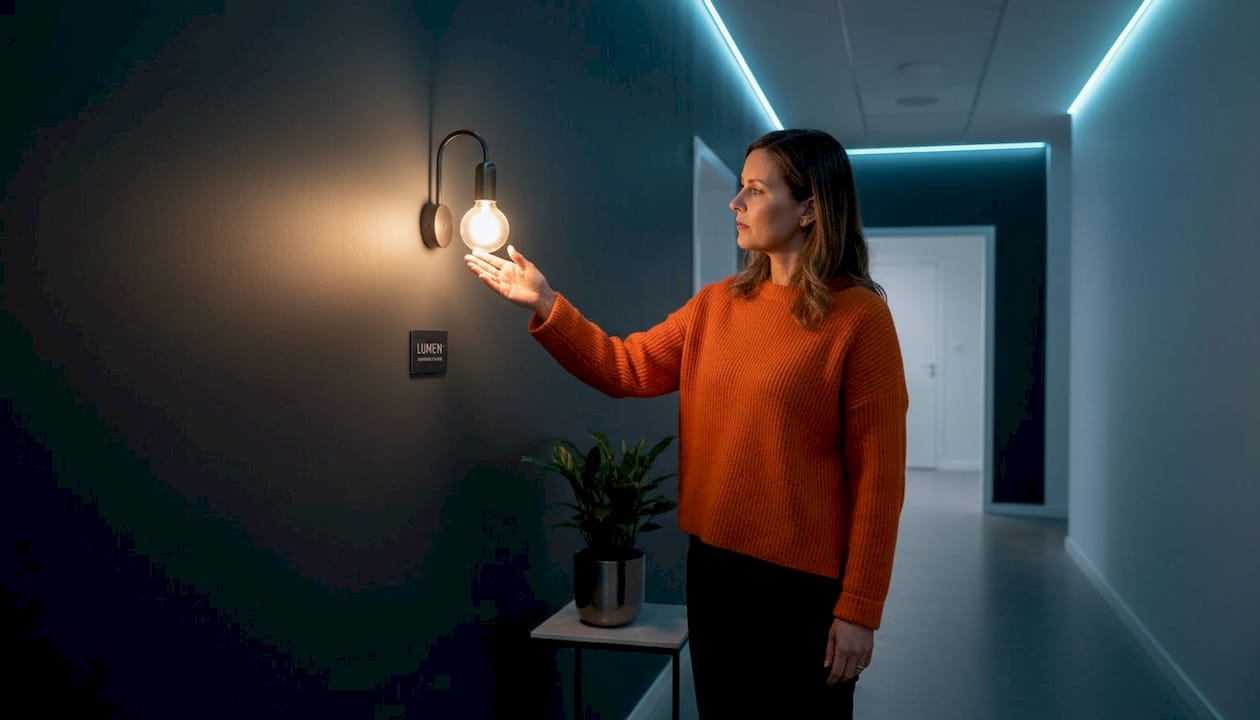
This is where the numbers make the decision for you. Upfront bulb price gets a lot of attention. Total cost of ownership tells the real story.
LED bulbs use 80 to 85% less electricity than halogen for the same brightness level. Across a full household, that adds up fast. Switching to LED can cut your lighting electricity bill by 50 to 60%. For a home running 20 to 30 fixtures, that is a meaningful monthly reduction.
The lifespan gap is just as significant. Quality LED bulbs last 25,000 to 50,000 hours while halogen bulbs typically last 1,000 to 4,000 hours. That is 12 to 25 times longer per bulb.
| Factor | Halogen | LED |
|---|---|---|
| Typical wattage | 50W | 7–10W |
| Lifespan (hours) | 1,000–4,000 | 25,000–50,000 |
| Energy cost (relative) | High | 80–85% lower |
| Replacement frequency | High | Very low |
| Lighting bill savings | Baseline | 50–60% reduction |
| Surface heat | Exceeds 250°C | Cool to touch |
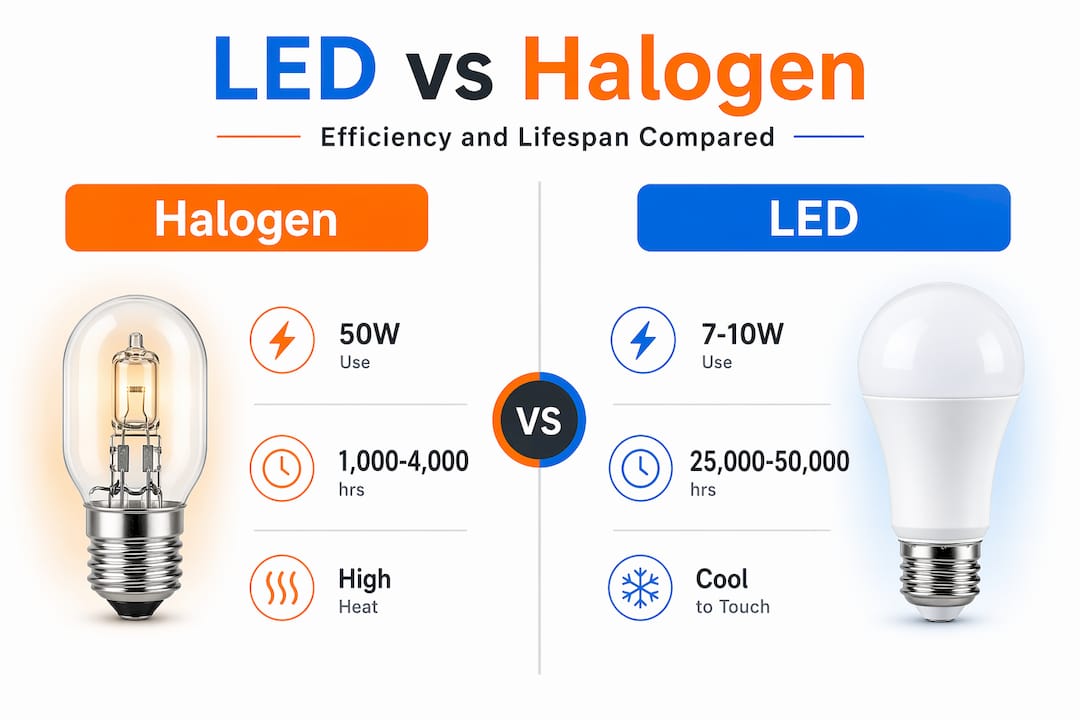
The total cost of LED ownership is lower despite the higher sticker price. A homeowner replacing a halogen bulb every one to two years versus an LED that lasts a decade or more is also paying in time and inconvenience. High-up-recessed fixtures and outdoor spots are especially tedious to replace frequently. LEDs also fail gradually rather than abruptly. LED bulbs dim to around 70% brightness at end of life, giving you notice before full failure. Halogen bulbs typically burn out without warning.
Pro Tip: Calculate your household’s current lighting wattage by multiplying the number of halogen bulbs by their wattage and your average daily usage hours. Then compare that figure using LED equivalents. Most homeowners are surprised by how quickly the savings justify the switch.
Light quality, dimming, and safety at home
One reason halogen held on for so long is light quality. Halogen produces a warm, natural light with near-perfect color rendering. For artwork, kitchen counters, and spaces where accurate color matters, that mattered. The concern about switching was reasonable ten years ago. Today it is mostly outdated.
Modern LEDs can achieve a CRI of 80 to 95, which closely approaches halogen’s near-100 CRI. You can also buy LEDs in a wide range of color temperatures, from warm white at 2700K to daylight at 5000K. For most living spaces, a 2700K to 3000K LED is indistinguishable from halogen in terms of warmth and ambiance.
Where you still need to pay attention:
- Dimming compatibility. Many older dimmer switches cause LED flickering or buzzing because they were designed for halogen’s resistance characteristics. If your home has existing dimmers, verify LED compatibility or plan to upgrade the switches alongside the bulbs.
- Enclosed fixtures. LEDs are well suited for enclosed cans and recessed fixtures where heat buildup can shorten halogen life. Check that the LED is rated for enclosed use.
- Children’s rooms and nurseries. Halogen surface temperatures exceed 250°C, creating a burn hazard any time a child can reach a lamp or fixture. LEDs stay cool enough that contact is not dangerous.
- Kitchens. LEDs in kitchens add less ambient heat to a space that already runs warm during cooking, which matters in DFW summers.
- Bathrooms. LEDs rated for damp or wet locations handle humidity better and last far longer in those conditions than halogen equivalents.
The safety case for LED in residential settings is straightforward. A bulb that runs at room temperature near-equivalent presents no fire risk to a nearby lampshade, curtain, or wood surface. Halogen positioned too close to flammable material is a documented fire cause. That is not a theoretical risk.
Pro Tip: When shopping for replacement LEDs for any room where color accuracy matters, look for a CRI of 90 or higher and a color temperature between 2700K and 3000K. That combination produces the closest match to the warm, natural halogen look most homeowners remember.
How to transition from halogen to LED at home
Making the switch does not mean replacing every bulb on the same weekend. A phased approach is smarter and gives you time to find the right products for each space.
- Start with high-use rooms. Kitchens, living rooms, and home offices run lights for the most hours daily. These spaces deliver the fastest return on your LED investment.
- Audit your dimmer switches. Before buying LEDs for any dimmed fixture, note the dimmer brand and model. Older dimmers are commonly incompatible with LEDs, and replacing them is a simple, low-cost fix that prevents flickering problems.
- Read the product label carefully. Look for lumens (brightness), watts (energy use), CRI (color accuracy), and color temperature (warm vs. cool). Avoid cheap bulbs without clear specifications. Poor quality LED drivers cause most of the flickering and color inconsistency complaints homeowners encounter, not LED technology itself.
- Check fixture ratings. Some enclosed or recessed fixtures require LEDs labeled for enclosed use. Using a non-rated bulb in an enclosed fixture can shorten its life significantly.
- Consider outdoor lighting separately. Outdoor halogen spotlights and flood lights are among the best candidates for LED upgrades because they run long hours and are often in hard-to-reach locations. Our LED security lighting guide covers the outdoor-specific considerations in more detail.
- Keep one or two halogen bulbs on hand temporarily. If you have specialty applications like a kiln vent, photographic copy setup, or other high-heat-requirement uses, halogen may still be the right call. Halogen’s near-perfect color rendering and specific heat output make it the preferred choice in a narrow set of professional or artistic contexts.
- Track your bills after switching. Most homeowners see a measurable drop in their electric bill within one to two billing cycles after a full LED conversion. Documenting this helps reinforce the decision and validates the investment.
My honest take on the LED vs. halogen debate
I have watched a lot of homeowners wrestle with this decision over the years, and the hesitation almost always comes from the same place: the upfront price tag on quality LED bulbs. When a halogen bulb costs a couple of dollars and a comparable LED costs eight or ten, it feels like the wrong financial move. I get it.
But what I have seen consistently is that homeowners who focus only on sticker price end up spending more over a three to five year window than those who switched to quality LEDs from the start. The energy savings and replacement frequency difference are not marginal. They are substantial.
Where I think halogen still earns consideration is in very specific artistic or high-color-fidelity applications. A photography studio, a painting workspace, or a retail jewelry display case might genuinely benefit from halogen’s near-perfect CRI. For the typical family home in the DFW area? The practical case for LED is overwhelming.
My one consistent caution: do not buy cheap LEDs to save a few dollars. The problems people associate with LEDs, flickering, uneven color, early burnout, almost always trace back to low-quality drivers or incompatible dimmers. Invest in reputable products and verify your dimmer compatibility. That combination resolves 90% of the complaints I hear about LED performance.
— Adrian
Ready to upgrade your home’s LED lighting?
At Dfwledpro, we work with homeowners across the Dallas-Fort Worth area to move beyond outdated halogen systems and into high-performance LED solutions. Our expertise covers everything from indoor fixture upgrades to full permanent outdoor LED installations that transform how your home looks and functions year-round.
If you are ready to explore what professional LED lighting can do for your home, our JellyFish permanent LED lighting installation service is a great place to start. These systems are built for DFW’s climate, professionally installed, and backed by a lifetime warranty on the fixtures. You can also visit our lighting tips and guides blog to keep learning before you make any decisions. When you are ready to talk specifics, our team is available to walk you through the right options for your home and budget.
FAQ
How much energy do LEDs save compared to halogen?
LED bulbs use 80 to 85% less electricity than halogen bulbs for the same light output. Switching a household from halogen to LED typically reduces lighting electricity costs by 50 to 60%.
Will LED bulbs work with my existing dimmer switches?
Not always. Many older dimmer switches were designed for halogen and cause LED bulbs to flicker or buzz. Check your dimmer model for LED compatibility, or replace the dimmer with a modern LED-compatible unit before installing new bulbs.
How long do LED bulbs last compared to halogen?
Quality LED bulbs last 25,000 to 50,000 hours. Halogen bulbs typically last 1,000 to 4,000 hours. That means one LED bulb can outlast more than a dozen halogen replacements in the same fixture.
Are LED bulbs safe for children’s rooms?
Yes. LED bulbs run at a fraction of halogen’s surface temperature. Halogen bulbs exceed 250°C on the surface, posing a real burn and fire risk. LEDs are a much safer choice for any space where children can access lamps or fixtures.
Do LEDs produce the same warm light as halogen?
Modern LEDs with a color temperature of 2700K to 3000K and a CRI of 90 or higher closely match the warm, natural quality of halogen light. The gap in light quality that existed years ago has largely closed with current LED technology.