Why Avoid Seasonal Lighting Hassle: A Homeowner’s Guide
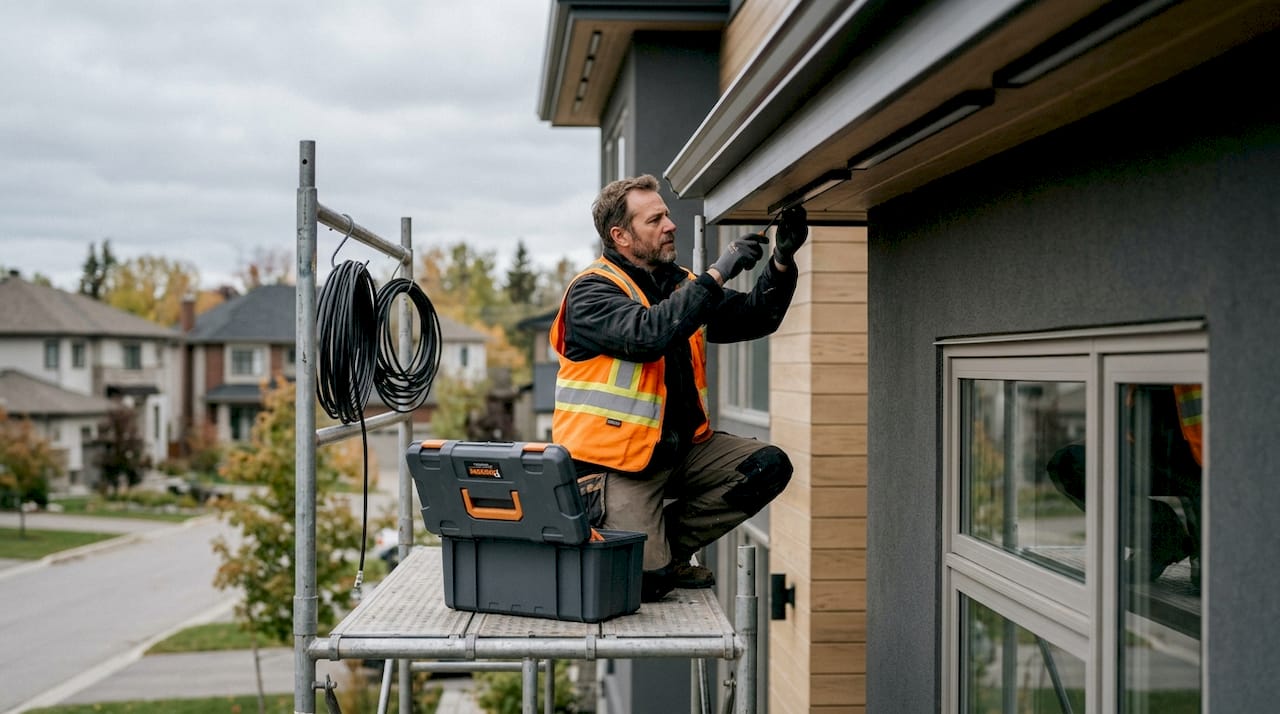
Permanent outdoor lighting is the most effective way to avoid seasonal lighting hassle for good. Every november, millions of homeowners climb ladders, untangle knotted strands, and replace burned-out bulbs, only to repeat the entire process in reverse six weeks later. The industry term for the alternative is permanent architectural lighting, a system installed once and controlled year-round through a smartphone app. This guide explains exactly why the annual setup cycle costs more than most homeowners realize, and how a one-time professional installation from Dfwledpro eliminates those recurring costs, safety risks, and storage headaches entirely.
Why avoid seasonal lighting hassle in the first place?
Seasonal outdoor lighting hassle is defined as the annual cycle of setup, maintenance, storage, and removal that temporary holiday lights demand from homeowners. Seasonal lighting hassle includes yearly untangling, storage challenges, frequent replacements, and real safety risks during installation and removal. That cycle repeats every single year with no end in sight.
The financial burden compounds quickly. Homeowners who hire professional seasonal installers pay $800–$2,000 annually. That means a homeowner spending $1,200 per year pays $6,000 over five years for lights that come down every january. A permanent system costing $2,000–$5,000 pays for itself in 4–5 years by eliminating those recurring costs entirely.
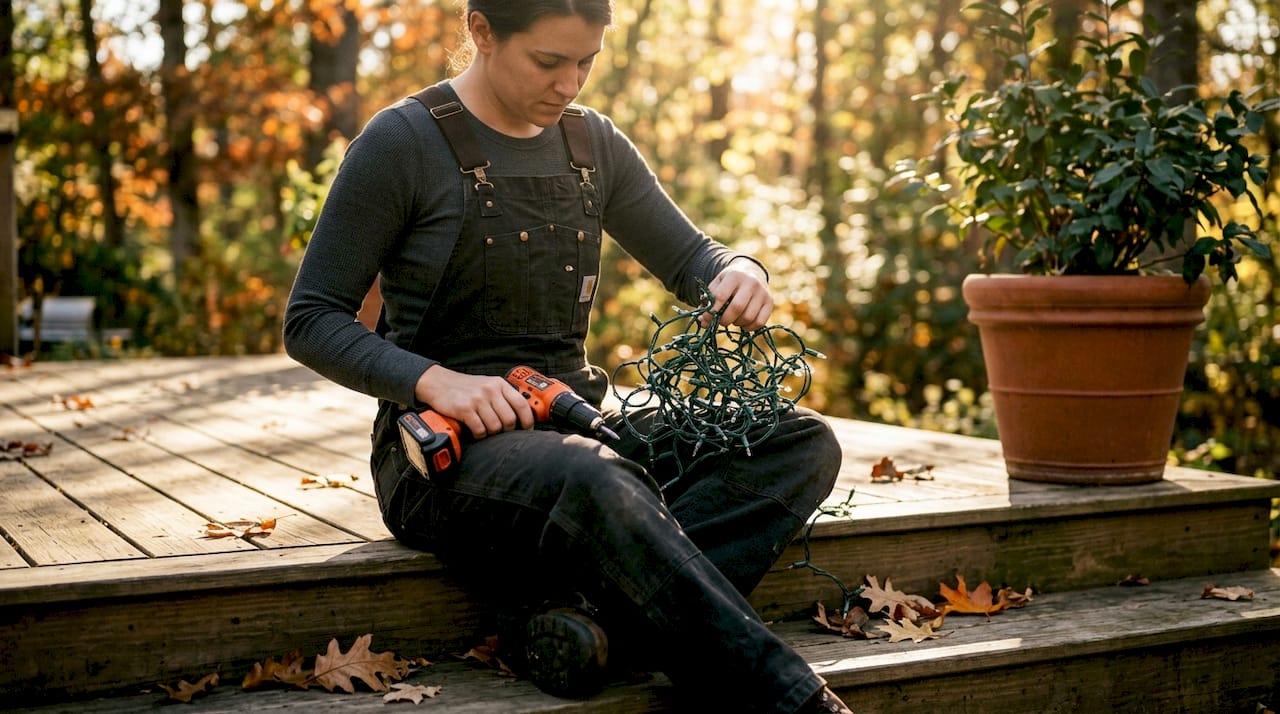
Safety is the other side of the equation. Thousands of ladder-related injuries occur each year during seasonal light installation. Most of those injuries happen to otherwise healthy adults who simply misjudge a step or lose balance on a wet roof edge.
What makes temporary holiday lights such a burden?
The frustration starts before you even open the storage box. Here is what the average homeowner faces every season:
- Untangling and testing. Strands stored loosely develop knots and kinks. Testing each strand before installation takes time, and a single dead bulb in an older series-wired set can kill the whole strand.
- Bulb and strand replacement. Poorly handled seasonal lights suffer loose contacts, wire breaks, and burned-out bulbs far more often than permanently mounted systems. Replacement costs add up across multiple seasons.
- Ladder work and fall risk. Reaching rooflines, gutters, and second-story eaves requires ladder repositioning every few feet. Each climb is a separate fall opportunity.
- Storage damage. Lights stored in garages or attics face temperature swings, moisture, and pest damage. Texas summers routinely push attic temperatures above 130°F, which degrades plastic insulation on wire strands.
- Removal labor. Taking lights down after the holidays is just as time-consuming as putting them up, and it happens during cold, often wet weather in january and february.
- Recurring professional fees. If you hire a crew, you pay installation and removal fees every year. If you do it yourself, you pay with your time and physical risk.
Pro Tip: Label your storage bins by roofline section before packing lights away. It cuts setup time the following year, but it does not eliminate the ladder risk or the bulb failures.
How do permanent outdoor lighting systems solve these problems?
Permanent lighting systems address every pain point in the seasonal cycle. The core benefit is simple: you install once, and the lights stay in place year-round, flush-mounted to your roofline or fascia.
Key advantages include:
- No annual setup or removal. Professional installation is a one-time event. After that, your lights are always in place and ready to activate.
- App-controlled color and scheduling. Modern permanent systems provide smart app controls for color changes, scheduling, and remote operation. You switch from Christmas red and green to Fourth of July red, white, and blue in seconds from your phone.
- Weather-resistant construction. Quality permanent systems use IP67-rated waterproofing, meaning the fixtures are fully protected against dust and temporary water immersion. That rating matters in DFW, where spring hailstorms and summer thunderstorms are routine.
- Lower maintenance over time. Permanent LED systems use less energy than traditional bulbs and require far less frequent bulb replacement. The result is less maintenance time and lower operating costs year after year.
- Year-round functionality. Permanent lighting transforms seasonal decoration into a year-round home improvement. You get curb appeal for every season, functional security lighting at night, and ambiance for backyard gatherings in the summer.
- Eliminated ladder risk. Once the system is installed by professionals, you never climb a ladder for lighting again. Color changes and scheduling happen entirely through the app.
Pro Tip: Use your permanent system’s scheduling feature to run a dim warm-white setting every night year-round. It adds security lighting and curb appeal without any additional effort or cost.
Dfwledpro installs JellyFish Lighting systems across 35+ cities in the Dallas-Fort Worth area. JellyFish uses a patented 4-wire redundancy design, which means a single point of failure does not take down an entire section of your roofline. That engineering detail matters when you are comparing permanent systems against temporary strands that fail completely when one bulb burns out.
What are the financial and safety advantages of permanent lighting?
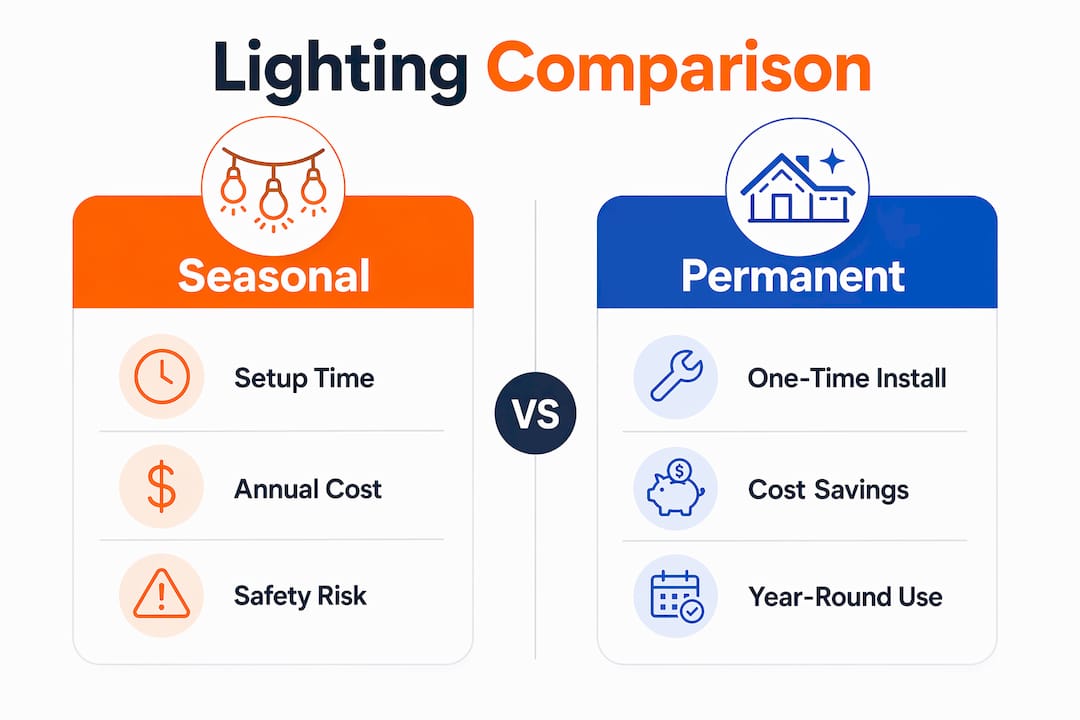
The cost comparison between seasonal and permanent lighting is straightforward once you account for the full lifetime of each option.
| Cost Factor | Seasonal Lighting (Annual) | Permanent System (One-Time) |
|---|---|---|
| Professional install/removal | $800–$2,000 per year | $2,000–$5,000 total |
| Bulb and strand replacement | $50–$200 per year | Minimal; LED lifespan is 50,000+ hours |
| Storage and damage | Variable | None; system stays mounted |
| Payoff timeline | Never | 4–5 years |
| Ladder injury risk | Every season | Eliminated after install |
The math favors permanent systems for any homeowner planning to stay in their home for five or more years. A homeowner paying $1,500 per year for professional seasonal installation spends $7,500 over five years. A permanent system installed for $3,500 costs less than half that over the same period, and it keeps working for decades after.
Permanent outdoor lighting is not just a convenience upgrade. It is a safety decision. Thousands of Americans are injured each year falling from ladders during holiday light installation. A one-time professional installation removes that risk from your life permanently.
The energy efficiency argument is equally strong. LED technology uses a fraction of the power that incandescent holiday strands consume. Lower energy draw means lower monthly utility bills, which adds another layer of long-term savings on top of the eliminated installation fees.
Homeowners considering curb appeal improvements should factor lighting into their exterior upgrade plans. Lighting is one of the highest-visibility improvements you can make to a home’s exterior, and permanent systems deliver that visibility every night of the year.
What should homeowners consider before switching to permanent lighting?
Making the switch from seasonal to permanent lighting is a straightforward process, but a few practical factors are worth thinking through before you commit.
- Length of stay. The ROI on a permanent system makes the most sense if you plan to stay in your home for at least four to five years. If you are planning to sell within two years, the financial case is weaker, though the curb appeal benefit can still support resale value.
- Installer quality. Professional installation ensures proper wiring, reduces future maintenance needs, and delivers optimal placement for aesthetics and safety. A poorly installed system creates the same maintenance headaches you were trying to avoid. Choose an installer with verifiable experience and manufacturer authorization.
- Design flexibility. Confirm that the system you choose supports multiple color profiles and custom scheduling. A system locked to a single color or preset pattern limits your ability to use it year-round for different occasions.
- Local codes and HOA rules. Some Dallas-Fort Worth HOAs have specific rules about lighting brightness, color, and operating hours. Check your HOA guidelines before installation so your system is configured to comply from day one.
- Placement and brightness. Work with your installer to plan fixture placement that covers rooflines, eaves, and architectural features evenly. Uneven coverage creates dark spots that reduce both curb appeal and security value.
- Maintenance expectations. Permanent systems require very little ongoing maintenance, but you should know the warranty terms and who to call if a section fails. Dfwledpro provides ongoing support for every system we install across the DFW area.
For homeowners who want a broader look at outdoor lighting for every season, planning your system around year-round use from the start produces better results than designing for holidays alone.
You can also explore professional outdoor lighting installation as a reference point for what a quality installation process looks like, regardless of your location.
Key Takeaways
Permanent outdoor lighting eliminates seasonal hassle by replacing annual setup, ladder risk, and recurring costs with a single professional installation that works year-round.
| Point | Details |
|---|---|
| Seasonal costs add up fast | Homeowners paying $800–$2,000 per year for professional installs spend more than a permanent system costs within 4–5 years. |
| Ladder injuries are preventable | Thousands of Americans are injured annually during seasonal light installation; permanent systems remove that risk entirely. |
| App controls replace physical effort | Smart scheduling and color-change controls mean you never touch a ladder or strand again after the initial install. |
| Year-round value justifies the cost | Permanent lighting serves security, curb appeal, and entertaining functions every night, not just during the holiday season. |
| Installer quality determines results | Choosing an authorized, experienced installer like Dfwledpro protects your investment and ensures proper wiring and placement. |
Why I think most homeowners underestimate the real cost of seasonal lights
After working with homeowners across the Dallas-Fort Worth area for years, I have noticed a consistent pattern. Most people calculate the cost of seasonal lighting as the price of the lights themselves. They forget the installation fee, the removal fee, the replacement strands, and the two weekends of their own time.
The safety issue is the one that surprises people most. Nobody thinks they are going to fall off a ladder until they do. I have talked to homeowners who switched to permanent lighting specifically because a neighbor or family member was injured during a holiday install. That conversation changes your perspective quickly.
The other thing I see consistently is how much homeowners enjoy the year-round use once the system is in place. They start using their lights for birthday parties, game nights, and just everyday ambiance in the backyard. The system stops being a “holiday thing” and becomes part of how they live in their home. That shift in thinking is what makes permanent lighting genuinely worth the investment, not just the math on paper.
My honest advice: do not buy the cheapest system available. The quality gap between entry-level permanent fixtures and a properly engineered system like JellyFish Lighting is significant. IP67 waterproofing, 4-wire redundancy, and a real warranty are not marketing terms. They are the difference between a system that works for 20 years and one that needs repairs after the first Texas summer.
— Adrian
Permanent LED lighting for your DFW home, installed right the first time
Dfwledpro installs JellyFish permanent LED lighting systems across 35+ cities in the Dallas-Fort Worth area, including Arlington, Fort Worth, Grand Prairie, Mansfield, and Burleson. Every installation is custom-designed for your roofline, color-matched to your home’s exterior, and backed by a lifetime warranty on the system.
If you are ready to stop climbing ladders every november and start enjoying year-round curb appeal, we are ready to help. Our team handles everything from design to installation to ongoing support. Homeowners in Lancaster can explore our permanent LED lighting in Lancaster service page for details on what a professional installation includes. Dallas homeowners can review our Dallas permanent LED installation options. Contact Dfwledpro today for a free consultation and quote.
FAQ
What is seasonal lighting hassle, exactly?
Seasonal lighting hassle refers to the annual cycle of installing, maintaining, storing, and removing temporary holiday lights. It includes ladder work, bulb replacement, untangling strands, and paying recurring professional installation fees every year.
How long does a permanent lighting system take to pay for itself?
Permanent systems costing $2,000–$5,000 typically pay off in 4–5 years for homeowners who currently spend $800–$2,000 annually on professional seasonal installation and removal.
Are permanent outdoor lights safe in Texas weather?
Quality permanent systems use IP67-rated waterproofing, which protects fixtures against rain, hail, and humidity. JellyFish Lighting systems installed by Dfwledpro are rated for the temperature extremes and storm conditions common across the DFW area.
Can permanent lights be used for occasions other than Christmas?
Yes. Smart app controls let you change colors and schedules for any occasion, from Fourth of July to Halloween to everyday security lighting. The system works year-round, not just during the holiday season.
Do I need a permit to install permanent outdoor lighting in DFW?
Permit requirements vary by city and HOA. A reputable installer like Dfwledpro will confirm local code requirements before installation and configure your system to comply with any applicable brightness or operating-hours rules.