What Is RGBW in Lighting? A Homeowner’s Guide

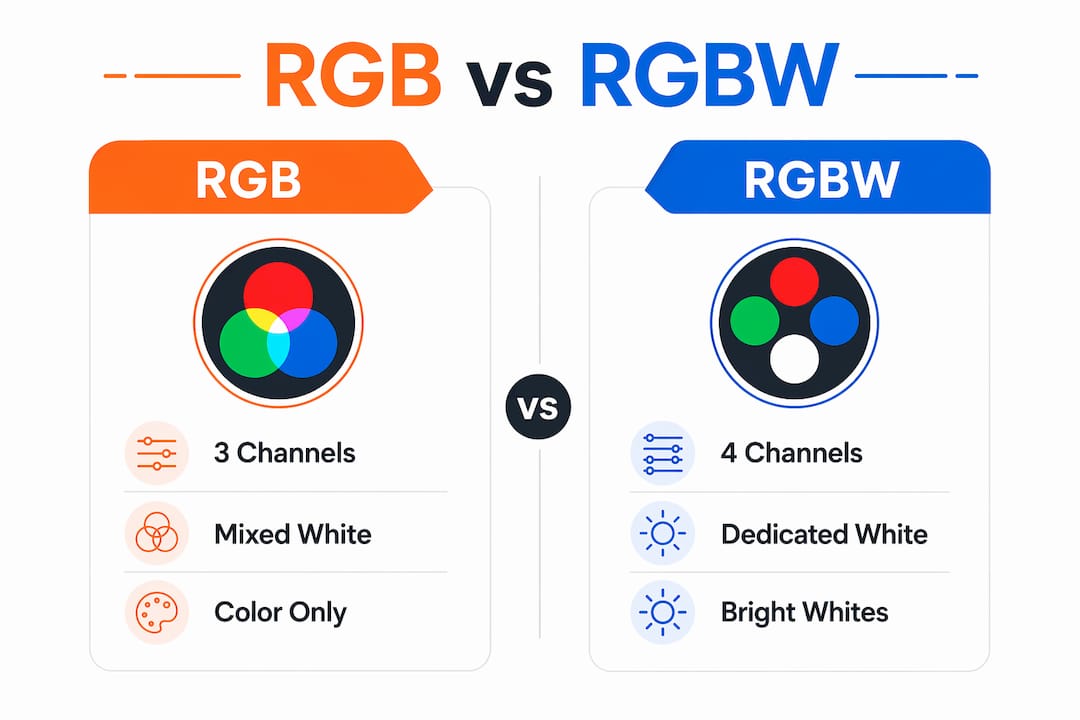
RGBW in lighting is defined as an LED technology that adds a dedicated white diode to the standard red, green, and blue (RGB) configuration, enabling true white light output rather than an approximated white produced by color mixing. Standard RGB lighting creates white by blending all three color channels, but the result often looks bluish or artificial. RGBW solves that problem directly. The white diode delivers clean, accurate white light that works for both task lighting and ambient settings. Because RGBW systems control four separate channels instead of three, they require 4-channel controllers rather than standard RGB controllers.
What is RGBW in lighting and how does it work?
RGBW stands for Red, Green, Blue, and White. Each letter represents a separate LED diode inside the fixture or strip. The white diode is the key difference between RGBW and standard RGB. RGB lighting mixes red, green, and blue to approximate white, but cannot generate pure white light. That mixed white often carries a bluish or unnatural tint that stands out in home interiors.
RGBW systems control four independent channels. Each channel adjusts the brightness of one diode color. The white channel operates completely separately from the RGB channels. This separation is what makes RGBW superior for rooms where you need both vibrant color and clean white light.
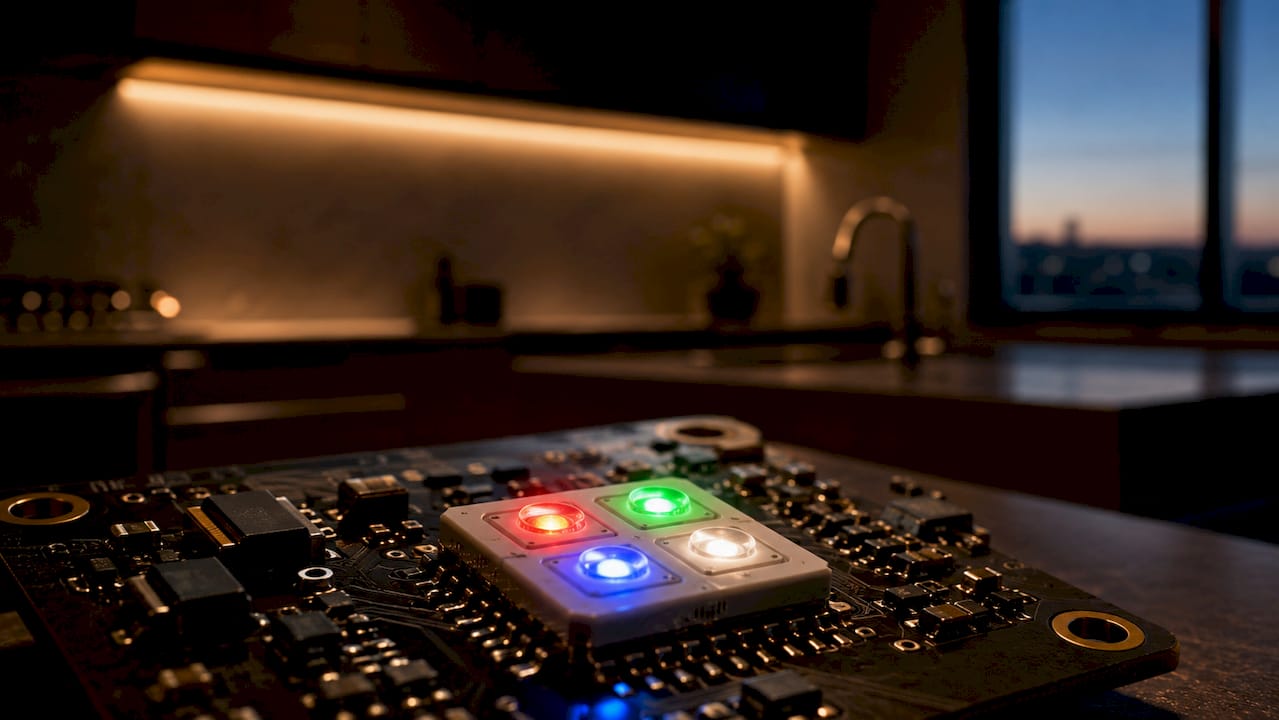
The two physical layouts of RGBW LEDs
RGBW LEDs come in two configurations. The first is the 4-in-1 chip, which places all four diodes inside a single LED package. This layout produces seamless color blending with no visible color separation. The second is the alternating chip layout, which places separate RGB and white chips side by side on the strip. Alternating layouts cost less to manufacture but can show visible color edges when viewed up close.
For home use, the 4-in-1 chip design is worth the extra cost. You will not see color shadows on your walls or ceilings, and the light blends naturally across any surface.
Controller and wiring requirements
RGBW strips require a 4-channel controller. Using a standard 3-channel RGB controller on an RGBW strip disables the white channel entirely. The strip will still produce colors, but you lose the dedicated white output. This is one of the most common mistakes DIY installers make. Power supply compatibility also matters. Balancing forward voltages across four different diode colors prevents uneven brightness and color shift. A generic power supply may cause the white LEDs to appear too bright or too dim relative to the color channels.
Pro Tip: Before purchasing any RGBW strip, confirm the controller is rated for four channels. Check the product spec sheet for the label “RGBW controller” rather than “RGB controller.” A mismatched controller is the single fastest way to waste money on a lighting upgrade.
Key technical points to keep in mind:
- RGBW strips have five wires: one for each color channel plus a shared ground
- 4-in-1 chips blend colors more smoothly than alternating chip designs
- A 4-channel controller is non-negotiable for full RGBW functionality
- Power supplies must match the voltage rating of the strip (typically 12V or 24V)
RGBW vs RGB vs RGBWW: which one is right for your home?
Understanding the differences between RGB, RGBW, and RGBWW helps you choose the right system for each room. Each type serves a different purpose, and selecting the wrong one leads to lighting that either looks off or fails to meet your practical needs.
| Feature | RGB | RGBW | RGBWW |
|---|---|---|---|
| White light source | Mixed (R+G+B) | Dedicated white LED | Dedicated warm white LED |
| White light quality | Bluish, artificial | Clean, neutral to cool | Warm, soft, natural |
| Best for | Accent and party lighting | Task and ambient lighting | Bedrooms, living rooms |
| Color accuracy | Moderate | High | High |
| Controller required | 3-channel | 4-channel | 4-channel |
| Cost | Lowest | Moderate | Moderate |
RGB is the right choice when you only need color effects and never need white light. Think accent lighting behind a TV or under a bar. RGBW adds a dedicated white LED chip that produces true white, making it suitable for kitchens, home offices, and outdoor facades where you want both color and functional illumination.
RGBWW replaces the cool or neutral white diode with a warm white diode, typically around 2700K. This produces a softer, more amber-toned white that suits bedrooms, dining rooms, and living spaces where you want a relaxed atmosphere. Standard RGBW fixtures typically offer either a warm white channel at 2700K or a cool white channel at 6000K, not a tunable range between the two. More advanced RGBTW systems offer tunable white, but those come at a higher price point.
Here is a quick breakdown of where each type fits best in a home:
- RGB: Entertainment rooms, gaming setups, holiday displays, exterior color washes
- RGBW: Kitchens, home offices, garages, outdoor architectural lighting
- RGBWW: Bedrooms, dining rooms, living rooms, covered patios
The benefits of RGBW lights over RGB include brighter white output, better pastel color rendering, and lower energy consumption when running in white mode. Mixing RGB to produce white draws power from three channels simultaneously. The dedicated white diode achieves the same result more efficiently.
Practical tips for homeowners installing RGBW lighting
Getting RGBW lighting right in your home comes down to four decisions: white color temperature, controller selection, wiring, and smart home integration. Making the right call on each one determines whether your lighting looks professional or feels like a DIY experiment gone wrong.
-
Choose the right white color temperature for each room. Cool white (5000K–6500K) works well in kitchens, bathrooms, and workspaces where you need clear, bright light. Neutral white (3500K–4500K) suits hallways and general living areas. Warm white (2700K–3000K) belongs in bedrooms and dining rooms. Selecting the wrong white tone can clash with your interior design and make a room feel uncomfortable.
-
Match your controller to your strip. Always purchase a 4-channel RGBW controller. Confirm the controller’s amperage rating covers the total wattage of your strip run. Undersized controllers overheat and fail.
-
Plan your wiring before you cut anything. RGBW strips have five conductors. Map out your run length, identify your power injection points, and calculate total wattage before ordering supplies. For runs longer than 16 feet, power injection at both ends prevents voltage drop and uneven brightness.
-
Integrate with smart home systems. RGBW strips pair well with platforms like Philips Hue, Home Assistant, and Govee Home. Smart controllers allow you to schedule color changes, set scenes by room, and control brightness from your phone. This is where color changing lighting becomes genuinely useful rather than just a novelty.
-
Test before permanent installation. Power up the strip and run through all four channels before mounting. Confirm the white channel activates independently and that colors blend without visible banding.
Pro Tip: For outdoor RGBW installations, look for strips rated IP65 or higher. IP65 protects against water spray from any direction. IP67 handles temporary submersion. Texas weather, including heavy rain and humidity in the Dallas-Fort Worth area, demands that rating as a minimum.
Common RGBW misconceptions that trip up DIYers
The biggest misconception about RGBW is that it is a single product. RGBW is a category that includes multiple white temperature options, chip configurations, and controller requirements. Buying any RGBW strip without checking these details leads to disappointment.
Here are the most common mistakes homeowners and DIYers make:
- Using an RGB controller on an RGBW strip. The white channel simply does not activate. The strip behaves like a standard RGB strip, and you never get the white light you paid for.
- Assuming all RGBW strips produce the same white. Cool white at 6000K and warm white at 2700K look completely different. One feels clinical; the other feels cozy.
- Ignoring power supply quality. Inconsistent forward voltages across the four diode colors cause one channel to overpower the others. The result is a color cast that no amount of controller adjustment will fix.
- Confusing RGBW with RGBWW. These are different products with different white outputs. Ordering the wrong one means your bedroom gets a harsh cool white instead of the warm glow you wanted.
Electrical engineers emphasize precise calibration of RGB and white LED channels to maintain saturated colors and achieve accurate color reproduction in RGBW systems. A well-calibrated system looks intentional. A poorly calibrated one looks broken.
The fix for all of these issues is straightforward. Read the spec sheet before you buy. Match your controller to your strip. Choose your white temperature based on the room’s function and your existing decor. These three steps eliminate most RGBW installation failures before they happen. For a broader look at LED best practices, Dfwledpro has a dedicated guide worth reviewing before you start any install.
Key takeaways
RGBW lighting outperforms standard RGB for any application where clean white light matters alongside color, making controller compatibility and white temperature selection the two most critical decisions for homeowners.
| Point | Details |
|---|---|
| RGBW adds a white diode | The dedicated white LED produces true white light, not the bluish mix from RGB channels. |
| 4-channel controller required | Using a 3-channel RGB controller disables the white channel and wastes the upgrade. |
| White temperature determines room fit | Cool white suits kitchens and offices; warm white belongs in bedrooms and living rooms. |
| Chip design affects blending quality | 4-in-1 chips blend colors seamlessly; alternating chip layouts can show color edges up close. |
| Power supply quality matters | Mismatched power supplies cause uneven brightness and color shift across the four channels. |
Why I always recommend RGBW over RGB for permanent home lighting
After working with residential LED installations across the Dallas-Fort Worth area, I have seen the same pattern repeat. Homeowners choose RGB to save money upfront, then call us six months later because the white light looks wrong. RGB white is not really white. It is a compromise, and it shows.
The moment a homeowner sees a properly calibrated RGBW system running in white mode, the difference is obvious. The light looks like light, not like a color effect. That matters most in permanent outdoor installations where the lighting has to work for everyday use, not just holiday displays.
My strongest advice is to match your white temperature to the room before you order anything. I have seen warm white RGBWW strips installed in a home office that made the space feel like a candlelit restaurant. The homeowner hated it. A cool white RGBW strip would have been the right call. The technology is excellent. The planning is what separates a great result from a frustrating one.
For homeowners thinking about upgrading to LED lighting, RGBW is the version worth investing in. The energy savings in white mode alone justify the modest price difference over standard RGB.
— Adrian
Upgrade your home with professional RGBW LED lighting from Dfwledpro
Dfwledpro is the official authorized JellyFish Lighting dealer for the Dallas-Fort Worth metroplex. We install permanent RGBW LED lighting systems on residential properties across Arlington, Fort Worth, Mansfield, Grand Prairie, and 35+ surrounding cities. JellyFish Lighting uses a 4-channel RGBW system built for permanent outdoor installation, with app-controlled color scenes, dedicated white channels, and IP-rated weatherproofing designed for Texas conditions.

If you are ready to move beyond basic RGB and install a lighting system that handles both color and true white light, our team is ready to help. Contact Dfwledpro for a free consultation, or explore our permanent LED installations in Dallas to see what a professionally installed RGBW system looks like on a real home.
FAQ
What does RGBW stand for in LED lighting?
RGBW stands for Red, Green, Blue, and White. The white represents a dedicated fourth LED diode that produces true white light independently from the color channels.
Can I use an RGB controller with an RGBW strip?
No. A 3-channel RGB controller disables the white channel on an RGBW strip, so you lose the dedicated white output entirely. You need a 4-channel RGBW controller for full functionality.
What is the difference between RGBW and RGBWW?
RGBW uses a cool or neutral white diode (typically 5000K–6000K), while RGBWW uses a warm white diode (typically 2700K). RGBWW suits bedrooms and living rooms; RGBW suits kitchens and workspaces.
Is RGBW more energy efficient than RGB for white light?
Yes. The dedicated white diode in RGBW produces white light more efficiently than mixing three RGB channels simultaneously, resulting in brighter output at lower energy draw.
Where should I use RGBW lighting in my home?
RGBW works best in spaces that need both color flexibility and functional white light, including kitchens, home offices, outdoor facades, and covered patios. For bedrooms and dining rooms, RGBWW with its warm white channel is the better fit.