The Role of LED for Patios: A Texas Homeowner’s Guide
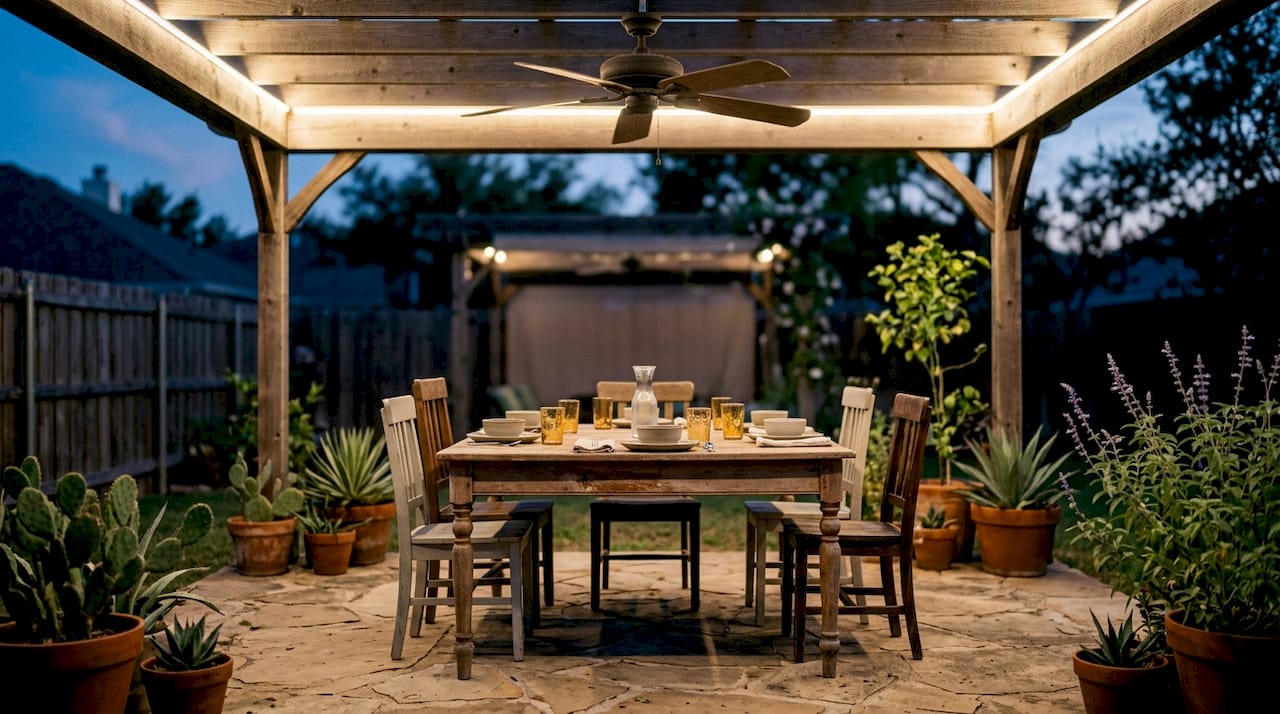
LED patio lighting is defined as a permanent or semi-permanent outdoor illumination system that uses light-emitting diode technology to deliver safety, ambiance, and energy efficiency across your outdoor living space. The role of LED for patios goes well beyond decoration. It covers everything from lighting slippery steps after a Texas rainstorm to setting the mood for a backyard cookout in Fort Worth. Systems like JellyFish Lighting and fixtures from brands like Philips Hue have made it easier than ever for homeowners to get professional results without complicated wiring or constant bulb replacements. This guide covers what you need to know to light your patio well, from lumen counts to smart controls to Texas-specific durability requirements.
How do LED lights enhance safety and functionality on patios?
LED lighting is the most effective tool for preventing accidents on patios, steps, and uneven outdoor surfaces. Poorly lit transitions between indoor and outdoor spaces cause a significant share of residential falls, and a well-placed fixture eliminates that risk entirely. Patio lighting combines safety and ambiance when LEDs are placed strategically at entry points, stair risers, and pathway edges.
For functional areas like grilling stations and outdoor dining tables, brightness matters. Design professionals recommend 150–300 lumens for accent lighting and significantly higher outputs for task areas near grills or food prep surfaces. That range gives you enough light to see what you are doing without washing out the atmosphere you worked to create.
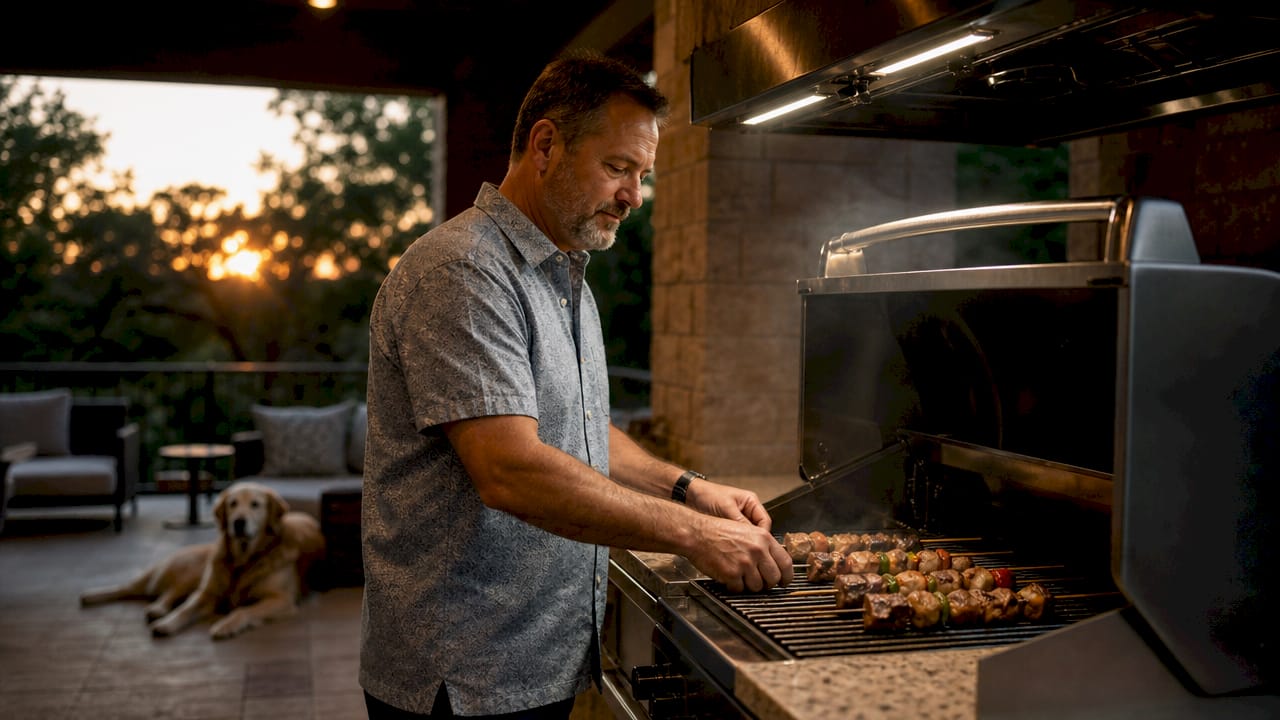
Security is another practical benefit. Motion sensor LED lights deter intruders and reduce accident risks on stairs or uneven surfaces. They activate only when needed, which also keeps your energy use low.
Here are the most effective fixture types for patio safety and function:
- Step lights: Recessed into stair risers or mounted on side walls to mark elevation changes
- Path lights: Staked along walkways to guide foot traffic after dark
- Flood or wall-pack fixtures: Mounted high for broad coverage over grilling and dining zones
- Motion-activated spotlights: Positioned at entry points and dark corners for security
Pro Tip: Aim task lighting at a 45-degree angle over your grill area rather than directly overhead. This reduces glare and gives you better visibility of food surfaces.
What are the energy and cost benefits of LED patio lighting?
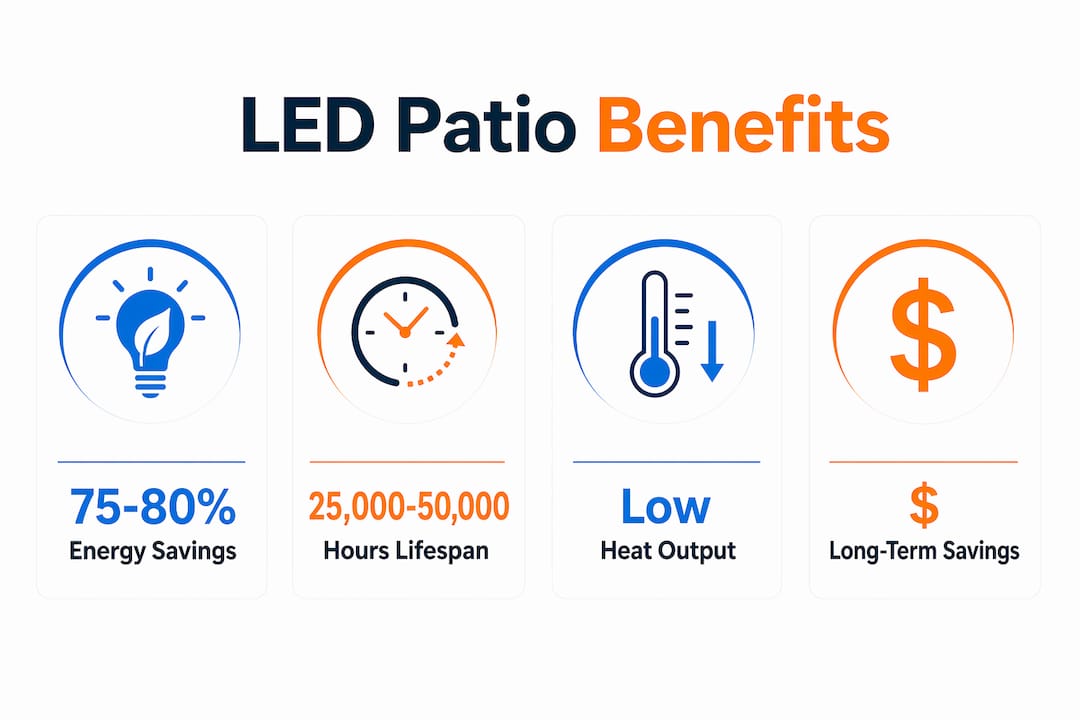
LED patio lights use 75–80% less energy than incandescent bulbs. For Texas homeowners already dealing with high summer electric bills, that reduction adds up fast across a full outdoor lighting setup.
The lifespan advantage is equally significant. LEDs last between 25,000 and 50,000 hours, compared to roughly 1,000 hours for a standard incandescent bulb. That means you replace a patio LED fixture far less often, which cuts both maintenance costs and the hassle of ladder work on a hot Texas afternoon.
| Factor | Incandescent Bulbs | LED Patio Lights |
|---|---|---|
| Energy use | Baseline | 75–80% less |
| Lifespan | ~1,000 hours | 25,000–50,000 hours |
| Heat output | High | Very low |
| Replacement frequency | Frequent | Rare |
| Texas summer performance | Degrades faster | Stable in heat |
LEDs also produce very little heat compared to incandescent or halogen fixtures. That matters in Texas summers where ambient temperatures already push outdoor fixtures hard. Lower heat output means less thermal stress on the fixture housing and longer service life overall.
The upfront cost of quality LED fixtures runs higher than basic incandescent options. The long-term savings on electricity and replacements, however, make the investment worthwhile within the first year or two of regular use.
How to select and install LED lights for ambiance and visual appeal
Color temperature is the single most important decision when choosing LED lights for outdoor spaces. Warm white LEDs in the 2700K–3000K range create the cozy, inviting atmosphere most homeowners want on a residential patio. Cooler whites in the 4000K–5000K range work better for commercial spaces or modern designs that call for a brighter, crisper look.
Color Rendering Index, or CRI, is a spec most homeowners skip. High CRI LEDs render outdoor furniture, plants, and hardscape materials in their true colors at night. A low CRI fixture makes your carefully chosen patio cushions look washed out or off-color. Aim for a CRI of 90 or above for the best visual results.
Layering light types gives your patio depth and flexibility. LED layered lighting combines ambient, task, and accent sources to extend patio usability into evening hours. Here is how each layer works:
- Ambient lighting: Overhead string lights or wall-mounted fixtures that provide general illumination across the whole space
- Task lighting: Directed fixtures over grilling stations, prep counters, or dining tables
- Accent lighting: LED tape lights under railings, uplights on trees or planters, and spotlights on architectural features
For Texas weather, waterproof ratings are non-negotiable. IP65-rated or higher LED tape lights handle rain, humidity, and UV exposure without failing prematurely. Power supplies for tape light runs should be housed in ventilated, weatherproof enclosures to prevent heat buildup.
Pro Tip: Install LED tape lights under deck railings or along the underside of pergola beams for a smooth wash of light that does not create glare at eye level.
For placement guidance specific to your home’s layout, the team at Dfwledpro has published a detailed outdoor fixture placement guide worth reviewing before you buy.
What smart lighting features elevate LED patios in Texas homes?
Smart LED controls turn a good patio lighting setup into a great one. Smartphone app control and programmable schedules let you automate your outdoor lighting without touching a switch. You can set lights to come on at dusk, dim at 10 p.m., and shut off at midnight, all from your phone.
Philips Hue outdoor systems are a well-known example of this approach. They support color-changing bulbs, scene presets, and integration with platforms like Amazon Alexa, Google Home, and Apple HomeKit. JellyFish Lighting, which Dfwledpro installs across the Dallas-Fort Worth area, takes this further with a dedicated app that controls color, brightness, and holiday lighting patterns from a single interface.
Key smart features worth prioritizing for Texas patios:
- Dusk-to-dawn automation: Lights activate at sunset and shut off at sunrise without manual input
- Motion-triggered zones: Specific areas like driveways or side gates activate only when movement is detected
- Dimming capability: Reduce brightness during casual evenings to save energy and set a relaxed mood
- Color-changing modes: Swap between warm white for everyday use and festive colors for holidays or game days
- Voice control integration: Works with Alexa, Google Assistant, or Siri for hands-free operation
Smart outdoor LED systems are evolving into fully customizable experiences. For a deeper look at how these controls work together, Dfwledpro’s guide on smart outdoor lighting controls breaks down the options clearly.
Which LED solutions are best suited for Texas patios?
Texas patios face conditions that most lighting products are not built for. Summer temperatures regularly exceed 100°F, UV exposure is intense from march through october, and spring storms bring heavy rain and humidity. The fixtures you choose must handle all three.
The best LED lights for patios in Texas share these characteristics:
- IP65 or higher waterproof rating: Protects against rain, sprinkler spray, and humidity
- UV-resistant housing: Prevents yellowing and cracking from direct sun exposure
- Aluminum or powder-coated steel construction: Handles thermal expansion without warping
- Quality certifications: Look for UL-listed or ETL-listed fixtures for verified safety standards
- Permanent installation options: Systems like JellyFish Lighting are built to stay in place year-round without seasonal removal
Temporary string lights and plug-in fixtures work for short-term use but degrade quickly under Texas conditions. Permanent LED systems installed by professionals like Dfwledpro use commercial-grade components rated for continuous outdoor exposure. The durability tips for South DFW published by Dfwledpro cover the specific failure points to watch for in this climate.
Professional installation also matters for safety. Outdoor electrical work near water sources requires proper weatherproofing at every junction. A licensed installer ensures your system meets local code and performs reliably for years.
Key Takeaways
LED patio lighting delivers the strongest return when it combines energy-efficient fixtures, correct color temperature, layered light types, and weatherproof ratings suited to Texas conditions.
| Point | Details |
|---|---|
| Energy savings are significant | LEDs use 75–80% less energy than incandescent bulbs, cutting Texas electric bills noticeably. |
| Lifespan reduces maintenance | A lifespan of 25,000–50,000 hours means far fewer replacements and less upkeep. |
| Color temperature sets the mood | Warm white (2700K–3000K) creates the best residential patio ambiance for evening use. |
| IP65 rating is the minimum for Texas | Heat, UV, and rain demand waterproof-rated fixtures to avoid early failure. |
| Smart controls add real value | App-based scheduling and motion sensors improve both convenience and energy efficiency. |
What I’ve learned from lighting Texas patios the right way
The mistake I see most often is homeowners buying fixtures based on looks alone. A beautiful lantern-style pendant that works perfectly indoors will crack, corrode, or fail within one Texas summer if it is not rated for outdoor use. The spec sheet matters more than the photo.
The second mistake is treating patio lighting as a single layer. Homeowners install one overhead fixture, call it done, and then wonder why the space feels flat at night. Layering ambient, task, and accent sources takes maybe 20% more planning but produces a result that looks professionally designed. The difference is obvious the first time you sit outside after dark.
My honest recommendation for Texas homeowners is to start with permanent LED systems if your budget allows. Temporary lights require seasonal removal, storage, and reinstallation, which most people stop doing after year two. A permanent system like JellyFish Lighting stays in place, handles the weather, and gives you full app control without the annual hassle. Dfwledpro’s permanent LED lighting basics article is a good starting point if you want to understand what that investment actually involves.
One more thing: do not skip the CRI spec. I have seen homeowners spend thousands on beautiful outdoor furniture and then light it with low-CRI LEDs that make everything look gray. A CRI of 90 or above costs a little more per fixture and makes a visible difference every single night.
— Adrian
Dfwledpro brings professional LED patio lighting to the DFW area
Dfwledpro is the official authorized JellyFish Lighting dealer for the Dallas-Fort Worth metroplex, serving residential and commercial properties across Arlington, Mansfield, Fort Worth, Grand Prairie, Burleson, and 30+ additional cities. Every installation uses permanent, commercial-grade LED components built to handle Texas heat, UV exposure, and heavy rain without seasonal removal or replacement.
If you are ready to upgrade your patio with a system that lasts, Dfwledpro handles everything from design to installation. Homeowners in the Lancaster area can learn more about permanent LED installation in Lancaster, and Dallas-area homeowners can explore professional LED services in Dallas. Contact Dfwledpro for a free consultation and get a lighting plan built for your specific outdoor space.
FAQ
What is the role of LED lights on a patio?
LED patio lights serve three core functions: safety, ambiance, and energy efficiency. They illuminate hazards like steps and uneven surfaces, extend usable evening hours, and use 75–80% less energy than incandescent alternatives.
What color temperature works best for residential patios?
Warm white LEDs in the 2700K–3000K range create the most comfortable and inviting atmosphere for residential patio use. Cooler temperatures above 4000K suit commercial or modern spaces better.
How long do outdoor LED patio lights last?
Quality outdoor LED fixtures last between 25,000 and 50,000 hours. That translates to many years of nightly use before any replacement is needed.
What waterproof rating do I need for Texas patio lights?
IP65 is the minimum recommended rating for Texas outdoor conditions. It protects against rain, humidity, and sprinkler exposure. Systems installed in direct weather exposure benefit from IP67 or higher.
Are smart LED controls worth it for a home patio?
Yes. App-based scheduling, motion sensors, and dimmable options reduce energy use and add convenience. Systems like JellyFish Lighting and Philips Hue both support full smartphone control and integrate with major home automation platforms.