Why Invest in Permanent Holiday Lighting for Your Home
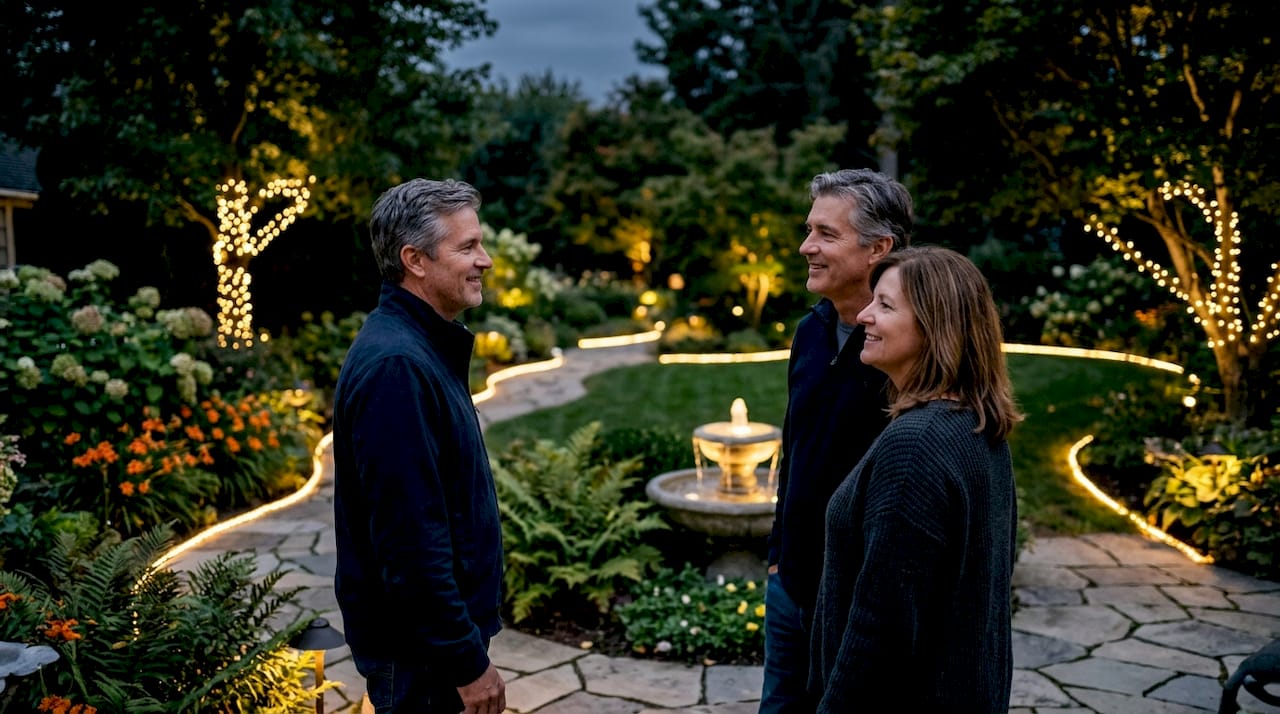
Permanent holiday lighting is a professionally installed, fixed LED system that stays on your home year-round, delivering automated and customizable illumination without annual setup or takedown. If you’ve ever spent a weekend on a ladder untangling strands in november, you already understand the appeal. The real question is whether the investment makes financial and practical sense. The answer is yes, for most homeowners planning to stay in their home three or more years. This article covers how these systems work, what they cost, and why the benefits of permanent holiday lighting go well beyond the holiday season.
Why invest in permanent holiday lighting: the core case
Permanent outdoor LED lighting systems are the recognized industry term for what many homeowners call “permanent holiday lights.” The distinction matters because these systems are engineered for year-round use, not just december displays. They use low-voltage LEDs mounted in color-matched tracks along your roofline, soffit, or fascia, and they connect to a smart controller you operate from your phone.
The financial case is straightforward. Permanent LED systems cost $2,500–$6,000 upfront but pay for themselves in 4–5 years compared to professional seasonal installation fees of $800–$1,500 annually. That break-even point is faster than most homeowners expect. Add in the time savings, and the value becomes even clearer.

DIY seasonal lighting installs accumulate roughly 80 hours of labor over 10 years. That’s two full work weeks spent hanging, adjusting, and removing lights. Permanent systems eliminate that entirely after the initial professional installation.
How do permanent holiday lighting systems work?
The technology behind these systems is straightforward once you understand the components. Each LED node sits inside a weatherproof housing rated to IP68 standards, meaning it withstands submersion and extreme weather without failing. The nodes connect through sealed wiring channels that run along your roofline and remain nearly invisible during daylight hours.
Key features of a quality permanent outdoor LED system include:
- Low-voltage operation: Systems run on 12V–48V LEDs that produce minimal heat, greatly reducing fire risk compared to traditional incandescent strands.
- Color-matched tracks: Mounting channels are custom painted to match your fascia or soffit color, so the hardware disappears against your home’s exterior during the day.
- App-based control: You schedule lighting times, adjust brightness, switch between millions of color combinations, and create scenes for different occasions, all from your phone.
- Year-round functionality: The same system that displays red and green in december can shift to orange for october, warm white for everyday ambiance, or team colors for game day.
- Professional wiring: A licensed installer routes all connections cleanly, with no exposed cords or visible hardware cluttering your roofline.
Pro Tip: Ask your installer to show you the color-matched track samples against your actual fascia before installation day. Many homeowners overlook this step and end up with tracks that stand out rather than blend in.
What are the main benefits of permanent holiday lighting compared to seasonal lights?
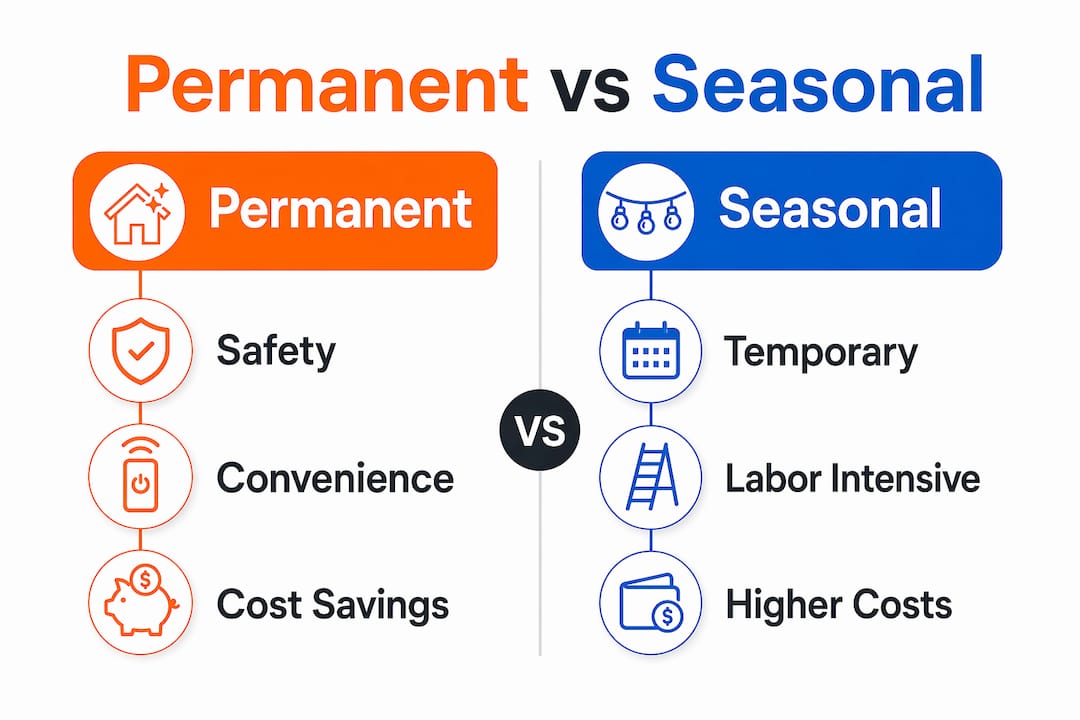
The advantages of choosing permanent lights over temporary setups fall into four clear categories: safety, convenience, cost, and design.
Safety first
Permanent lighting removes the ladder risk entirely after professional installation. Holiday-related ladder falls send thousands of Americans to emergency rooms each year. Eliminating annual climbs to hang and remove lights removes that risk from your life permanently.
Convenience that compounds over time
The convenience benefit grows every year you own the system. You never buy replacement strands, untangle knotted lights, or spend a saturday afternoon on a ladder. You open an app and your home is lit. That simplicity is genuinely hard to overstate once you’ve experienced it.
The real cost comparison
Seasonal lighting costs more than most homeowners realize. Replacing damaged or burnt-out traditional lights adds $150–$300 every one to three seasons. Professional seasonal installation runs $800–$1,500 per year. Over a decade, those costs add up to $8,000–$15,000 or more. A permanent system installed once at $2,500–$6,000 looks very different when you run those numbers side by side. For a detailed local breakdown, the DFW cost comparison guide walks through the math specific to this region.
Pro Tip: If you currently pay a professional to hang seasonal lights each year, your break-even point on a permanent system is likely under five years. Run your own numbers before assuming the upfront cost is prohibitive.
Design that works every day
Year-round lighting systems increase curb appeal by highlighting architectural features day and night. The color-matched tracks preserve your home’s daytime appearance while the LEDs create a polished, finished look after dark. Most homeowners who install permanent systems report using warm-white ambient lighting far more than seasonal color displays. The system becomes part of how your home looks every evening, not just in december.
How does permanent holiday lighting enhance home appeal and security all year?
Permanent outdoor LED lighting does more than look attractive. It functions as a practical security upgrade for your property.
Permanent lighting works as a non-invasive security measure by illuminating your property uniformly and eliminating dark spots. Automatic scheduling means your home is lit every evening without you remembering to flip a switch. Consistent nighttime lighting deters theft and reduces the risk of accidents on your property.
The year-round design benefits include:
- Architectural accent lighting that highlights rooflines, gables, and facade features every night of the year.
- Welcoming ambiance for guests, with warm-white scenes that make your home look polished and inviting.
- Event-ready flexibility to switch colors for birthdays, holidays, sports events, or neighborhood occasions in seconds.
- Invisible daytime profile because color-matched tracks add no visual clutter to your home’s exterior.
- Practical nighttime illumination that helps you and your family navigate driveways and entryways safely.
Homeowners are shifting from viewing holiday lighting as temporary decoration to treating it as a year-round home upgrade. That shift reflects how much daily value these systems deliver beyond the holiday season. For more on how outdoor lighting improves safety, the connection between consistent illumination and reduced property risk is well established.
What should homeowners consider before investing in permanent holiday lighting?
Permanent outdoor LED lighting is not the right fit for every situation. These considerations help you decide whether now is the right time.
- Budget for the upfront cost. Quality systems range from $2,500 to $6,000 depending on your home’s size and the complexity of the design. Get at least two professional quotes before committing.
- Plan to stay in your home. Permanent lighting best suits homeowners planning to remain three or more years. Short-term residents may not reach the break-even point.
- Choose a qualified installer. Professional installation determines the system’s durability, warranty coverage, and final appearance. Verify that your installer has specific experience with permanent LED systems, not just general electrical work.
- Confirm track color matching. Color-matched mounting tracks must be precisely chosen to blend with your fascia or soffit. This detail is easy to overlook and hard to fix after installation.
- Assess your year-round use case. If you want the system only for december, the value proposition weakens. If you plan to use ambient lighting, security scheduling, and event colors throughout the year, the investment makes strong sense.
- Understand maintenance expectations. Maintenance is minimal but not zero. Occasional cleaning keeps the tracks and nodes performing well. A partner like White Diamond Pressure Washing explains why keeping exterior lighting clean directly affects performance and longevity.
How to choose and maintain your permanent holiday lighting system
Selecting the right system starts with the right installer. Work with a professional who specializes in permanent outdoor LED systems and can show you completed local installations.
Key selection and maintenance practices include:
- Verify IP68-rated hardware. Permanent outdoor LED systems use IP68-rated nodes and sealed connections designed to withstand extreme weather. Confirm your system meets this standard before signing any contract.
- Match lighting options to your home’s style. A warm-toned brick exterior calls for different default settings than a modern gray facade. Discuss your preferred everyday look with your installer before finalizing the design.
- Ask about warranty coverage. Quality systems carry warranties on both hardware and installation labor. Understand exactly what is covered and for how long.
- Schedule annual cleaning. Dust, pollen, and debris accumulate on tracks and nodes over time. A quick annual cleaning maintains both appearance and performance.
- Use smart controls fully. App-controlled scheduling and scene settings are where most of the daily value lives. Set up automated evening schedules from day one so the system works for you without any ongoing effort.
Pro Tip: After installation, spend 30 minutes setting up three or four saved scenes in your app: warm white for everyday use, a festive color set for holidays, a bright white for security, and a dim setting for late nights. You’ll use all four regularly.
Key takeaways
Permanent outdoor LED lighting pays for itself in 4–5 years, eliminates ladder risks, and delivers year-round curb appeal and security that seasonal lights simply cannot match.
| Point | Details |
|---|---|
| Break-even in 4–5 years | Upfront cost of $2,500–$6,000 beats annual professional seasonal installation fees within five years. |
| Eliminates ladder risk | Professional installation removes the need for annual ladder climbing, cutting holiday injury risk entirely. |
| Year-round security value | Automated scheduling eliminates dark spots and deters intruders every night, not just during the holidays. |
| Color-matched tracks matter | Precise track color matching keeps hardware invisible during the day and preserves your home’s curb appeal. |
| Best for long-term homeowners | Homeowners planning to stay three or more years get the strongest return on their investment. |
Why I think permanent lighting is the most underrated home upgrade
I’ve seen a lot of home improvement investments come and go, and permanent outdoor LED lighting consistently surprises homeowners with how much they use it. Most people install it thinking about christmas. Within three months, they’re using warm-white ambient lighting every single evening. That shift from seasonal decoration to daily lifestyle upgrade is what makes this investment different from most exterior improvements.
The safety argument alone is compelling. Ladder falls during holiday decorating are a real and serious risk, and eliminating that risk permanently is worth something that doesn’t show up in any cost comparison spreadsheet. When I talk with homeowners after installation, the relief of never climbing a ladder to hang lights again is always mentioned in the first conversation.
The professional installation process also matters more than people realize. A poorly installed system looks worse than seasonal lights and fails faster. A well-installed system with color-matched tracks and IP68-rated nodes looks like it belongs on the house. The difference is visible from the street.
What I find most interesting is how permanent lighting aligns with broader smart home trends. Homeowners who already use smart thermostats and video doorbells take to app-controlled lighting immediately. It fits the same mental model: set it up once, automate it, and let it work. That combination of convenience, safety, and daily value is why I consider this one of the most practical exterior upgrades available to homeowners right now.
— Adrian
Permanent LED lighting installation in the DFW area
Dfwledpro is the official authorized JellyFish Lighting dealer for the Dallas-Fort Worth metroplex, serving 35+ cities including Arlington, Fort Worth, Mansfield, Grand Prairie, Burleson, and Cedar Hill.
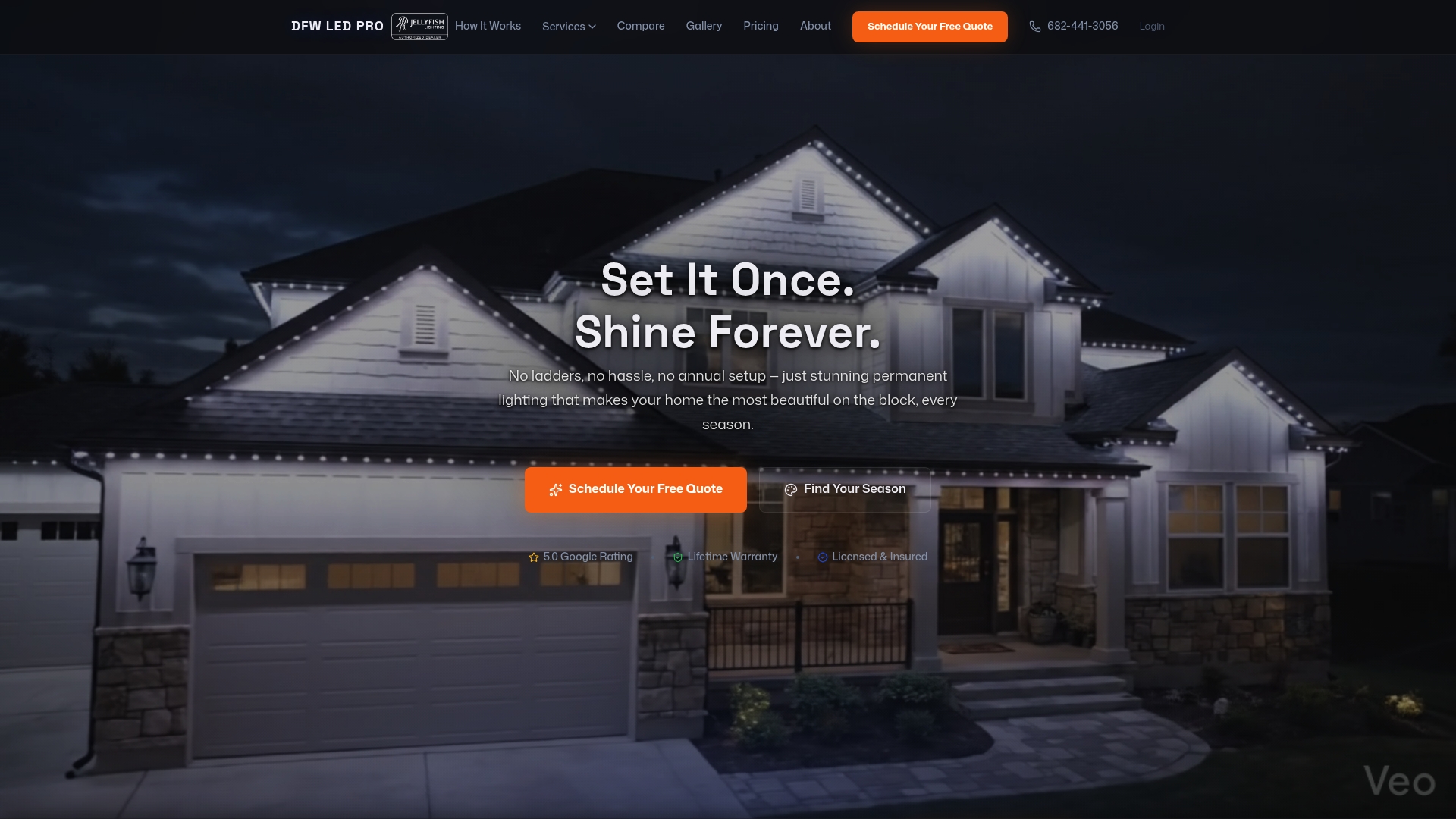
We install permanent outdoor LED systems with custom color-matched tracks, IP68-rated hardware, app-based smart controls, and full warranty coverage on both equipment and labor. Every installation is designed to match your home’s exterior and deliver year-round value, not just a holiday display. If you’re ready to stop renting seasonal lights and start owning a permanent solution, our Lancaster, TX installation service page is a good place to start. You can also explore our full range of JellyFish permanent LED lighting options to find the right fit for your home.
FAQ
How long does permanent holiday lighting last?
Quality permanent outdoor LED systems with IP68-rated nodes and sealed connections are built to last well over a decade with minimal maintenance. Most professional installations carry hardware warranties that reflect this expected lifespan.
Is permanent holiday lighting worth it for a smaller home?
Yes. Smaller homes typically fall at the lower end of the $2,500–$6,000 installation range, which means the break-even point against annual professional seasonal installation arrives even faster.
Can permanent lights display colors other than holiday themes?
Permanent outdoor LED systems support millions of color combinations and can be programmed via app for any occasion, including warm-white ambient lighting, sports team colors, or custom event themes.
Do permanent lights require a lot of maintenance?
Maintenance is minimal. Occasional cleaning of tracks and nodes keeps the system performing well. The hardware itself is sealed and weatherproof, so day-to-day upkeep is far less demanding than managing seasonal light strands.
What makes professional installation better than a DIY approach?
Professional installers handle color-matched track selection, clean wiring, and proper sealing, all of which determine how the system looks and how long it lasts. DIY installations typically void manufacturer warranties and risk visible hardware or premature failures.
Recommended
- Permanent Lighting Benefits Every Homeowner Should Know | DFW LED Pro
- Permanent LED lighting basics: Enhance DFW home safety and style | DFW LED Pro
- Are Permanent LED Lights Worth It? Honest Answer for DFW Homeowners | DFW LED Pro
- Best permanent lighting for homes: Boost curb appeal and safety | DFW LED Pro